Physicists Put Thousands of Atoms in Schrödinger’s Cat State
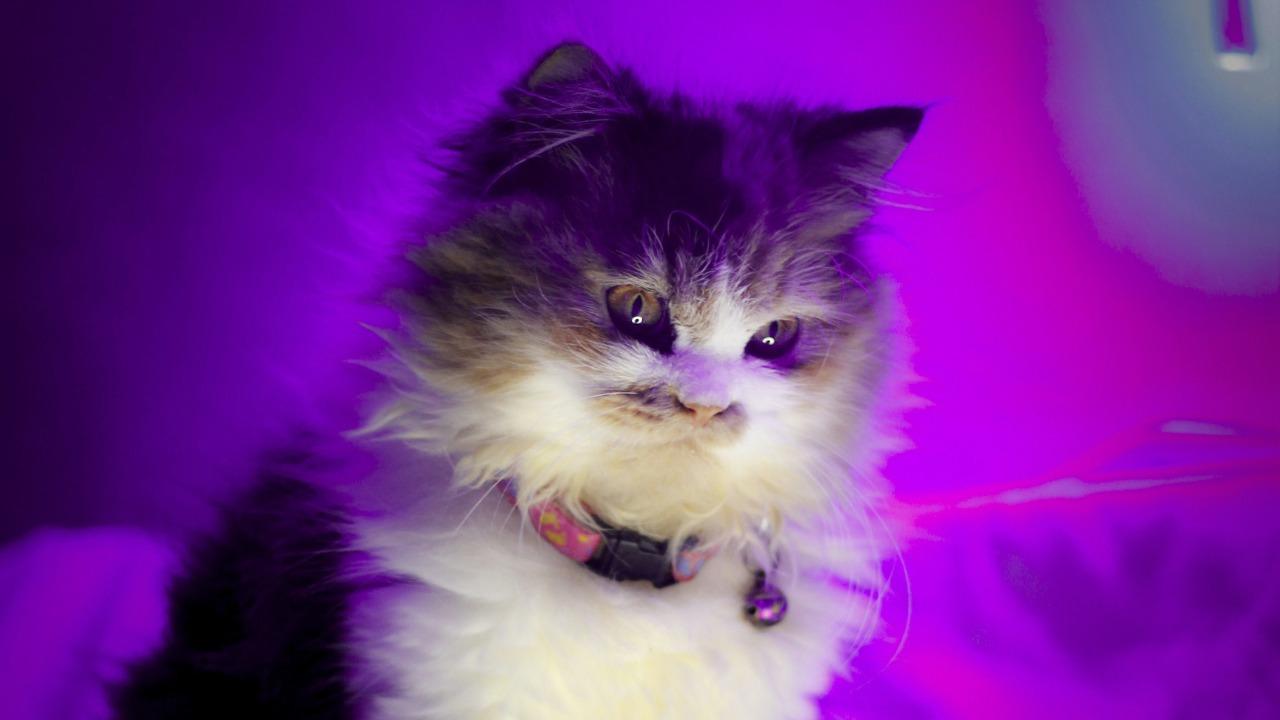
The Quantum Cat Grows Bigger
Physicists have achieved a remarkable milestone by creating a quantum state that defies classical intuition. They’ve managed to place clusters of thousands of atoms in a superposition, a phenomenon once confined to theoretical thought experiments like Schrödinger’s Cat. This breakthrough is not just a scientific curiosity but a significant step toward understanding how quantum mechanics can be applied to larger and more complex systems.
From Thought Experiment to Reality
Schrödinger’s Cat was originally conceived as a paradox to illustrate the strange nature of quantum mechanics when applied to macroscopic objects. The idea was that a cat in a sealed box could be both alive and dead until observed. Over time, this metaphor has become a cornerstone in explaining quantum superposition and the boundary between the quantum and classical worlds.
Creating such states experimentally has been a long and arduous process. Early efforts involved only a few particles, such as photons or small groups of atoms, and even then, these states were fragile and short-lived. The challenge lies in maintaining quantum coherence, as any interaction with the environment can disrupt the delicate quantum correlations.
Scaling Up the Quantum Cat
The latest research has taken this concept to a new level by using metal nanoparticles containing around 7,000 atoms. These particles were placed in a superposition, traveling along two paths simultaneously. The resulting interference pattern showed that the entire nanoparticle existed in multiple positions at once, a clear demonstration of quantum superposition on a much larger scale.
What makes this achievement particularly impressive is the distance between the alternative realities. The two paths were separated by 133 nanometers, more than 20 times the width of the nanoparticles themselves. This is akin to a ping pong ball being in two places around 80 centimeters apart, highlighting the macroscopic nature of this quantum state.
Measuring Macroscopicity
Determining how “macroscopic” a quantum state truly is has been a topic of debate among physicists. One approach involves assessing two key properties: the number of microscopic constituents and the degree to which the alternative branches differ in an observable quantity. Using this framework, the Vienna team’s experiment achieved a macroscopicity value of μ = 15.5, surpassing previous records by an order of magnitude.
This result not only pushes the boundaries of quantum mechanics but also provides insights into the limits of quantum theory. It further constrains alternative extensions of quantum mechanics, demonstrating that the principles of quantum physics hold even at larger scales.
Fighting Decoherence
As quantum systems grow larger, they face greater challenges from environmental interactions. Decoherence, the process by which quantum states lose their coherence due to interactions with the environment, becomes a significant obstacle. Larger objects are especially vulnerable, as they constantly interact with stray gas molecules, thermal radiation, and electromagnetic noise.
To combat this, researchers employ extreme isolation and advanced control techniques. Some experiments have focused on creating “hot Schrödinger cat states,” where superpositions persist even without cooling to near absolute zero. Others have developed long-lived cat states in atomic ensembles, paving the way for applications in quantum computing and precision measurements.
Bridging Quantum and Everyday Reality
As these experiments push the boundaries of quantum mechanics, they begin to intersect with objects that feel more like everyday items. Recent work involving metallic particles the size of some viruses has set a new record for the most macroscopically distinct quantum superposition. This brings the quantum world closer to our reality and aligns with Schrödinger’s original vision.
Looking ahead, the next frontier may involve biological materials. Researchers suggest that future experiments could observe biological entities, such as viruses, in a quantum superposition. While a virus is not considered truly alive, its biological components make it an intriguing candidate for such studies.
More from Morning Overview
‘Fail to shut down’: Microsoft issues urgent Windows update alert
‘The road’s gone’: 1,000 trapped on Outer Banks as highway vanishes into sea
Older Teslas are wearing out in ways owners never saw coming
Apple issues a major warning to 800M iPhone users right now

- Latihan Soal OSN Ilmu Komputer SMA 2026 - June 1, 2026
- Latihan Soal OSN Kebumian SMA 2026 - May 31, 2026
- Latihan Soal OSN Geografi SMA 2026 - May 30, 2026



Leave a Reply