Houston Meteorite Debris Detected on Weather Radar, Scientists Track It
A Rare Celestial Event Over Houston
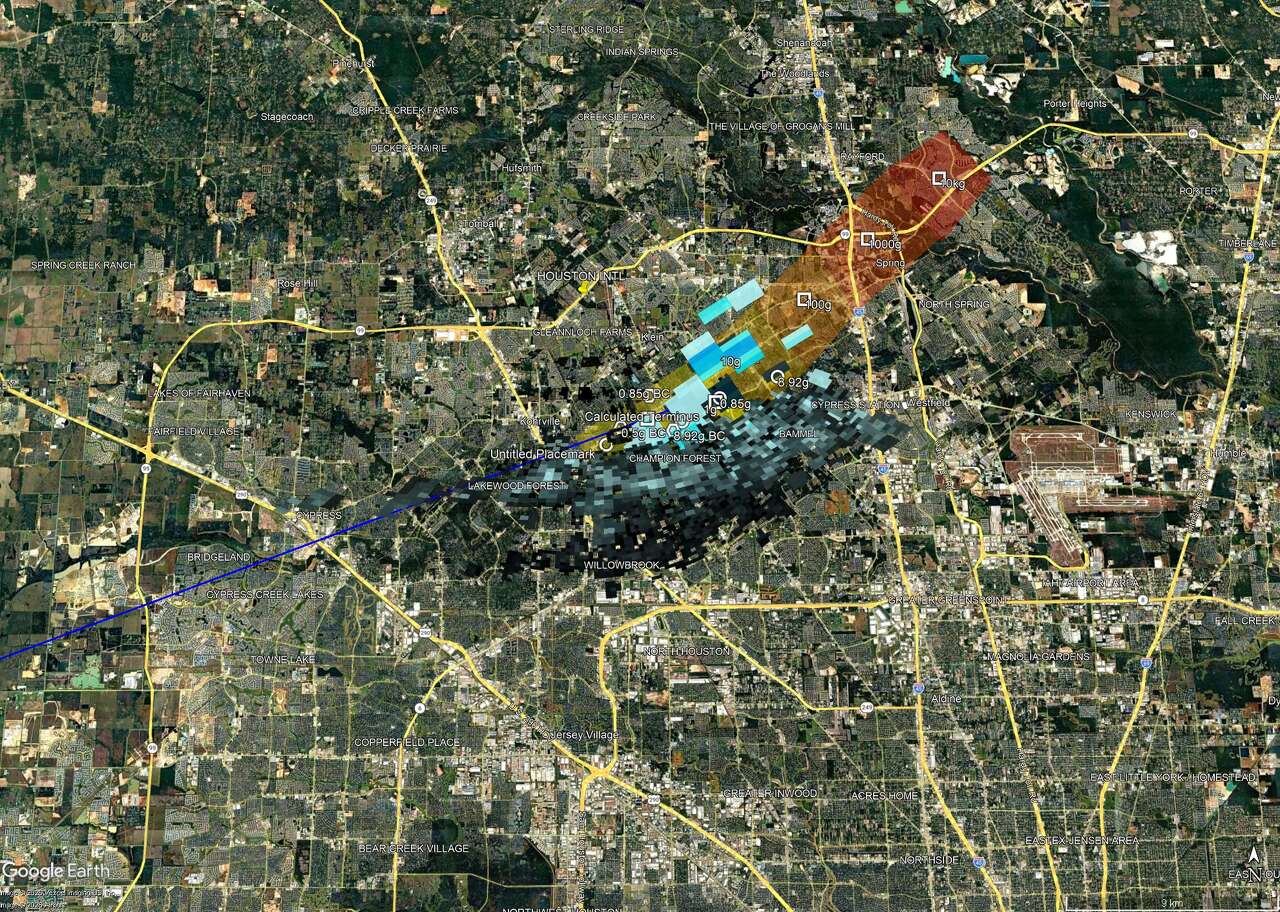
On March 21, a bright fireball lit up the afternoon sky over the Houston area, capturing the attention of many residents. This celestial event not only dazzled the eyes but also left a significant mark on weather radar systems, providing scientists with a rare opportunity to track the meteor’s journey.
How Weather Radar Detected the Meteor
Weather radar is primarily designed to detect precipitation such as rain and hail. However, it can also pick up signs of meteorites, albeit in an unexpected manner. The radar does not directly observe the glowing streak of the meteor itself. Instead, it detects the debris that falls through the atmosphere after the meteor breaks apart. This phase is known as “dark flight,” where fragments begin their descent toward the ground.
As the meteor disintegrates, heavier pieces fall faster while smaller fragments spread out and drift with the wind, creating an elongated trail of debris. If there is enough material, the radar can detect this as a small patch of precipitation. In the case of the Houston meteor, radar signatures showed material descending for several minutes after the fireball, indicating that some fragments may have survived the atmospheric entry.
The Unique Signature of Meteorite Falls
Meteorite falls have a distinct fingerprint on radar. According to NASA, they often appear as elongated or streak-like signatures, shaped by the winds in the upper atmosphere. These signatures can suddenly appear in clear skies shortly after the fireball disappears and then quickly fade as the fragments fall to the ground.
Unlike storm patterns, these signals do not move in organized ways. Instead, they weaken rapidly and disperse. The Houston event was notable because the radar detected falling debris for several minutes, suggesting that at least some fragments made it through the atmosphere intact.
The Importance of Radar Detection
Radar detections like the one over Houston are more than just a curiosity; they provide valuable scientific insights. NASA has noted that weather radar has helped identify dozens of meteorite falls in recent decades. This information allows scientists to narrow down potential landing sites, guide recovery efforts, and study how meteors behave during their entry into Earth’s atmosphere.
Freshly recovered meteorites are especially valuable because they are less altered by exposure to Earth’s environment. However, not every fireball shows up clearly on radar. For a meteor to be detected, it must be large enough to produce debris, some fragments must survive the intense heat of entry, and it must pass within range of radar coverage. Most meteors burn up completely, leaving nothing behind to detect.
A Fleeting Spectacle with Lasting Implications
For most people across the Houston area, the March 21 event lasted only a few seconds as a quick streak of light across the sky. However, thanks to radar technology, scientists were able to continue tracking the meteor after it disappeared. This allowed them to turn a fleeting spectacle into a data-rich opportunity to understand what happened high above Southeast Texas and potentially what reached the ground.
Conclusion
The event over Houston highlights the intersection of astronomy and meteorology. While the fireball itself was a brief moment of beauty, the radar detection provided a wealth of information that could aid in future research and recovery efforts. As technology continues to advance, the chances of detecting and studying such events will only improve, offering new insights into the mysteries of our universe.

- Latihan Soal OSN Ilmu Komputer SMA 2026 - June 1, 2026
- Latihan Soal OSN Kebumian SMA 2026 - May 31, 2026
- Latihan Soal OSN Geografi SMA 2026 - May 30, 2026

Leave a Reply