How This YouTuber Helped His Parents Retire in Thailand by 2026 – 2 Key Factors to Know
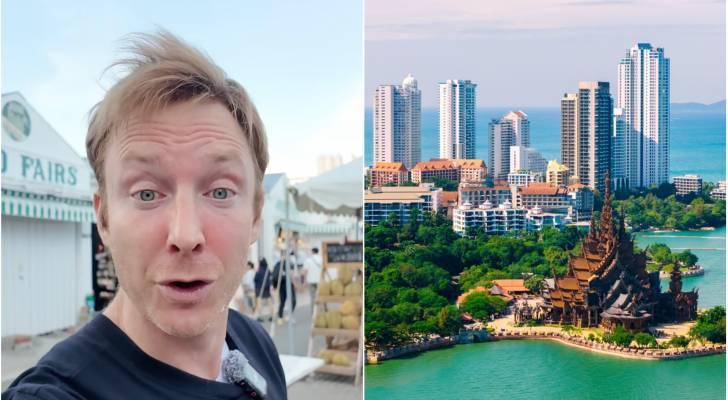
If you scroll through YouTube or TikTok, you might come across videos claiming that you can retire in Thailand for just a few hundred dollars a month. However, these claims often oversimplify the reality of living in a foreign country. Cal, a YouTuber known as @TheBangkokGuide, has lived in Thailand since 2015 and is helping his parents retire there. In a recent video, he provided tips for anyone considering retiring in Thailand in 2026, emphasizing that it’s not as straightforward as it seems.
Understanding the Financial Realities
Cal highlights that retiring in Thailand requires careful planning to ensure your nest egg can sustain you for decades. He uses a framework that considers both controllable and uncontrollable factors, such as market swings, healthcare costs, exchange rates, and personal preferences. These elements play a crucial role in determining whether a modest retirement is feasible.
Thailand offers several advantages, including a relatively low inflation rate of around 1%, which is much lower than the U.S. This means that local prices for fresh market food, apartments, public transportation, and utilities tend to rise slowly and predictably. However, this advantage isn’t universal.
Key Financial Factors to Consider
Two critical financial factors that many expat discussions overlook are:
Inflation: While general inflation in Thailand is low, medical inflation is significantly higher. According to a survey by WTW, medical inflation in Thailand reached 14.2% in recent years. Private hospitals offer high-quality care, but costs have been rising faster than general inflation. Many international health insurers have age caps, making coverage more expensive or less available for older retirees.
Currency Risk: If your income comes from U.S. investments, Social Security, or pensions paid in dollars, your cost of living in Thailand depends heavily on how the dollar performs against the Thai baht. A strong baht can make everything more expensive, while a weak one can quietly squeeze budgets over time. Currency risk doesn’t show up neatly in retirement calculators but can have a significant impact over a 20- or 30-year retirement.
Upfront Costs and Immigration Requirements
Before settling in Thailand, there are upfront costs to consider, such as flights, shipping personal items, and short-term housing, which can add up to several thousand dollars. Most retirees rent before buying, and long-term leases typically require two months’ deposit plus the first month’s rent upfront. However, most condos come furnished, which helps reduce setup costs.
Thailand’s standard retirement visa generally requires either proof of 65,000 baht in monthly income or 800,000 baht deposited in a Thai bank account. Some retirees opt for the lump-sum option because income verification can be challenging. Additionally, annual renewal fees, required reporting, and optional visa agents add to the overall costs. Cal recommends having roughly 1 million baht available for setup costs plus another 200,000 baht as a safety buffer.
What “Affordable” Actually Looks Like
Costs vary depending on lifestyle and location. Bangkok, Chiang Mai, and beach destinations like Phuket all have different price points. Cal breaks down monthly spending into three broad tiers based on his experience:
Lean Lifestyle: ~40,000 baht a month
This includes a studio or small one-bedroom apartment, eating mostly local food, and limiting discretionary spending. Rent often runs between 8,000 to 15,000 baht. Utilities, phone, and internet average around 3,000 baht. Local meals can cost 40 to 80 baht, with coffee closer to 30 to 40 baht.Comfortable Lifestyle: ~70,000 baht a month
This allows for more flexibility, including frequent restaurant meals, hobbies like golf or fitness clubs, and domestic travel.Higher-End Lifestyle: ~150,000 baht a month
This includes larger condos, imported groceries, regular trips home to the U.S., and access to top-tier private hospitals.
Planning Your Nest Egg Withdrawals
U.S. financial planners often cite the 4% rule, which suggests that if you want your nest egg to last for 30 years, you need enough to safely withdraw 4% in your first year of retirement and then adjust that for inflation every year thereafter. Based on the 4% rule, Cal estimates the size of a retirement portfolio an expat retiree would need in Thailand:
- Leaner Lifestyle at about 40,000 baht/month: roughly 12 million baht (~$400,000 USD)
- Comfortable Lifestyle at about 70,000 baht/month: roughly 21 million baht (~$560,000 to $660,000 USD)
- Luxurious Lifestyle at about 150,000 baht/month: roughly 45 million baht (~$1.4 million USD)
Lower inflation helps, but health-care costs and currency volatility can wipe out those advantages. Before committing to a permanent move, Cal recommends tracking every expense in baht for a full year. Seeing your spending in local currency reveals how exchange rates affect daily life and shows where budgets can run tight.
Thailand can offer a more affordable lifestyle than the U.S., and for some Americans, it can make early retirement a possibility. However, the key is to understand the risks associated with making a big move like this. Plan for the long-term and don’t get swept up in the next viral TikTok video.




Leave a Reply