They Left Their Cats on a Roof and Kayaked Away from Flooded Oahu Farm—Now They Fear Losing It
A Harrowing Escape from Oahu’s Floodwaters
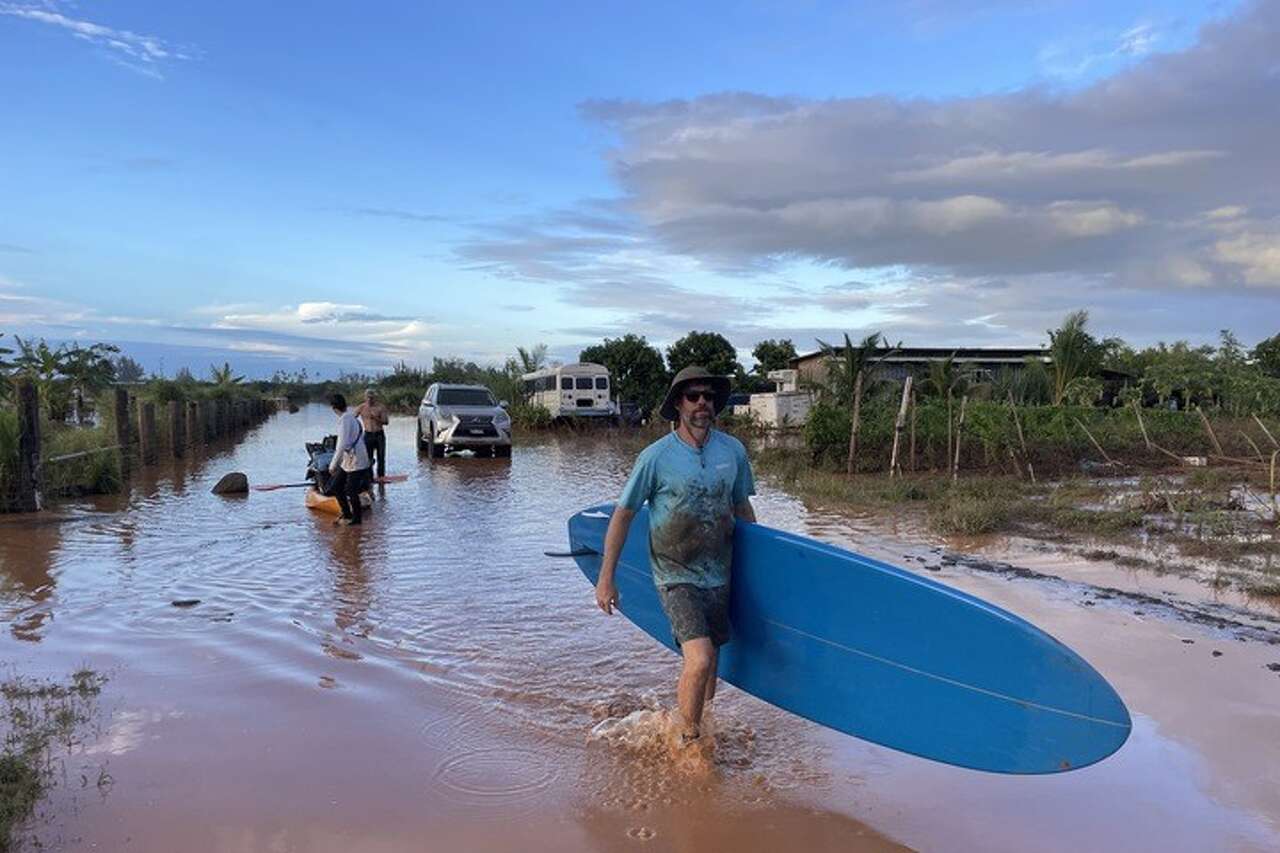
MOKULEIA, Hawaii – As storm waves battered the famous surf breaks on Oahu’s North Shore, not far inland, fields of papaya, bananas, and noni were taking in water quickly. And so were the homes of the people growing those crops. Blake Briddell and his wife, Brit Yim, woke at their modest farm quarters when floodwaters toppled a recycling bin, a sure sign that the rushing water was about to strike their dwelling. Already, around them, in the dark of night, the ag land as far as they could see was flooded. This high, muddy water, though, was their only path to safety.
“We put on our wet suits and put a dry change of clothes in a cooler,” Briddell said late Saturday, a day after the couple made the hasty decision to leave their 8-acre plot in the rural community of Mokuleia. “We started walking, and then we had to swim.”
Before they departed, they put their two cats on the roof of a shipping container and cracked a few cans of cat food, hoping for the best.
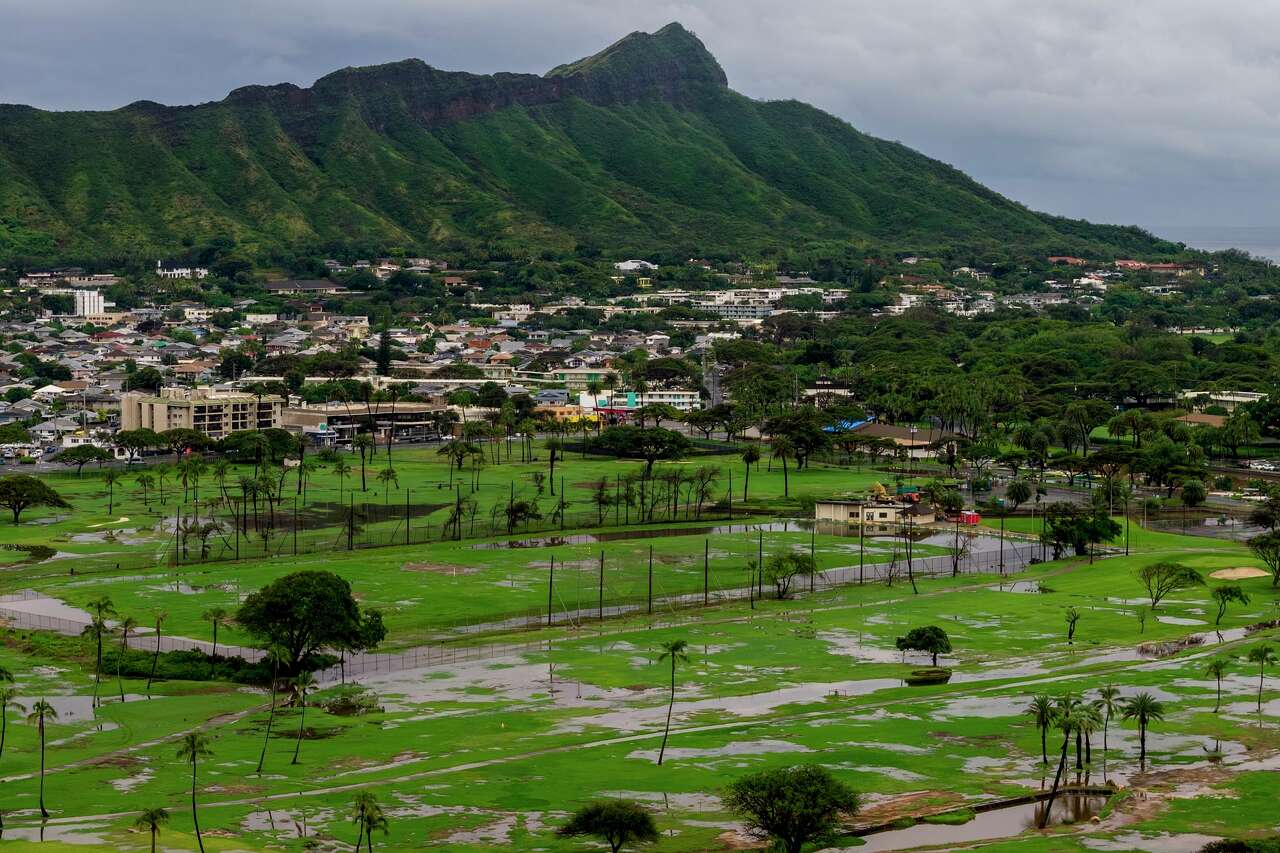
The rainfall that hit the Hawaiian Islands over the past two weeks is the most the state has seen in two decades, according to the National Weather Service. A brutal storm a little more than a week ago was followed by an even more brutal system late last week.
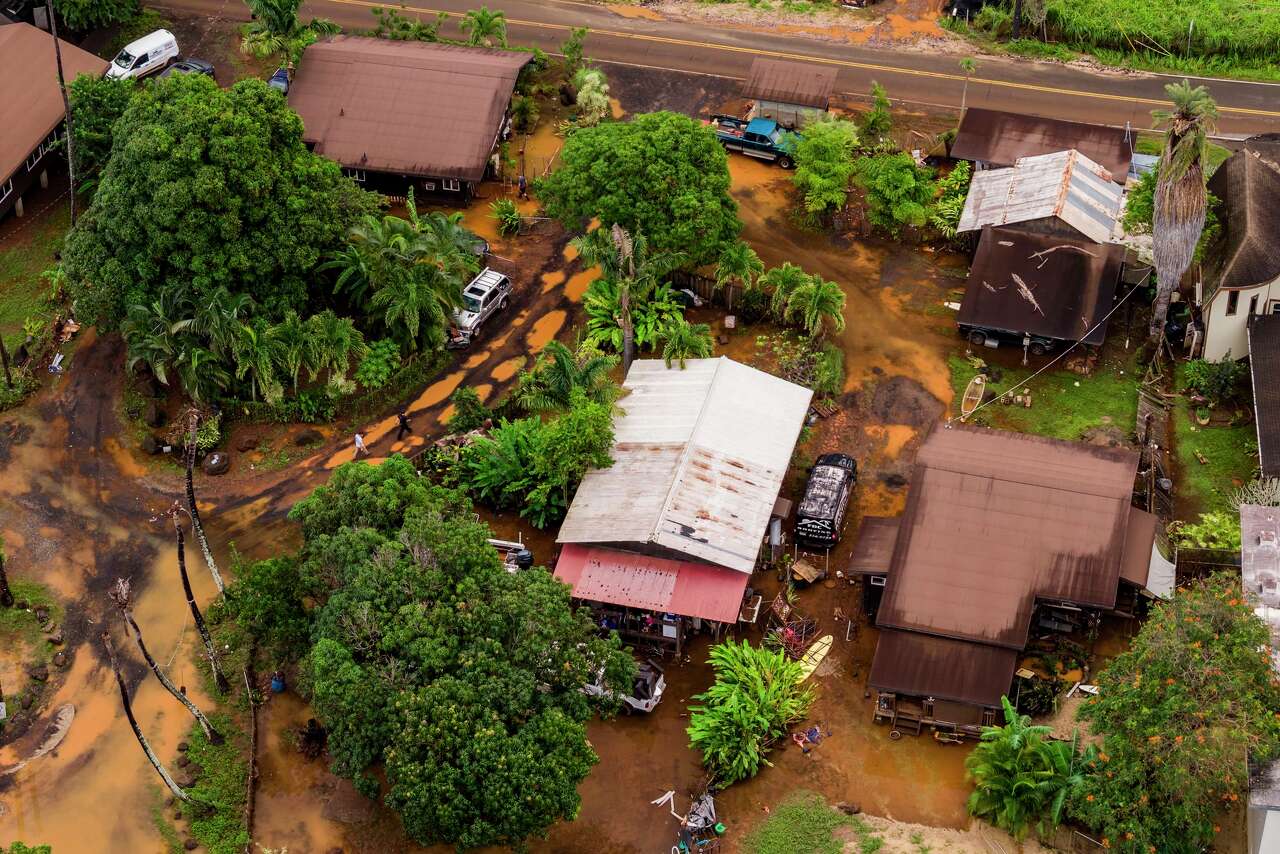
In many areas, including the northern reaches of Oahu, about an hour north of Honolulu, there was just no place for the rainwater to go, so it pooled across stream banks, roads, neighborhoods, and farmland. Briddell and Yim’s property is among the many small growing operations west of the better-known surf towns such as Haleiwa. Here, mostly specialty crops have replaced the giant sugar plantations that once ruled the island.
“This is an area that provides a lot of our locally grown food,” Briddell said. Mokuleia, in the native Hawaiian language, means land of abundance. The flat, soggy coastal terrain, which sits below the steep mountains of the Waianae Range, makes the place good for growing produce – and also ripe for high water.
“This area is no stranger to flooding, but we’ve never seen anything like this,” Briddell said.
As Briddell and his wife swam from their farm on the night of their escape, they followed the road as closely as they could, for about a quarter-mile, Yim said. They kept the cooler and their dry clothes afloat beside them. Neighbors estimate that the water was 10 feet deep in spots.
The protective wet suits that Briddell and Yim wore, they said, were as much to protect them from the cold as the debris and pollutants that have turned the floodwaters into a filthy soup. The couple happened to have a kayak docked nearby, which they had used a week earlier to get past a previously submerged area. They boarded the boat and called a friend who met them in his pickup truck along the main road through Mokuleia. They’ve been staying with friends on another part of the North Shore since.
On Saturday, the couple were back in Mokuleia, kayaking to their submerged plot to get their cats. They found the two animals scared but safe.
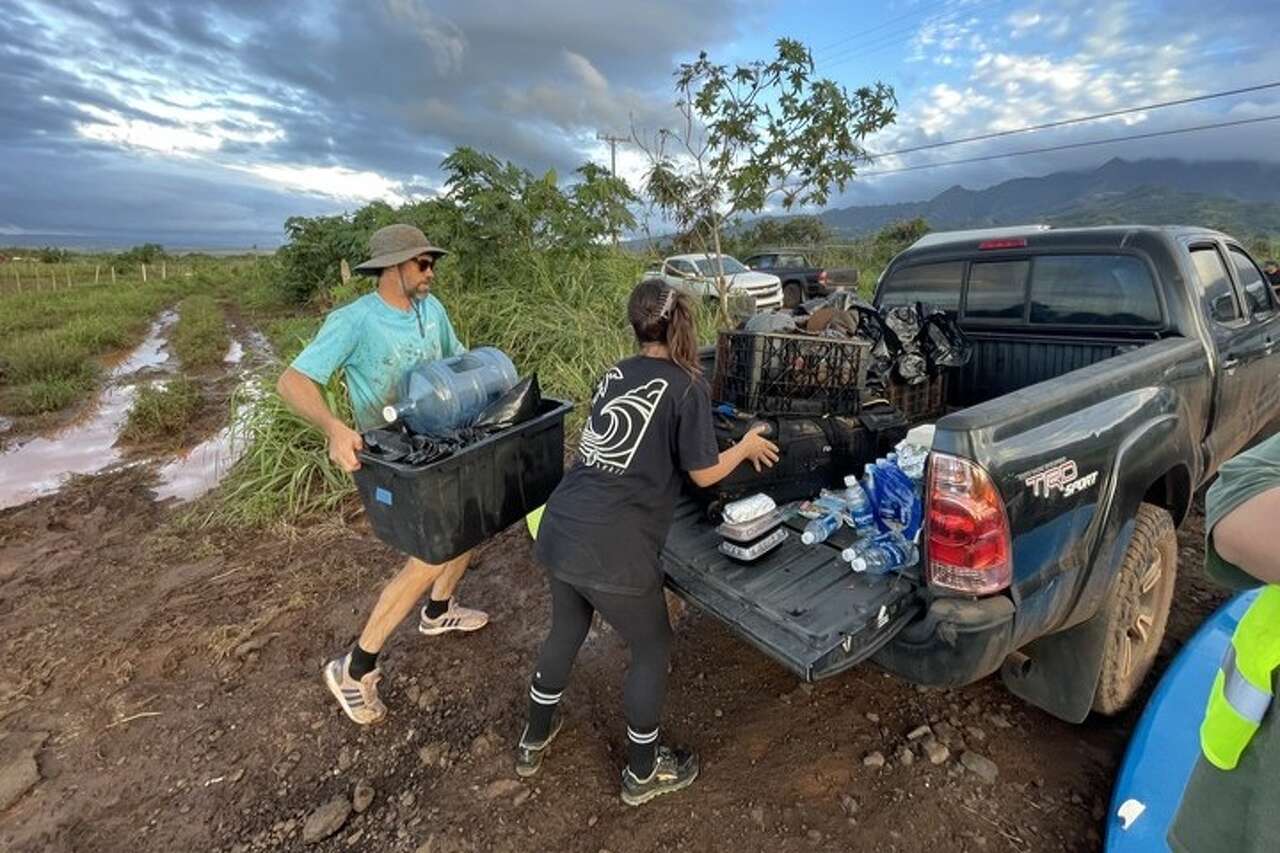
As it turns out, these weren’t the only pets being retrieved from flooded properties. Alongside Briddell and Yim, who brought back their cats as well as bags of clothes, farming equipment, and anything else they could salvage, a maritime animal rescue operation emerged.
“People have been showing up with paddleboards and kayaks to help,” said Rain Barbour, head of Pule Kahu Outreach and Rescue, who was at the edge of an engulfed field with several volunteers. She and the others counted a total of a dozen dogs, five cats, and three chickens that had been paddled from inaccessible homes to safe harbor. At one remote house surrounded by water, the owner did not want to leave, so the volunteers left a week’s worth of food for her animals.
Briddell and Yim, who confirmed that their farm quarters were destroyed, are still taking inventory of their farm. “We may end up losing everything,” Briddell said. “But I’m hopeful for the mangoes. I’m hopeful for the breadfruit. The citrus? Maybe. Not the avocadoes.”
The couple also worry that young trees in a nursery they had been cultivating won’t rebound. Briddell, who is originally from California, had recently quit his job at a solar installation company on the island to tend to the agricultural business full time. Yim works as a nurse. Given the scale of the damage, they said it’s going to be hard to revive the farm.
“We’re going to take a little time to regroup,” Briddell said.


Leave a Reply