Hawaii Residents Return to Flood-Damaged Homes
Rising Waters and a Community in Crisis
As floodwaters begin to recede on Oahu, residents are returning home to assess the damage and, in many cases, what’s been lost. The return to normalcy is proving to be anything but straightforward, as the full impact of the storm becomes evident.
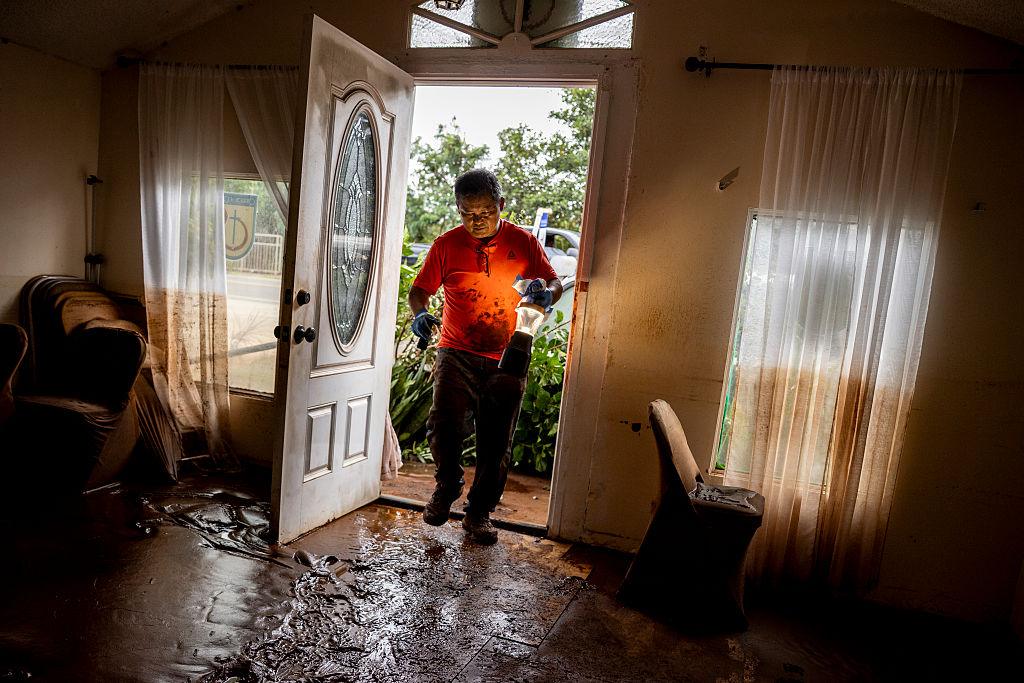
Officials lifted evacuation orders across parts of the island’s North Shore, including Waialua and Hale’iwa, after fears over the aging Wahiawa Dam eased and water levels dropped. However, the return has revealed the storm’s full impact: homes pushed off foundations, streets still partially submerged, and families sifting through mud-soaked belongings in search of anything salvageable.
In communities like Laie, the destruction has been especially severe. Local officials estimate roughly 100 homes were damaged overnight as floodwaters surged through neighborhoods, filling garages and living spaces with debris. Residents described water rising to waist level in just hours — overwhelming properties that had never flooded before and leaving behind a thick layer of mud and debris.
Rescue Efforts Highlight the Scale of the Crisis
Rescue efforts during the storm underscored the scale of the crisis. More than 230 people were pulled from dangerous conditions statewide, while crews conducted dramatic rooftop evacuations at the height of the flooding. The United States Coast Guard, working alongside Navy and local responders, rescued seven people and a dog trapped by rising waters — one of many scenes that highlighted how quickly conditions spiraled.
These efforts were not only about saving lives but also about navigating the unpredictable nature of the disaster. Emergency teams faced challenges such as blocked roads, power outages, and the constant threat of additional flooding, all of which made rescue operations more complex.
Shifting Focus to Other Islands
Even as O’ahu begins the long process of recovery, the broader emergency is shifting to the southeast. Authorities warn that the same storm system is now threatening other islands, with flash flood alerts and evacuation warnings issued for parts of Maui, Molokai, and Lanai. Saturated ground and damaged infrastructure mean even moderate rainfall could trigger new flooding or landslides in the days ahead.
This shift highlights the ongoing risks faced by the entire state. While Oahu is focusing on recovery, other areas are bracing for potential new disasters, creating a multi-pronged emergency response.
A Historic Disaster with Long-Term Consequences
The flooding is described as the worst Hawaii has seen in more than two decades and has already caused widespread destruction, with early estimates suggesting more than $1 billion in damage to homes, roads, and critical infrastructure. Power outages, road closures, and disrupted water systems continue to complicate recovery efforts.
Despite these challenges, charity efforts to support residents affected by the flooding are already in progress. Local organizations and volunteers are stepping up to provide aid, food, and shelter to those in need.
A New Phase of Recovery
For residents now returning home, the crisis is no longer about escape, but recovery. And as cleanup begins on Oahu, the danger is far from over — it’s simply moving.
Communities are coming together to rebuild, but the road ahead remains uncertain. With the threat of further storms and the lingering effects of the current disaster, the focus remains on resilience, unity, and the long-term recovery of the island.


Leave a Reply