The Green River Carves Through Utah’s Uintas as Mountains Dipped First
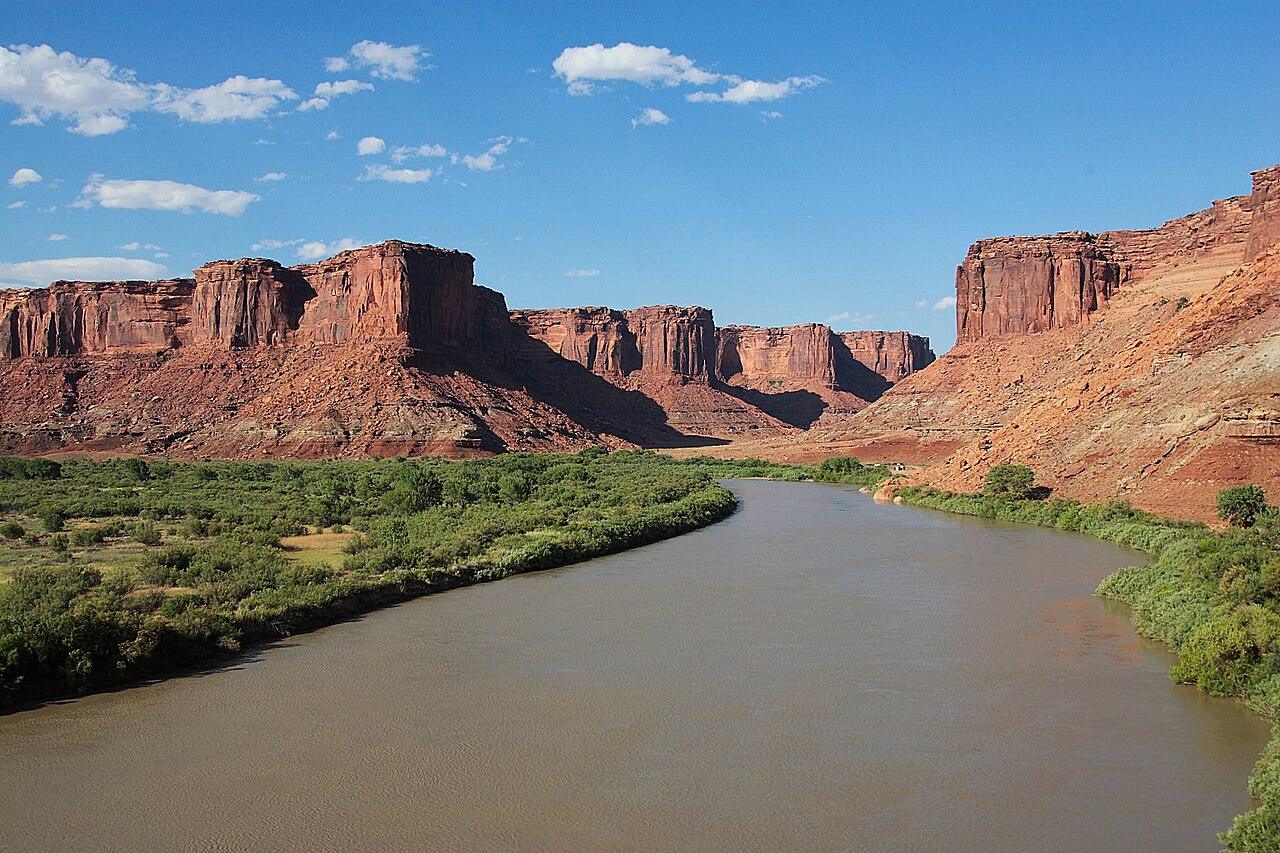
The Enigma of the Green River and the Uinta Mountains
The Green River, a major tributary of the Colorado River, presents one of the most intriguing geological puzzles in North America. It flows through the Canyon of Lodore, a striking gorge flanked by towering rock walls that rise over 2,300 feet above the rushing waters. This canyon, known as the Gates of Lodore, serves as a dramatic entrance to a landscape that defies conventional understanding of how rivers interact with mountain ranges.
Adam Smith, a researcher in numerical modeling at the University of Glasgow, describes the river’s path as “such a weird path.” Normally, rivers tend to circumvent obstacles like mountains, but the Green River cuts directly through the Uinta Mountains—a long, high range that should have redirected its course. The Uintas are approximately 50 million years old, while the Green’s current route across them is only between 8 and 10 million years old. This discrepancy has left scientists puzzled about the history of drainage in the region for generations.
This mystery dates back to the 19th century when John Wesley Powell explored the Green and Colorado rivers. He sought to understand the logic behind the landscape and rejected the idea that the river simply followed cracks in the rock. Instead, he proposed that the river had carved its own channel, creating gorges through erosion. While his concept of an older river standing firm against rising mountains was compelling, later geologic dating failed to support this theory. The Uintas were already ancient when the Green took its modern course, suggesting that the canyon was more of a problem of rerouting rather than resistance.
Over the years, two main theories have emerged to explain how the Green River managed to cross the Uinta Mountains. One suggests that the Yampa River system to the south may have captured the Green’s flow, while another proposes that seasonal flooding caused by sediment deposition allowed the river to bypass the mountains. However, both explanations struggle to account for the scale of the canyon and the distinct features left on the landscape.
A New Perspective on the Uinta Mountains
Recent research has shifted the focus from surface-level processes to deeper geological mechanisms. Scientists now believe that the Uinta Mountains did not simply wait to be cut through. Instead, they may have undergone a process called “lithospheric drip,” where parts of the Earth’s crust sink and then rebound. This occurs when dense minerals form under high pressure, creating a heavy root that detaches and sinks into the mantle. As this material moves downward, the surface above can sink, and once the load is removed, the area rebounds, creating a distinctive bullseye pattern on the topography.
Studies using seismic tomography—often compared to a CT scan of the Earth—have revealed a cold, rounded object deep beneath the Uinta Mountains. This structure aligns with the theory of a detached drip, and its estimated age (2–5 million years) matches the timing of the Green River’s establishment of its cross-mountain path.
A Landscape Shaped by Deep Forces
This new understanding suggests that the landscape was temporarily simplified, allowing the Green River to find a passage through the Uinta Mountains during a period of low elevation. Once established, the river continued to erode and carve features like the Lodore Canyon as the mountains rose around it.
In this view, the canyon is not just a testament to the persistence of water but also a record of profound shifts in the Earth’s buoyancy. The mountains themselves may have dipped and then risen, while the river seized the opportunity and maintained its course.
This interplay between tectonic forces and river dynamics highlights the complex and often surprising ways in which the Earth’s surface is shaped over millions of years.


Leave a Reply