The Homeschooling Secret
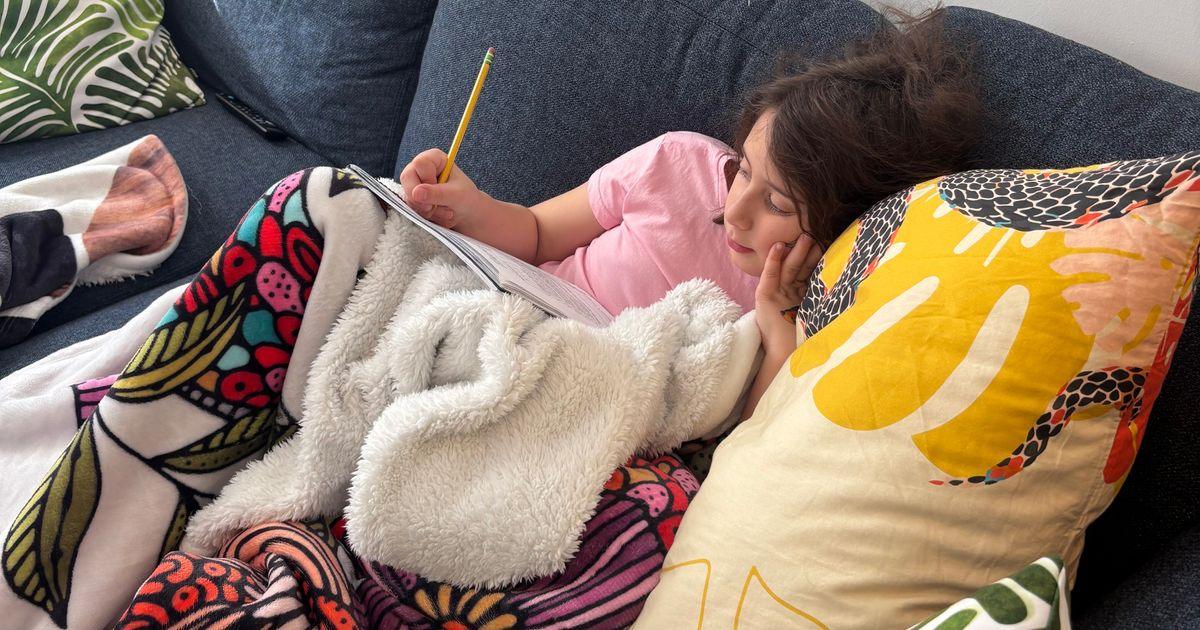
The Homeschooling Scene in New York City
For an idealized image of homeschooling — a glimpse of the life parents and children might lead off the clock, out of institutions, on their own — one could do worse than visit Heckscher Playground on the south end of Central Park early on a Wednesday afternoon. Most of the kids in New York are still in their classrooms, but a sizable group of children meets here weekly. Kids arrive with their parents, holding hands or racing ahead. Some are neatly dressed, some of them messy; there are girls with cute headbands and girls with hair dyed blue. They drop their water bottles and let their backpacks jump up and down on their shoulders as they break into a run after spotting friends. They cluster into pairs or groups. They self-organize soccer games or sit playing cards. Some of them climb rocks.
Homeschooling, long associated with hippies and religious conservatives in the U.S., is in the middle of a rebrand and a boom. In New York City, the number of children being educated at home increased 324 percent from 2017 to 2023; nationwide, more than 3 million children are homeschooled. Even Jonathan Haidt — the author of The Anxious Generation and our nation’s current sage of adolescent failure to thrive — has come out in favor of homeschooling, arguing on the Ezra Klein podcast, “If you want to send me someone who’s going to do well” in higher education, “don’t send me someone who has mastered Instagram. Send me someone who is homeschooled and never had any of this garbage. They’re able to pay attention. They’re able to read a book.”
There are around 16,000 homeschooled children in the city, and they generally fall into one of three groups: religious homeschooling families; “un-schoolers,” who aim to learn entirely outside traditional student–teacher hierarchies; and a new generation of homeschoolers who share some of the philosophy of the un-schoolers but are more straightforwardly ambitious in their plans for their children. It’s this last group that dominates the regular meetup at Heckscher Playground. The gathering doesn’t really have a name, which feels appropriate for the set. It’s the “Wednesday meetup” or, sometimes, “Wednesday recess,” and is loosely organized by Olena Blumberg, one of the community’s most prolific loose organizers.
Blumberg is a homeschooling mother of daughters ages 9 and 13 and a moderator of the NYC Secular Homeschoolers on Facebook, a group with some 2,000 members. Small and wry, she jumps between irreverence and intensity when she speaks. “I always expected to teach them just after school,” she tells me. “And then I thought, ‘But when will they have time to play and read?’” Her discussions of homeschooling carry a hint of conspiratorial irony, as if the exercise of what parents like her are engaged in — educating children — is at once monumentally important, a little silly, and totally exhausting.
Homeschooling in the city can be administratively difficult. There are states where keeping your children at home requires little more than an email stating your intention to do so. In New York, parents must outline their educational programs and goals annually and add updates throughout the year. Every few months, Blumberg’s Facebook group lights up with questions about how paperwork should be filed. “It’s hard work,” Blumberg, who has a Ph.D. in mathematics, says.
At Heckscher, the parents break into smaller groups, some sitting with their children near a sandbox, others finding a seat along a low stone wall that doubles as a bench. One mother tries to persuade others to bring their kids to an educational event at Yale over the weekend. Blumberg declines. “I cannot spend another weekend at Yale,” she says. Haidt’s message had definitely reached this crew. “I’ve heard,” one mom tells me, “that colleges like homeschooled students.”
Most of the parents at Heckscher are not absolutely opposed to traditional schools, but they were concerned about bullying and competition, falling test scores, and short attention spans. One of the women at Wednesday recess had started homeschooling her autistic son after he began to have stress-induced seizures at school. Another had always wanted to teach her child and was in the process of moving from Chicago in part because the homeschooling community is so active here.
At home, the parents I met argued, their children were more self-motivated, better rested, and less anxious than their peers in normal classrooms. They can read a book without distractions or devote hours of attention to a single subject. Parents, in turn, can carefully measure their child’s interests, skills, and learning styles, teaching them to become discerning à la carte consumers of classes and extracurriculars. It presents a kind of logical endgame to our current educational and child-rearing trends, offering the ultimate in parental agency and in individual attention.
The College Path for Homeschooled Students
A few hours’ drive north of the city, a woman named Lisa Davis has been running a college consultancy for homeschooling families for over a decade. She successfully taught five children of her own before sending them to college, and she offers families a road map for doing the same. She serves families that “world school” while traveling and conservative religious families that aim to preserve a certain orthodoxy in their household. Davis wields the kind of calm authority you might expect from someone who kept multiple children at home with her and came out sane. “The minute I heard your voice I calmed down!” reads one testimonial on her website.
The matter of college comes up often among homeschooling families, possibly because, having opted out of institutions once, it’s not a given that a university degree is on the table. When families come to Davis seeking guidance, she emphasizes how important it is to tell their homeschooling story well: Why they made this choice, and how it has played out.
Davis is skeptical that universities seek out homeschoolers because they are more self-motivated. “Homeschoolers love to say that,” she tells me. But she says the advantages provided by avoiding traditional education are real: “More and more, I see traditional students falling behind and I see them just addicted to their phones and wanting instant gratification in every area of their life. At least in the homeschooling families that I work with, they’re not falling into that trap. I would even say anxiety-wise, they’re not falling into that trap.”
For college applications, homeschooled students need to show some concrete evidence of their educational attainment. A parent can give their kids all the A’s in the world, and it will mean nothing to an admissions officer. “The thing that a lot of homeschoolers forget about is letters of recommendation,” Davis says. “While the parent can write that counselor letter, it’s not like a teacher recommendation.” For these, Davis recommends taking community-college classes, hiring a tutor, or going online. This is where parental agency really kicks in. The selection of online classes, tutors, and schools available has exploded since the pandemic.
“A lot of my families, they’re handpicking not just ‘Oh, here’s an online academy,’” Davis tells me. “You’re handpicking a chem teacher. You’re handpicking the AP lit teacher. You know what format works best for your student. You know what kind of level, what kind of rigor, if your student is into a particular subject academically.”
Expanding Educational Opportunities
Sometimes the line between a traditional school and resources for homeschoolers can be hard to discern. Different Directions, a homeschooling co-op above a synagogue in Hell’s Kitchen, offers small classes for elementary-, middle-, and high-school students. Its director, Tinamarie Panyard, can rattle off the colleges that have accepted some of her former students: NYU, University of Chicago, MIT, Berkeley. Panyard’s own daughter, Lottie, is a freshman at UC Santa Barbara, where she is deciding between majors.
“Lottie’s whole last year was about getting into college,” Panyard says. The family hired a writing coach to help with her applications. She opted not to take the SAT or the ACT but to focus on her skills as a performer and musician. They played to her strengths. “You can do that as a homeschooler. You have that time,” Panyard says. At UCSB, Lottie says, she felt just as prepared as her classmates. She made friends quickly; she struggled with a glitchy attendance app on her phone.
Another former homeschool student, Anika, tells me that she felt had an advantage over her peers at the University of Wisconsin–Madison, where she is a junior. “None of my education happened at home, and none of it was conducted by my parents. I took classes at institutions and with professionals,” she says. “Even just structurally, the classes were an hour or an hour and a half.” The transition to college felt nearly seamless.
The Broader Implications of Homeschooling
Haidt’s message has spread so widely in part because he tapped into a well of parental anxiety: How can we maximize achievement for our children while minimizing the pressure they feel?
As homeschooling numbers climb, child and educational advocacy groups have raised alarms about abuses — children who are neglected or simply not educated or who fall off the map. Homeschooling groups, critics say, claim high numbers of college-bound students and graduation rates that are difficult to confirm. The feeling that parents have, however — that choice and hard work can replace and outdo institutional learning — is real and reflected in their expanding ranks.
Blumberg’s kids have eclectic and varied interests. In addition to math, science, sewing, and Russian, Blumberg’s 13-year-old daughter has been a member of an improv group. Last year, Blumberg invited me to watch her perform at an annual Homeschoolers Talent Show with a program listing dozens of singers, cellists, piano players, and dancers.
One performer stood uncomfortably onstage while his music was being cued, staring at a shelf of hair that protruded out and up from his forehead, until, when the music came on, he erupted into an impassioned version of Adele’s “Set Fire to the Rain.” After he hit the last note, he smiled, nodded, and walked off. Another group, made up entirely of siblings, played a rendition of “Surfing Safari,” and before they arrived onstage, the eldest of them announced that he had made his guitar out of “New York City street trees.” He was in the process of making some street-tree ukuleles, if anyone wanted to buy one.
The answer to Haidt’s concerns about anxiety and focus, for the homeschooling parent, requires a good deal of self-sacrifice. Most have to give up their careers and their free time to educate their children at home. When I ask the group at Heckscher if they feel like staying home was an easy choice, they all nod at first. Then someone says, “Well, actually, of course it is a sacrifice. It’s a huge sacrifice.”
One mother, an artist named Michelle, agrees. “It is a lot, but it changes your perspective,” she says. “When you were this ambitious person, looking at yourself through the perspective of what you were achieving. And that’s not all there is. I like being able to sit with my daughter in the subway and say, ‘Well, what do we want to be doing in the fall?’”
Blumberg’s daughter’s improv group was the final act at the talent show. The premise of their skit was an animal rebellion at a zoo. There was a message embedded in the performance about group dynamics and independence: The tigers feuded with the penguins; someone pretended to be an exotic worm. But mainly what I witnessed was the familiar, sweet chaos of a kid performance. At the end, the kids tumbled into a disorganized curtain call, bowing together but not quite as one.
- Banjir Tunjangan untuk Jutaan Guru PNS & PPPK, Pesan Khusus dari Dirjen - April 8, 2026
- Nicholas Brendon, Xander Harris from Buffy, Dies at 54 - April 8, 2026
- How Did “Project Hail Mary” Fare With Science? - April 8, 2026

Leave a Reply