Interstellar Comet 3I/ATLAS Challenges Comet Chemistry Tests
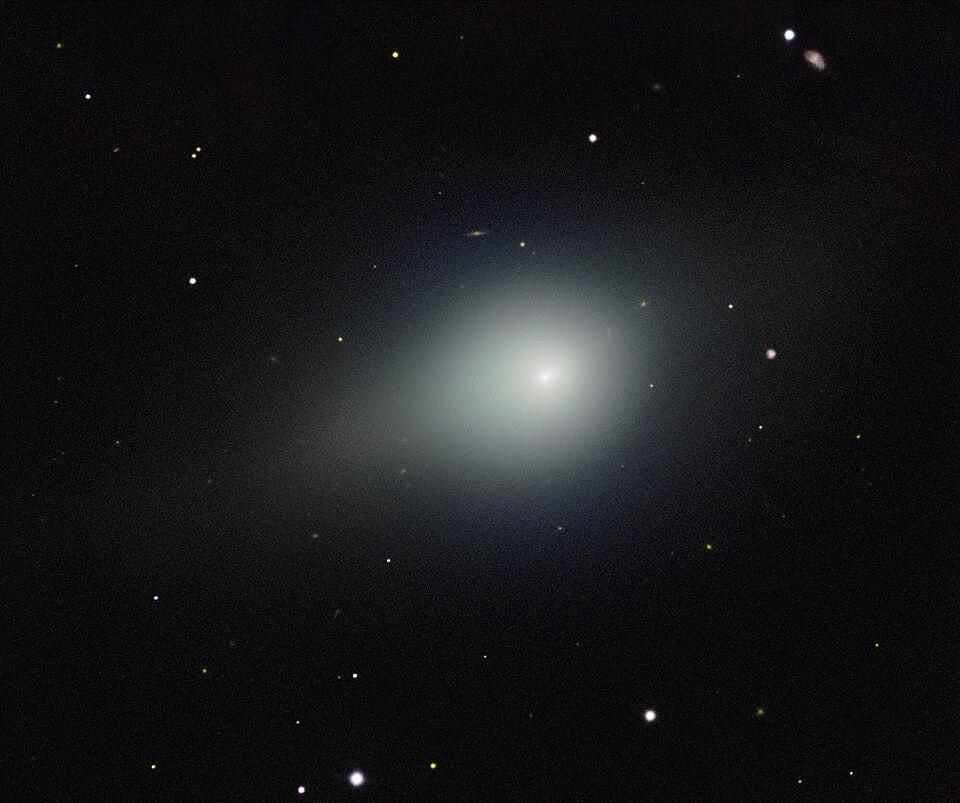
Discovery of Atomic Nickel Vapor in Comet 3I/ATLAS
In a groundbreaking observation, atomic nickel vapor was detected in the vicinity of comet 3I/ATLAS at a distance of 3.88 AU from the Sun, far beyond what is typically expected for such metals to exist in gaseous form. This discovery marked a significant shift in the classification of 3I/ATLAS, elevating it from a “rare discovery” to a “precision target.” The comet was first identified by the ATLAS survey in Chile on July 1, 2025, and became the third known interstellar visitor after 1I/ʻOumuamua and 2I/Borisov. The timing of its detection was crucial, allowing observatories to organize a coordinated campaign before the comet reached perihelion on October 29, 2025, and then departed on an orbit that would not be repeated.
The trajectory of 3I/ATLAS was based on precise calculations. It approached on a hyperbolic orbit, traveling at approximately 61 km/s, which meant it could not come any closer to Earth due to the crowded paths within the inner solar system. This high velocity and orbital geometry limited the physics that could describe its movement. Astronomers interpreted this as an opportunity to isolate the effects of typical cometary forces, such as jets driven by outgassing material. The absence of unusual acceleration beyond what could be attributed to outgassing supported the idea that natural processes, rather than engineered control, were at play.
Despite being classified as “natural,” 3I/ATLAS was far from “familiar.” Observations revealed a dusty coma with active jets stretching hundreds of kilometers sunward, associated with asymmetries in the heating of a rotating nucleus. The size of the nucleus was estimated to range from hundreds of meters to several kilometers, making it challenging to measure accurately due to its position deep within a bright and expanding cloud. However, the overall behavior of the comet aligned with familiar patterns: volatiles near the surface were heated by sunlight, gases escaped through weak points, and dust was pushed outward to form a tail influenced by both the comet’s movement and the solar wind.
A notable puzzle emerged from the chemistry of the comet. Spectral lines observed using the Very Large Telescope indicated the presence of atomic nickel vapor, while iron was not detected beyond instrumental limits. Rather than suggesting exotic materials, this finding pointed to a more plausible mechanism: nickel could have been transported in molecules that disintegrated under sunlight, releasing metal atoms at temperatures much lower than those required for metal sublimation. Infrared studies further revealed a complementary coma composition rich in carbon dioxide, carbon monoxide, and water-ice particles, painting 3I/ATLAS as a chemically stratified archive from another planetary system.
When the comet moved into a position where it was difficult to observe from Earth, spacecraft played a vital role. The Parker Solar Probe, using its WISPR instrument, captured images of 3I/ATLAS between October 18 and November 5, 2025. These images provided a unique perspective that ground telescopes could not replicate. Processing these images required careful attention to remove stray sunlight and exposure effects, highlighting the value of heliophysics instrumentation being repurposed for small-body science.
Another cross-mission opportunity came from the Europa Clipper. On November 6, the spacecraft gathered seven hours of ultraviolet observations from a distance of about 102 million miles (164 million kilometers). The Europa-UVS instrument was used to investigate the structure and composition of the coma. These observations underscored a recurring theme in deep-space engineering: even highly precise instruments can contribute significantly to science beyond their primary purpose, provided teams are aware of constraints, data outputs, and geometric considerations.
Ultimately, 3I/ATLAS offered a practical test case rather than speculative theories. Its one-time pass combined remote spectroscopy, solar-wind imaging, and opportunistic spacecraft measurements into a single dataset. This data set addressed a simple yet profound question: what does another star system send when it sends a comet? 

- USC menjual jenazah kepada Angkatan Laut untuk program pelatihan medis Angkatan Pertahanan Israel - March 30, 2026
- Dry all week, hope on the horizon - March 30, 2026
- Demitologisasi Beasiswa Luar Negeri - March 30, 2026



Leave a Reply