False Nipah Virus Posts Exploit Fear in Philippines
The Nipah Virus in the Philippines: No Active Threat, But Social Media Spreads Fear
Recent social media posts have sparked concerns among Filipinos about the potential spread of the Nipah virus in the country. However, health officials have repeatedly denied these claims, stating that there is no active threat of the virus in the Philippines. These rumors gained traction after reports of a Nipah outbreak in India were widely shared online.
False Claims and Misinformation Spread Online
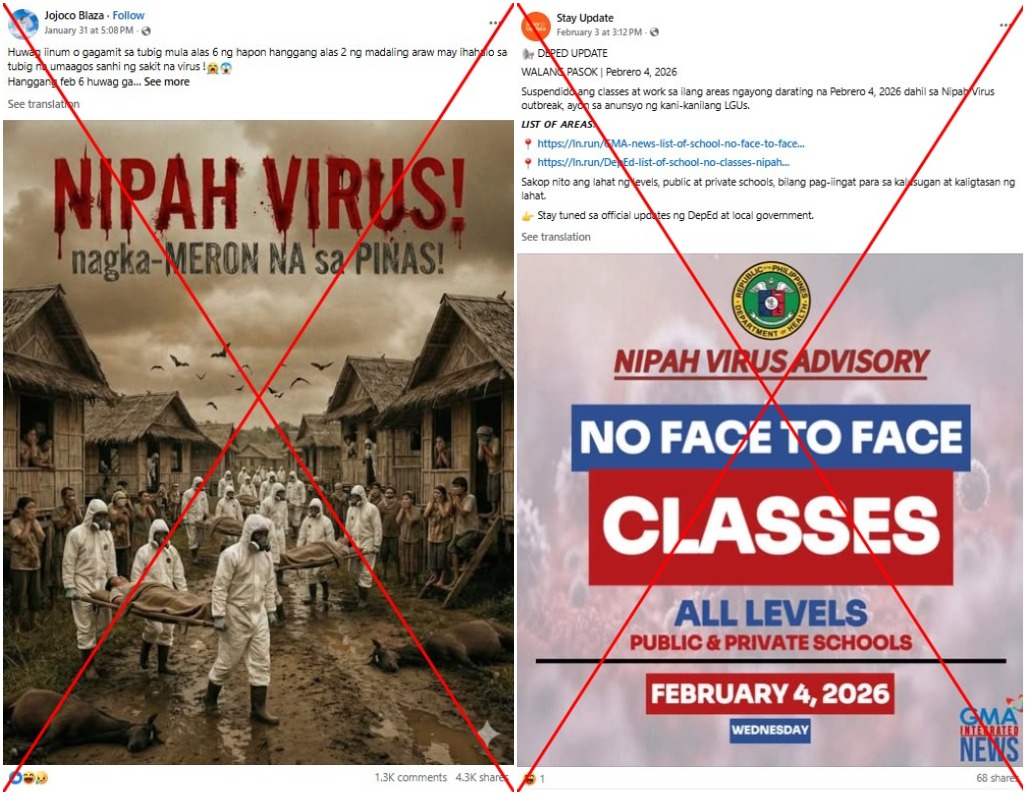
One of the most viral posts on Facebook featured a graphic in Tagalog language claiming, “Nipah virus! Already in the Philippines!” This post, which has been shared over 2,600 times since January 31, 2026, warned people to avoid using or drinking running water between 6 pm and 2 am. The message claimed that something causing the virus was being mixed into the water supply, urging people to follow this rule for safety.
Another post, purportedly created by GMA News, falsely stated that classes had been suspended due to an outbreak of the Nipah virus. The advisory, which bore the logo of the Department of Health (DOH), claimed that all levels of schools—public and private—were closed starting February 4, 2026.
These misleading graphics circulated widely on Facebook, leading to confusion and fear among the public. Some users even questioned whether it was safe to drink tap water, with one commenter asking, “So to be sure, we do not drink water from the tap?” Others suggested that water from refilling stations was safer than tap water.
Official Reactions and Clarifications
Despite the spread of these false claims, as of February 11, there have been no official reports of confirmed Nipah virus cases in the Philippines. The Department of Health (DOH) emphasized that the country remains Nipah-free.
On February 6, the DOH posted on its official Facebook page that there was “no active case of Nipah virus in the Philippines.” A graphic attached to the post noted that while the country remains open to arriving passengers at all airports and seaports, the Bureau of Quarantine continues to maintain strict surveillance at all arrival areas as part of border monitoring protocols.
When contacted by Bisakimia on February 9, a DOH representative reiterated previous statements, confirming that the country has remained Nipah-free since 2014. The health department also mentioned that during the only recorded Nipah outbreak in 2014, human cases were linked to the consumption of infected horse meat and close contact with sick individuals.
Understanding the Nipah Virus
The World Health Organization (WHO) states that Nipah is a zoonotic virus, usually transmitted from animals to humans, but can also be transmitted through contaminated food or directly between people. It is naturally carried by fruit bats and can cause severe symptoms such as respiratory illness, seizures, and brain inflammation that may lead to a coma.
There is currently no vaccine available for the Nipah virus, and its fatality rate ranges from 40 to 75 percent, according to WHO guidelines. Importantly, these guidelines do not mention any risks of transmission through the water supply.
Disproving the Rumors
The falsely shared graphics do not appear on the official online platforms of either the DOH or GMA News. Additionally, the Department of Education has also refuted the claims of school closures due to an alleged Nipah virus outbreak. In a February 9 Facebook post, the department called the rumors “fake news.”
Bisakimia has previously debunked other misinformation related to the Nipah virus, reinforcing the importance of relying on verified sources for accurate information.
Conclusion
While the Nipah virus remains a serious public health concern, especially in regions where outbreaks have occurred, the Philippines has not reported any active cases since 2014. Health officials continue to monitor the situation closely, and they urge the public to remain informed through official channels rather than unverified social media posts. As always, staying informed and cautious is key to preventing the spread of misinformation and protecting public health.

- Veteran Rides for Cancer Research in Charity Bike Race - March 30, 2026
- IDI Riau Buka Kesempatan Diskusi Dokter RSUD Tengku Rafian Siak tentang Kesetaraan Gaji - March 30, 2026
- Your Core Routine Is Incomplete Without These Oblique Exercises - March 30, 2026



Leave a Reply