AI Unearths 1,300 New Cosmic Oddities from Hubble’s Archive
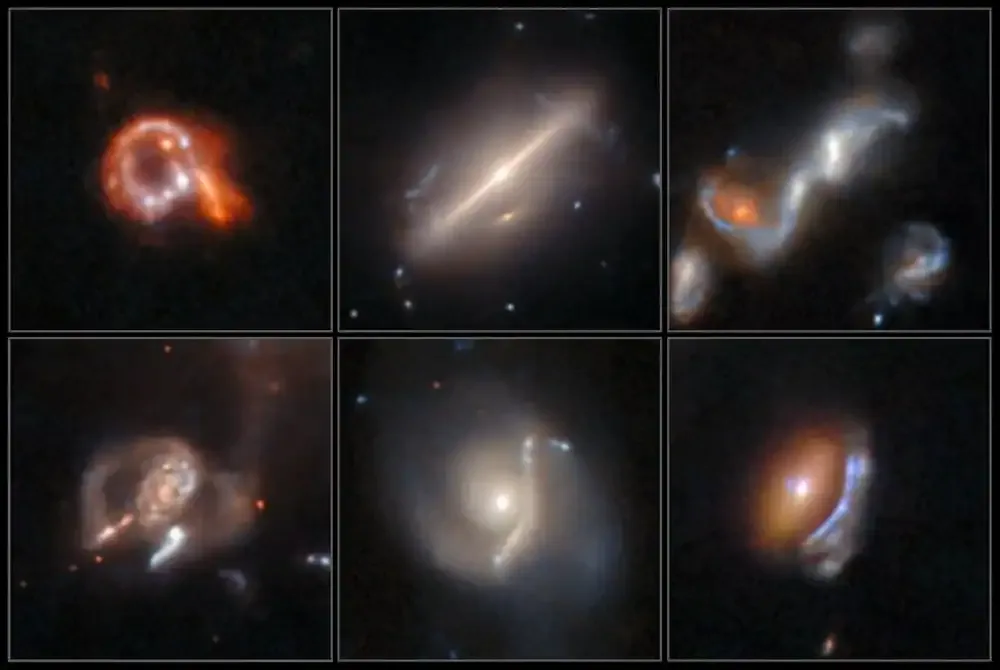
For more than three decades, the Hubble Space Telescope has been a cornerstone of astronomical research, capturing targeted images to address specific scientific questions. From mapping distant galaxies to studying nearby nebulae, Hubble has amassed an immense collection of data. Despite its remarkable contributions, the sheer volume of information has made it impossible for astronomers to analyze every single image in detail.
In addition to its primary targets, the Hubble archive also contains numerous unexpected objects that were not the focus of the original observations. These hidden gems have remained largely unexplored until now.
Two astronomers have taken a new approach by revisiting the Hubble archive with an innovative plan. They developed an artificial intelligence system designed to identify when something appears “wrong” or unusual. In just 60 hours of computing time, the tool flagged over 1,300 anomalies within 100 million Hubble snapshots. Many of these findings had never been documented in scientific literature.
A Sea of Cosmic Thumbnails
The study, published in Astronomy & Astrophysics, focused on the Hubble Legacy Archive and a dataset derived from it: 99.6 million “cutouts.” Each cutout is a small square view of the sky centered on an extended source, such as a galaxy, taken from the Hubble Source Catalogue.
These thumbnails are small but consistent—150 by 150 pixels, about 7.5 arcseconds on a side. They were created using Hubble’s Advanced Camera for Surveys and saved as single-channel grayscale JPEGs. This format preserves shapes while keeping storage manageable.
David O’Ryan and Pablo Gómez developed a system called AnomalyMatch to sift through this vast collection of thumbnails. Their initial goal was to find “protoplanetary disks,” rare, edge-on dusty structures where planets form. They trained the AI using only three known examples.
However, as the system learned what “unusual” looked like, it began identifying a wide range of phenomena. It uncovered warped gravitational lenses, galaxies colliding, and other cosmic oddities. Running on ESA’s Datalabs platform, the AI completed its task in two and a half days—an achievement that would have taken a human a lifetime.
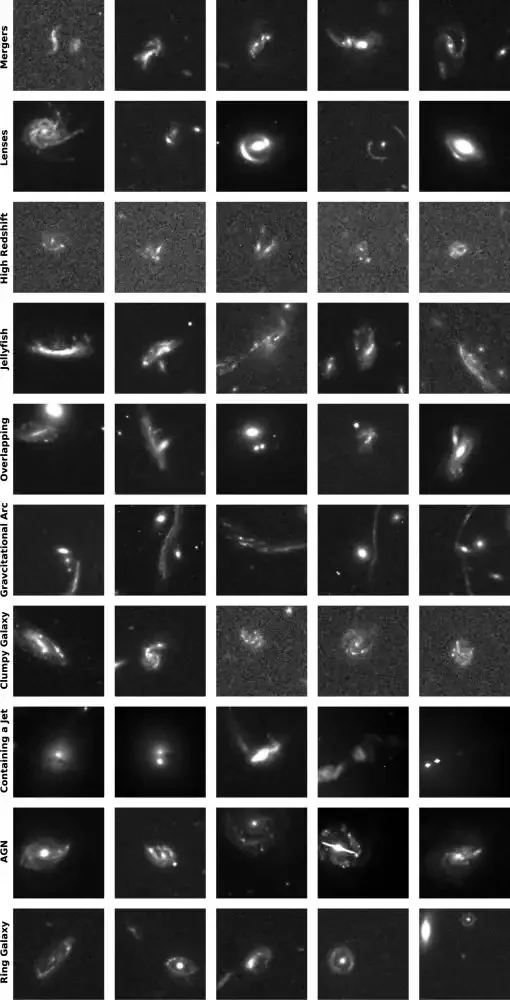
After completing its search, AnomalyMatch generated a ranked list of anomalies. The researchers then reviewed the 5,000 most unusual images manually. After removing duplicates caused by catalog errors (such as single galaxies mistakenly split into multiple entries), they identified 1,339 distinct anomalies.
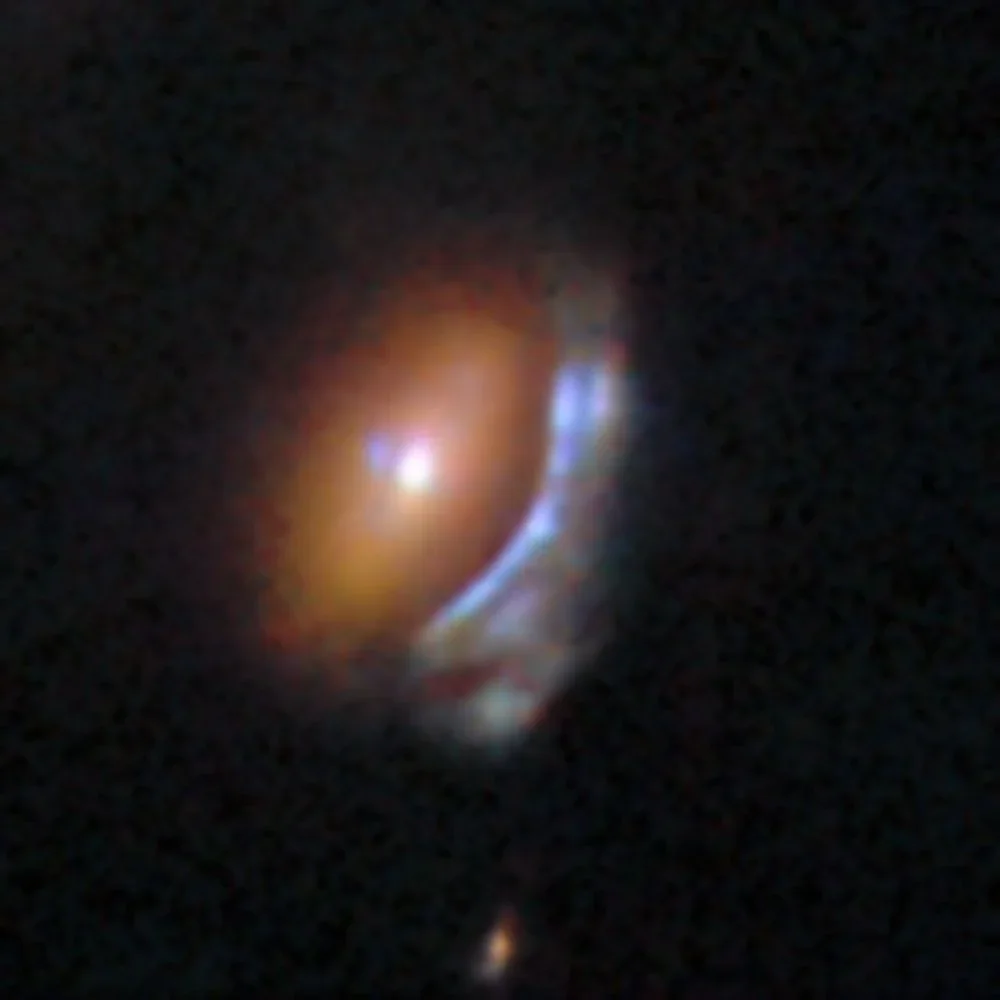
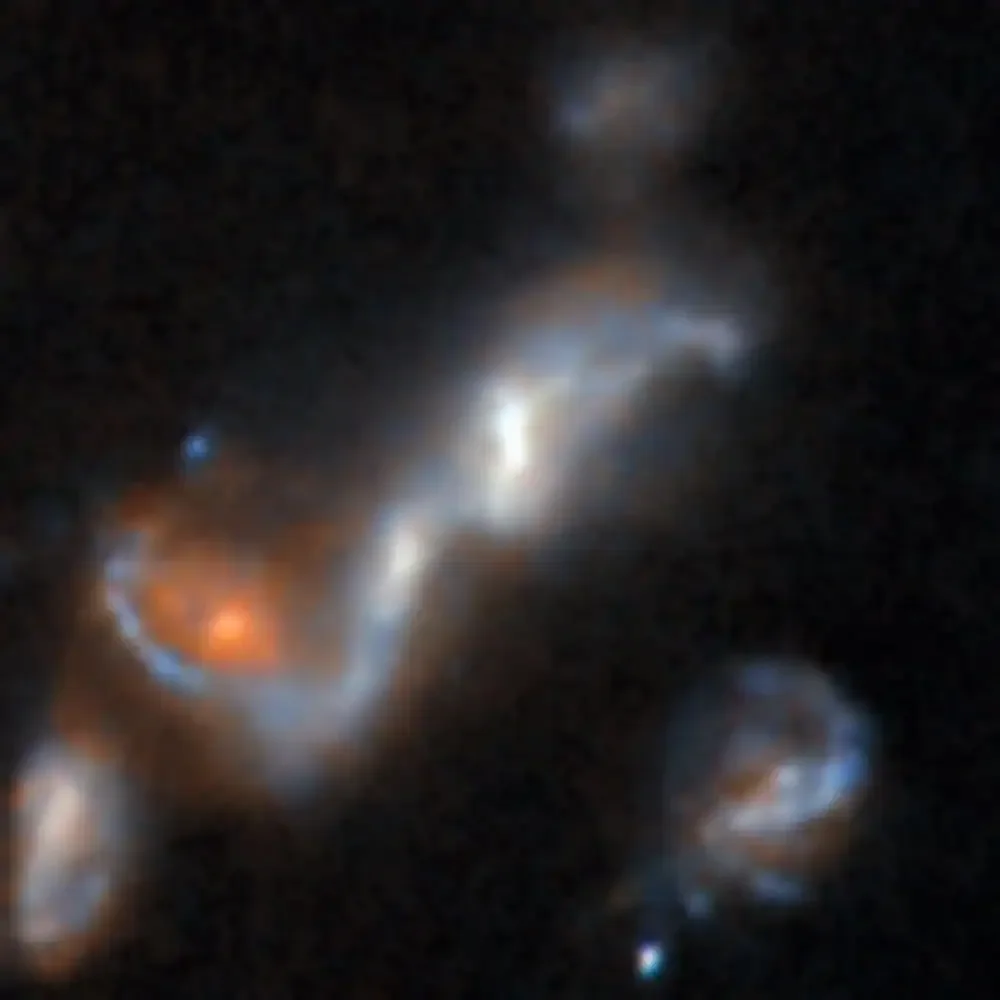
Approximately half of these were merging or interacting galaxies, distorted by gravity into lopsided smears and trailing tidal tails. Many others appeared as gravitational lenses—chance alignments where a foreground galaxy bends the light of a more distant object into arcs, partial rings, or bright mirrored knots.
A Gallery of the Bizarre
As telescopes become increasingly productive, discovery now relies heavily on triage—deciding which objects warrant closer examination. AnomalyMatch represents one potential solution to this challenge.
Hubble’s archive spans decades, but it is not a survey telescope. Researchers typically look for specific targets, and data outside the primary objective often goes unnoticed. The most surprising finding of this study is that about 65% of their final anomaly sample (811 objects) had never been documented in scientific literature.
Some of these “new” objects may simply be background galaxies or features overlooked during previous studies. The paper’s breakdown reads like a catalog of astrophysical edge cases: 629 merging systems, 140 candidate gravitational lenses, 35 jellyfish galaxies, and 43 objects whose forms defy classification. The authors chose not to force labels onto the unclassifiable sources, leaving them as intriguing mysteries.
These extreme cases help clarify complex astrophysical mechanisms. A strong gravitational lens can reveal how mass—much of it dark matter—is distributed within a galaxy. A jellyfish galaxy can show how a galaxy loses gas as it moves through the thin plasma of a cluster.
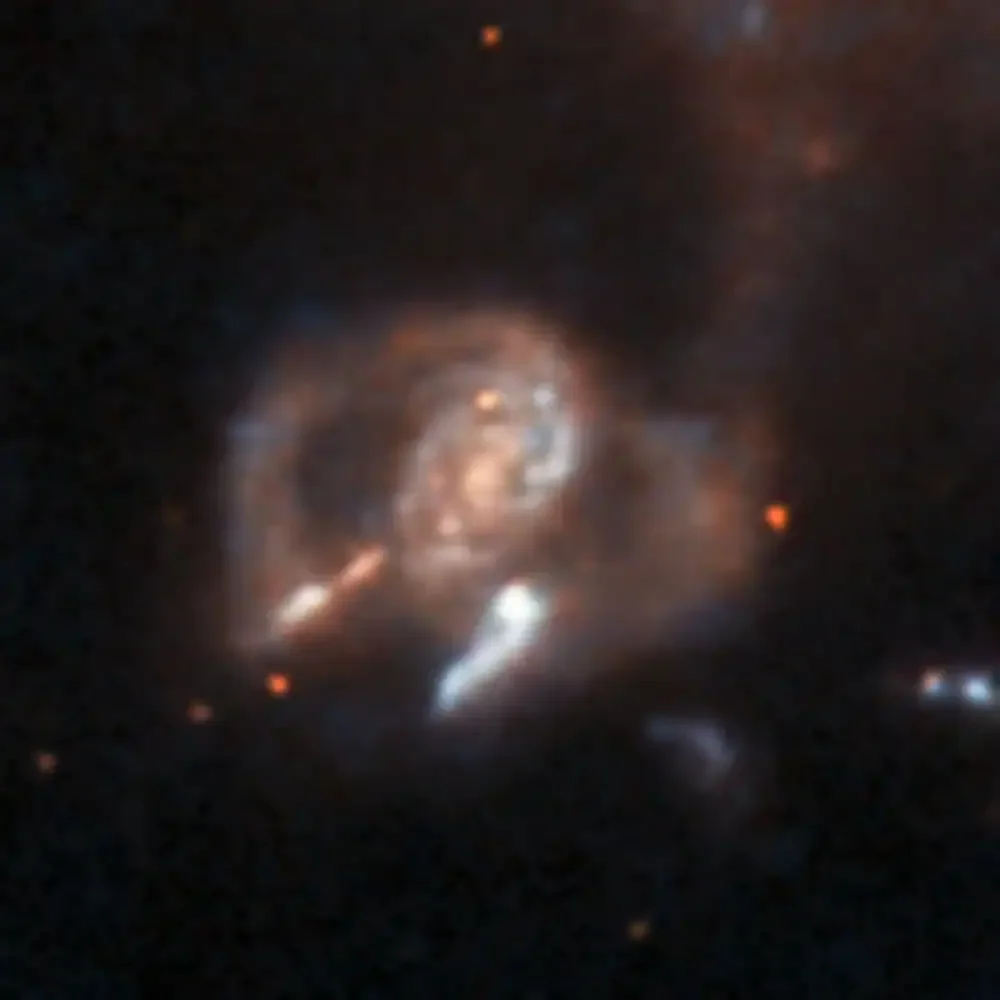
The study also highlights a shift in how astronomy will operate as new observatories come online. ESA’s Euclid mission is already mapping the large-scale universe, and NASA’s Nancy Grace Roman Space Telescope and the Vera C. Rubin Observatory will generate massive amounts of images with far less human selectivity than Hubble’s targeted approach.
In this future, the role of the astronomer may resemble that of an editor—reviewing algorithmically surfaced candidates, choosing which ones deserve further investigation, and determining which oddities are merely unusual and which could lead to groundbreaking discoveries.

- Nuggets’ Health Boost as Peyton Watson Returns at Key Moment - March 28, 2026
- 340B Bukanlah Jalur Kehidupan Kansas Pedesaan Seperti yang Diklaim | Opini - March 28, 2026
- 7 Keistimewaan Surat Maryam bagi Ibu Hamil - March 28, 2026


Leave a Reply