11 Wild Science Predictions That Actually Came True
The Power of Visionary Predictions in Science and Society
History is full of scientific ideas that initially seemed impossible, only to later become reality. These predictions, often dismissed as fantasy, have played a crucial role in shaping the world we live in today. From space exploration to medical breakthroughs, these “impossible” calls have not only redefined what is possible but also inspired generations of scientists, engineers, and thinkers.
Jules Verne and the Apollo-style Moon Mission
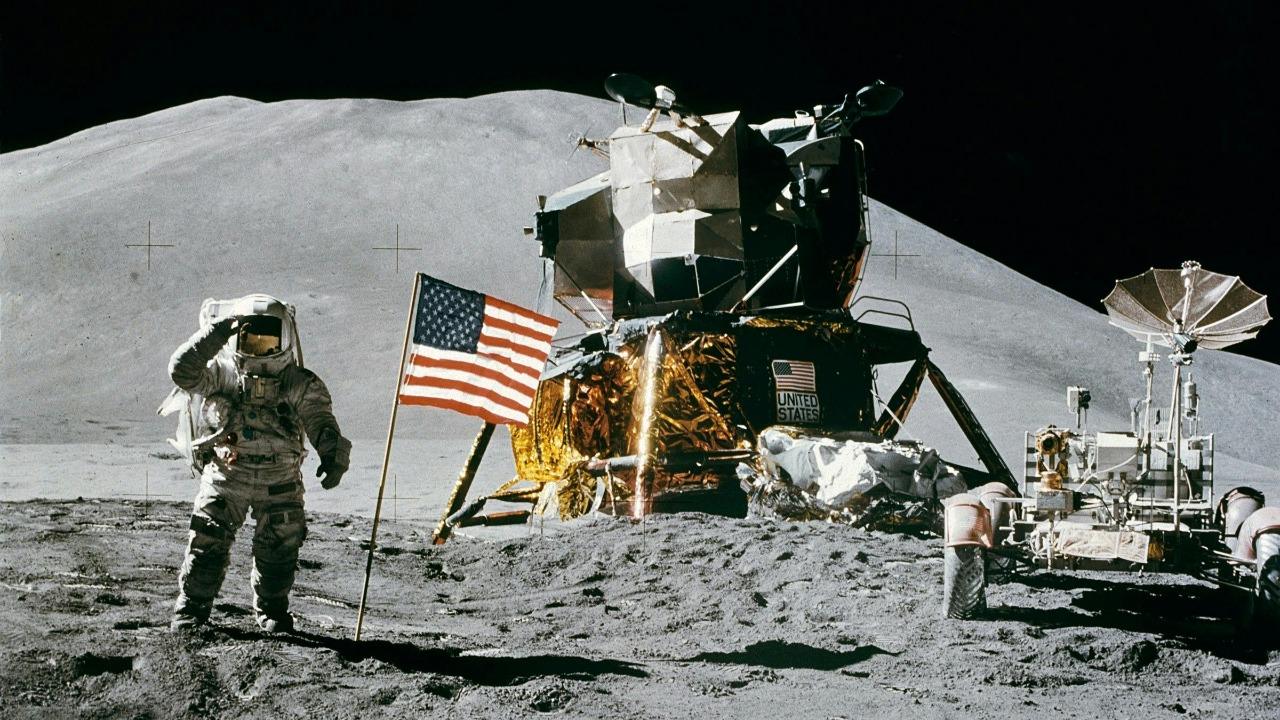
In 1865, author Jules Verne imagined a Moon mission in his novel From the Earth to the Moon. His story depicted a group of astronauts traveling to the Moon in a metal capsule launched from Florida, with a splashdown in the Pacific Ocean. This vision closely resembled the actual Apollo missions decades later. At the time, the idea of humans leaving Earth’s gravity was considered pure fiction. However, Verne’s detailed description of a crewed space mission helped normalize the concept of space travel, influencing future aerospace engineers and turning speculative fiction into reality.
Robert Heinlein and the Cold War
Science fiction writer Robert Heinlein predicted the Cold War long before it became a global reality. In his mid-20th-century stories, he described a prolonged standoff between the United States and the Soviet Union, complete with nuclear deterrence and ideological rivalry. Many at the time believed the post-WWII alliance would hold or that one side would quickly dominate. Heinlein’s vision, however, captured the complex geopolitical landscape that would define the 20th century. His work highlighted how science, particularly nuclear physics and rocketry, could lock superpowers into a tense equilibrium.
Ezra Stiles and U.S. Population Growth
In 1783, Yale president Ezra Stiles made a bold demographic prediction about the future population of the United States. He projected explosive growth for a young republic, an idea that seemed far-fetched at the time. However, census data later validated his forecast. Stiles treated population as a quantifiable variable, a concept that would later become central to the field of demography. His success showed that careful extrapolation of birth rates, migration, and land availability could yield surprisingly accurate forecasts.
Alfred Wegener and the Theory of Continental Drift
German meteorologist Alfred Wegener proposed the theory of continental drift in 1910, suggesting that continents move across the Earth’s surface. His idea was ridiculed by many geologists, who viewed the Earth’s crust as immovable. However, later discoveries in seafloor mapping and plate tectonics vindicated Wegener’s theory. His work demonstrated how a lone scientist, using cross-disciplinary data, could challenge deeply held assumptions and transform our understanding of the planet.
Spectroscopy and the Composition of Stars
For centuries, the idea of analyzing the composition of stars seemed impossible. However, physicists developed spectroscopy, which splits starlight into lines that reveal chemical fingerprints. This technique allowed scientists to identify elements like hydrogen and helium in stars long before they could replicate similar conditions on Earth. Spectroscopy has since become a cornerstone of astronomy, enabling the discovery of exoplanets and advancing our understanding of cosmology.
The Fall of Spontaneous Generation
For centuries, many scholars believed in spontaneous generation—the idea that living things could arise from nonliving matter. However, experiments by Louis Pasteur and others proved that microbes come from other microbes, not from thin air. This discovery laid the foundation for germ theory, sterile surgery, and modern epidemiology. It also demonstrated how deeply intuitive but incorrect ideas can dominate until proven otherwise.
The First Organ Transplant, Predicted in 1660
In 1660, early physicians speculated that major organs might one day be moved from one body to another. At the time, this idea seemed more like alchemy than medicine. However, when surgeons eventually performed successful kidney and heart transplants, they validated a centuries-old dream. This prediction shows how medicine often advances by pursuing ideas that initially sound like science fiction.
Stanley Kubrick’s Proto-iPad
In 1968, filmmaker Stanley Kubrick envisioned sleek, touch-controlled screens in his film 2001: A Space Odyssey. These devices resembled modern tablets and were used much like iPads today. At the time, such technology seemed absurd, but Kubrick’s vision anticipated both the hardware and the cultural shift toward constant screen use. His work highlights how visual storytelling can prototype user experiences long before engineers can develop the technology.
Jeane Dixon and High-Profile Assassinations
Psychic Jeane Dixon gained notoriety for predicting the assassinations of Martin Luther King and John F. Kennedy. While her predictions were controversial, they sparked discussions about the line between rigorous forecasting and intuition. Her case illustrates how the public often blurs the distinction between evidence-based predictions and coincidences, especially in high-profile events.
Superconductivity’s Once-Doubted Theory
When the microscopic theory of superconductivity first emerged, many physicists doubted its validity. The idea that electrons could move through a crystal lattice without resistance seemed like a mathematical trick. However, after experimental verification, the theory explained how certain materials could carry current indefinitely. This breakthrough underpins technologies like MRI machines and particle accelerators, demonstrating how radical theoretical claims can evolve into accepted science.
Science as a Way of Thinking
Behind all these stories is a deeper prediction about science itself. As physicist Carl Sagan noted, “Science is a way of thinking much more than it is a body of knowledge.” History is full of cases where accepted theories were overthrown by new ideas. This willingness to question and revise our understanding allows “insane” predictions to be tested rather than suppressed. For researchers, policymakers, and citizens, the lesson is clear: the next groundbreaking idea may already be in the works, waiting for the right moment to be realized.

- IDI Riau Buka Kesempatan Diskusi Dokter RSUD Tengku Rafian Siak tentang Kesetaraan Gaji - March 30, 2026
- Your Core Routine Is Incomplete Without These Oblique Exercises - March 30, 2026
- Mengapa Lutut Saya Memar Akibat Berlari? - March 30, 2026

Leave a Reply