How will the science of reading transform Syracuse schools?
Understanding the Science of Reading
Syracuse schools have faced challenges in improving student literacy through state test scores, which are the primary way schools are evaluated. In response to similar issues across the U.S., the Syracuse City School District has invested significant resources in contracts with literacy experts to change how teachers teach reading. One such group is The Reading League, a local nonprofit promoting the “science of reading” movement.
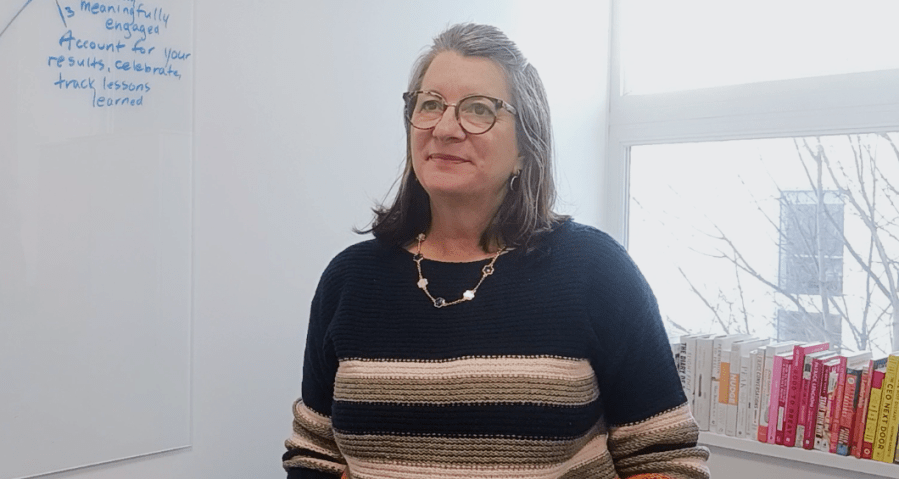
Maria Murray, director of The Reading League, recalls her childhood passion for reading, which led her to manually copy a book she loved. This passion eventually became her career, and she now works with schools to rethink reading instruction. The science of reading is not a specific model but a shift toward using cognitive science and psychology to influence teaching methods. It emphasizes phonics, connecting sounds to letters, and other strategies like Scarborough’s Reading Rope, which illustrates how language understanding and word recognition develop together.
The movement contrasts with the “whole language” theory, which focused on repetition and pairing words with images. While this method was once popular, it has been criticized for potentially causing learning disabilities. Dr. Seuss even acknowledged his role in moving away from “Dick and Jane” books.
The Role of Knowledge Brokers
Murray describes her organization as a “knowledge broker” for the science of reading. The Reading League began in her kitchen and has since grown, with the governor of New York committing to adopt the science of reading in education programs. The organization also highlights the importance of accurate teaching materials, as some outdated methods, like certain pronunciation guides, are no longer effective.
Innovative Teaching Methods
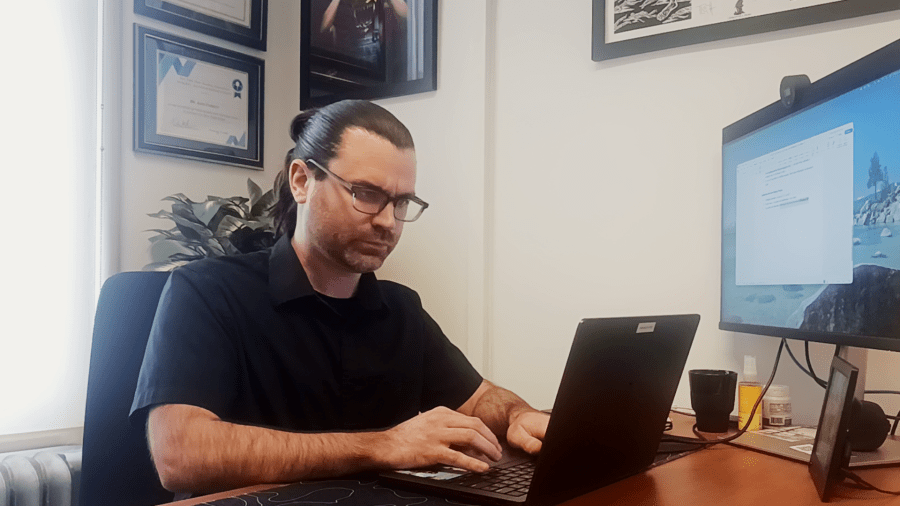
Alex Corbitt, a researcher at Syracuse University, experimented with integrating play into reading lessons. He transformed classrooms into talk show studios, where students engaged with stories creatively. This approach emphasized different perspectives and made learning more interactive. Corbitt believes that the best teachers inspire students beyond standardized measures.
Controversies and Challenges
While the science of reading has gained traction, it is not without controversy. Researchers Robert Tierney and P. David Pearson caution against adopting sweeping measures too quickly, as this could repeat past ineffective methods. Murray acknowledges that the science of reading is constantly evolving and needs to become the norm rather than an exception.
Corbitt supports the movement but stresses the importance of including diverse stories in English classes. He argues that focusing solely on basic literacy may overlook the need for functional literacy, which allows students to become critical readers.
Standardized Testing and Its Impact
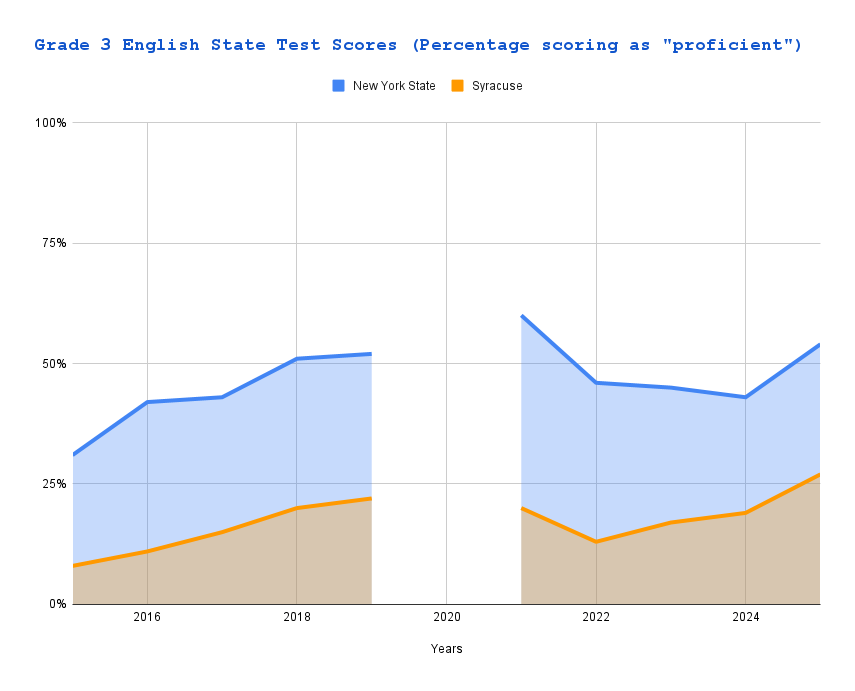
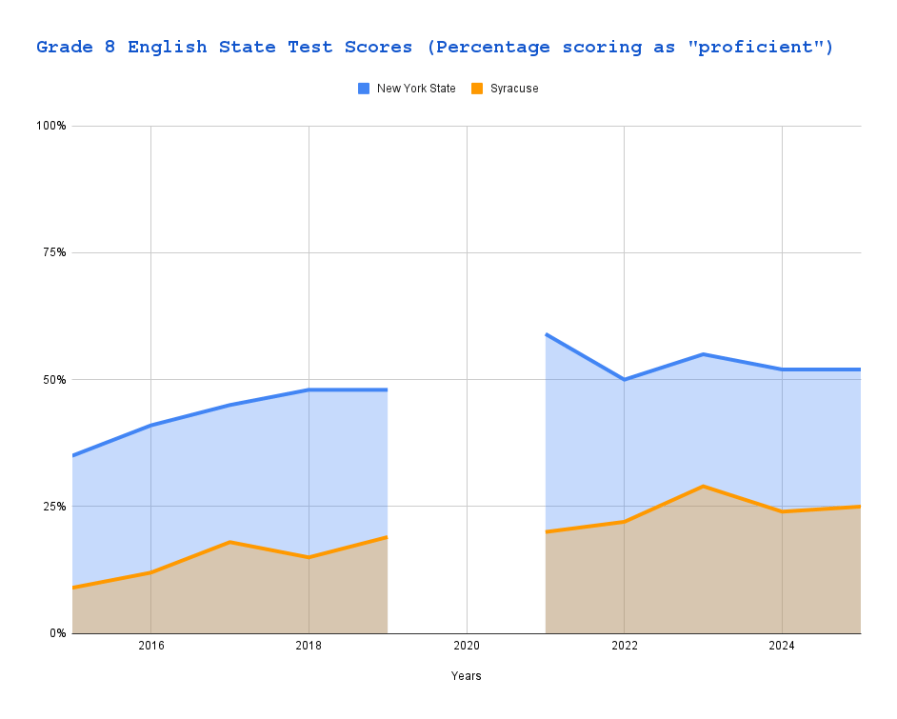
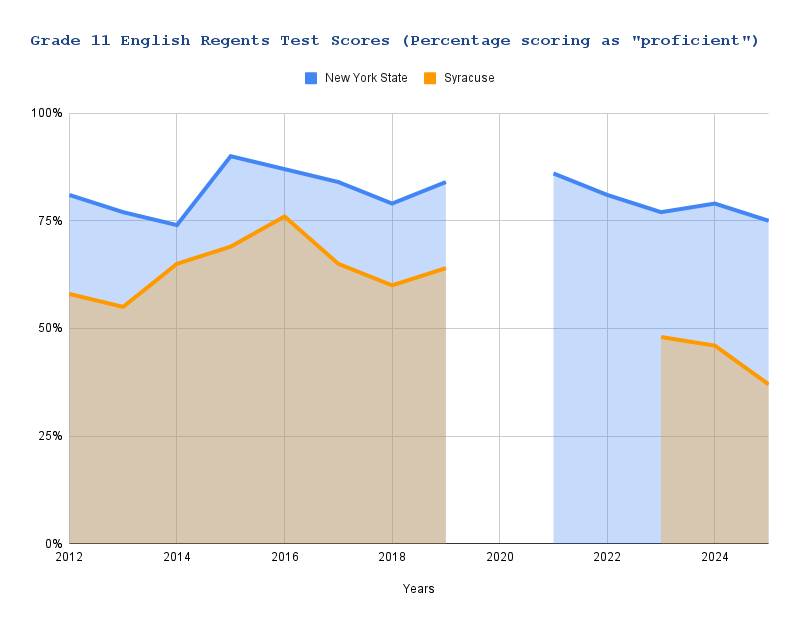
Syracuse schools consistently score low on state English tests, with only a fraction of students meeting basic literacy levels. Critics argue that standardized testing does not fully reflect real-world reading skills. The No Child Left Behind Act pressured schools to improve test scores, leading to “teaching to the test.” However, the pandemic disrupted testing data, creating gaps in understanding student progress.
Moving Forward
Superintendent Pam Odom aims to continue improving literacy in the district. The school board has consulted various organizations, including Lexia, to implement the science of reading. While some success stories, like Mississippi’s “Miracle,” highlight potential benefits, experts caution against assuming one method will work universally.
Murray uses a hiking metaphor to illustrate the challenges of teaching literacy, comparing it to preparing for a hike with the right tools. She emphasizes the need for teachers to be well-equipped to handle new educational methods effectively.

- Pemegang rencana Medicare Advantage UnitedHealth di 109 kabupaten akan kehilangan manfaatnya - March 30, 2026
- Red Flag Alert Issued for Kansas This Sunday - March 30, 2026
- Allianz Indonesia bagikan panduan manfaatkan THR untuk pendidikan anak - March 30, 2026



Leave a Reply