She Rebuilt Her Body After 70 — What Doctors Learned from Joan MacDonald

For decades, aging was widely accepted as a one-way decline. Muscle loss, reduced strength, and limited mobility were seen as unavoidable consequences of growing older. Joan MacDonald challenged that belief — not in her youth, but after the age of 70.
Born in Canada, Joan MacDonald spent much of her adult life struggling with health issues common among older adults, including hypertension, joint pain, and limited physical capacity. By her early 70s, doctors warned her that without lifestyle changes, her health trajectory would continue to worsen.
Instead of accepting decline, she chose a different path.
With guidance from her daughter, who worked in the fitness industry, Joan began a structured but conservative resistance training program. The goal was not aesthetic transformation, but functional recovery — improving balance, strength, and metabolic health. The changes that followed exceeded expectations.
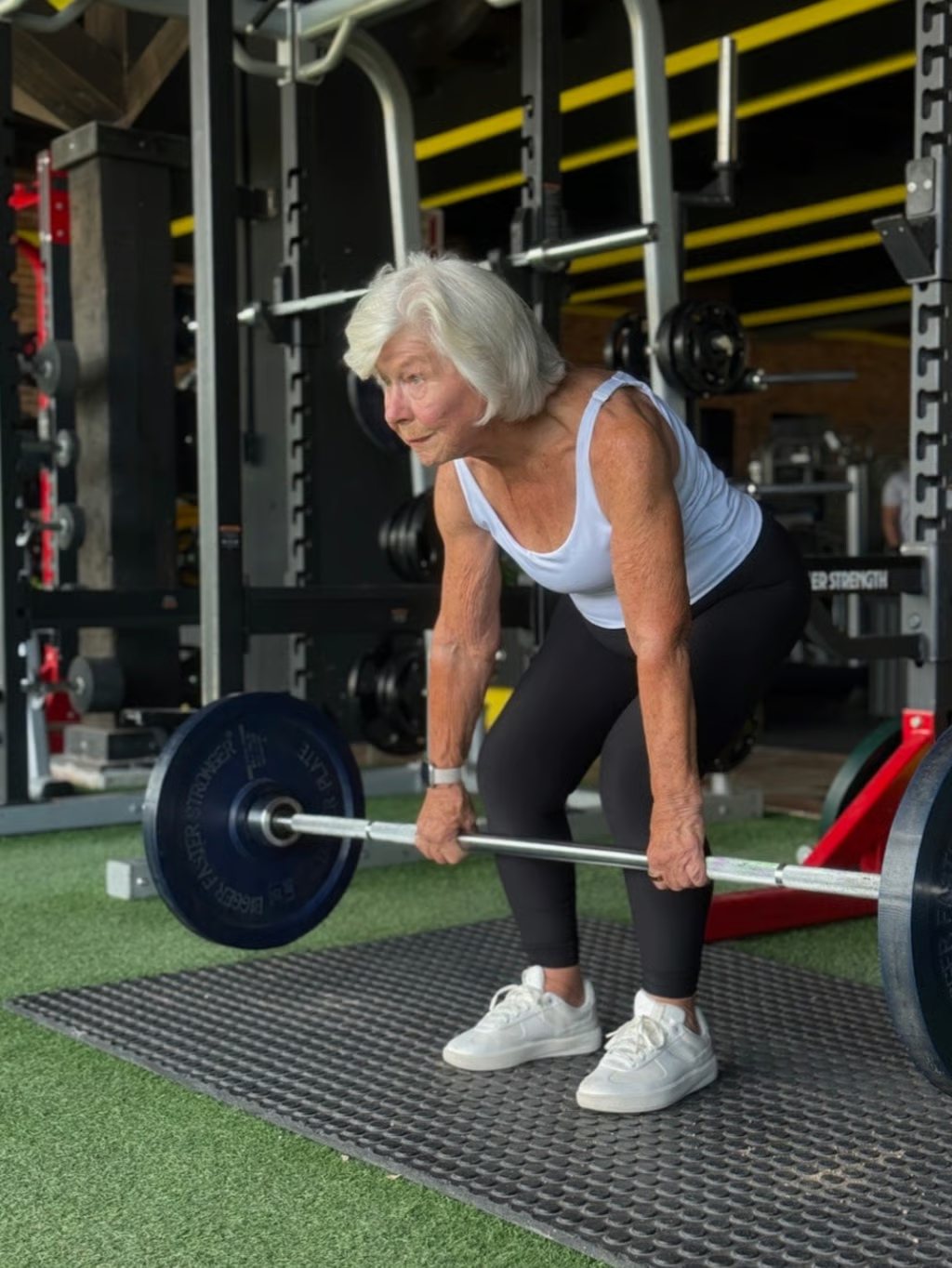
Within a few years, medical assessments showed significant improvements in muscle mass, bone density, and cardiovascular markers. Her strength levels increased steadily, reducing the risk of falls and improving daily mobility. What drew scientific and medical interest was not the speed of her transformation, but its sustainability.
Doctors observing her progress emphasized that resistance training played a central role. Unlike endurance exercise alone, resistance training directly counters sarcopenia — the age-related loss of muscle tissue. Muscle is not merely structural; it is metabolically active, influencing glucose regulation, hormonal balance, and inflammatory response.
Joan’s training was methodical. She did not lift excessively heavy weights or follow extreme routines. Instead, sessions focused on controlled movements, progressive overload, and adequate recovery. This approach aligned closely with emerging geriatric exercise guidelines.
Nutrition also supported her progress. Protein intake was sufficient but not excessive, paired with whole foods and consistent meal timing. There were no drastic diets or short-term interventions. The emphasis remained on adherence and recovery rather than intensity.
Perhaps most compelling was the psychological shift. Studies in aging consistently show that self-efficacy — the belief that one can influence outcomes — strongly affects health behavior. Joan’s visible progress reinforced motivation, creating a feedback loop that sustained long-term engagement.
From a clinical perspective, her case illustrates an important principle: biological age is modifiable, even when chronological age advances. While not everyone will experience the same degree of transformation, the mechanisms underlying her improvement are widely applicable.
Medical professionals caution that her journey should not be interpreted as a universal blueprint. Individual conditions, medical history, and physical limitations matter. However, her case demonstrates that aging does not eliminate the body’s capacity to respond to stimulus.
As populations age globally, healthcare systems increasingly focus on preserving independence rather than merely extending lifespan. Joan MacDonald’s experience aligns with this shift. Her strength was not about competition or performance, but about maintaining control over daily life.
Today, she is frequently cited in discussions about healthy aging, particularly for women, who face higher risks of osteoporosis and muscle loss later in life. Her story contributes to a broader reevaluation of what is possible after 70.
Joan MacDonald did not reverse aging. She redefined her relationship with it. And in doing so, she offered a living example of how consistent, evidence-based movement can reshape health far beyond expectations.

- Captain Skateland arrives in Rockford - March 23, 2026
- Pemprov Kaltim Cairkan Bantuan Pendidikan Gratis Tahap II Rp 117,55 Miliar - March 23, 2026
- Kunci Jawaban Bahasa Indonesia Kelas 5 Halaman 176 Kurikulum Merdeka - March 23, 2026



Leave a Reply