Top Baby Bottles for 2026: Anti-Colic to Breast-Like Styles
Choosing the Right Baby Bottle for Your Newborn
If you’re expecting your first baby, choosing the right bottle can feel like another overwhelming decision. Before your little one even arrives, you’re faced with endless options, each claiming to be the best for feeding, comfort, and sleep. To help you choose confidently, we’ve independently tested the best baby bottles available in 2026, including bottles for breastfed babies, assessing comfort, ease of use, and how well they support babies and parents.
Feeding your baby can feel stressful, especially for new or anxious parents. If you’re transitioning to bottles, stay calm and positive before offering the bottle. Here are some key factors to consider when selecting a bottle:
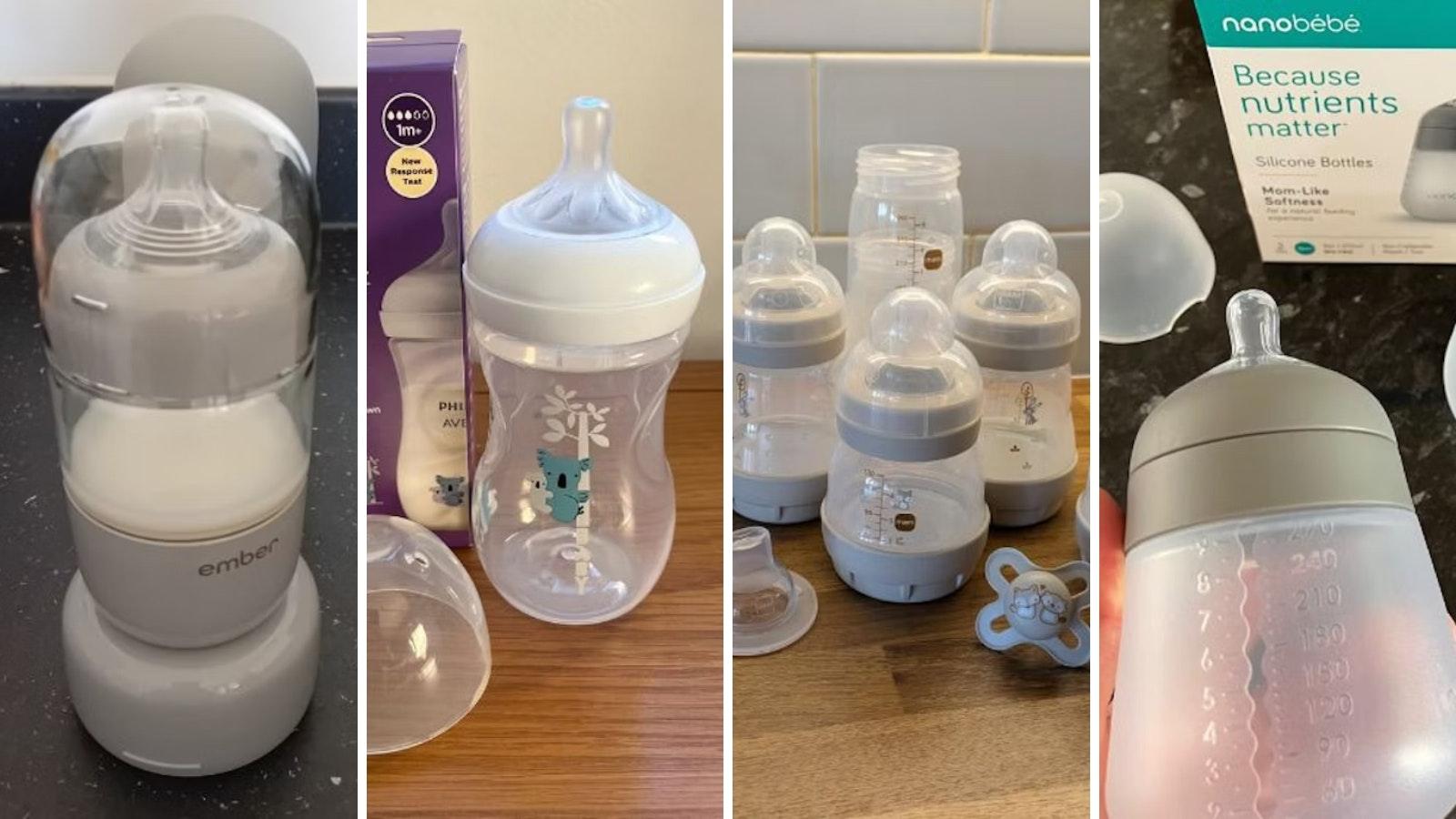
- Bottle shape: Some bottles come with handles (good for self-feeding), while others have wide necks for easier filling or cleaning. For example, the MAM Easy Star has handles, while Dr Brown’s bottles have wider necks.
- Size: Newborn bottles usually start at 90ml, with 130–160ml bottles suitable after a month. From 2–3 months, most babies use 250ml bottles, and larger bottles (up to 320ml) are available for bigger appetites. Midwife Angie notes that “research shows smaller bottles help to prevent overfeeding.”
- Teat options: Teats vary by flow rate (0–3 or slow, medium, fast) and material (silicone or latex). Slow teats prevent choking for smaller babies, while faster teats suit older babies. Natural-shaped teats can help with combination feeding.
- Breastfeeding compatibility: Bottles like Tommee Tippee Natural Start, Nuby, and Nanobebe mimic the breast for easier combination feeding. Nanobebe also has a soft, breast-like feel.
- Anti-colic features: Bottles with anti-colic systems reduce the amount of air your baby swallows, helping prevent discomfort and spit-up.
- Ease of cleaning: Consider whether bottles can be sterilised in a microwave, dishwasher safe, or easy to brush. Complex shapes can make cleaning harder.
- Material: Bottles are made from glass, silicone, or plastic. Glass is eco-friendly but heavier, while silicone bottles like Nanobebe feel soft and breast-like. Plastic bottles are lightweight and durable, but may stain or lose markings over time.
- Weight & durability: Check if the bottle is easy to handle, long-lasting, and whether markings stay clear over time.
- Assembly: Look for bottles that are easy to put together, ideally one-handed for night feeds.
- Price: Some bottles cost more initially but can save money if your baby takes to them easily or if they come in starter sets like MAM Easy Start, which last the entire feeding journey.
When choosing a bottle, consider the features that suit your baby and lifestyle:
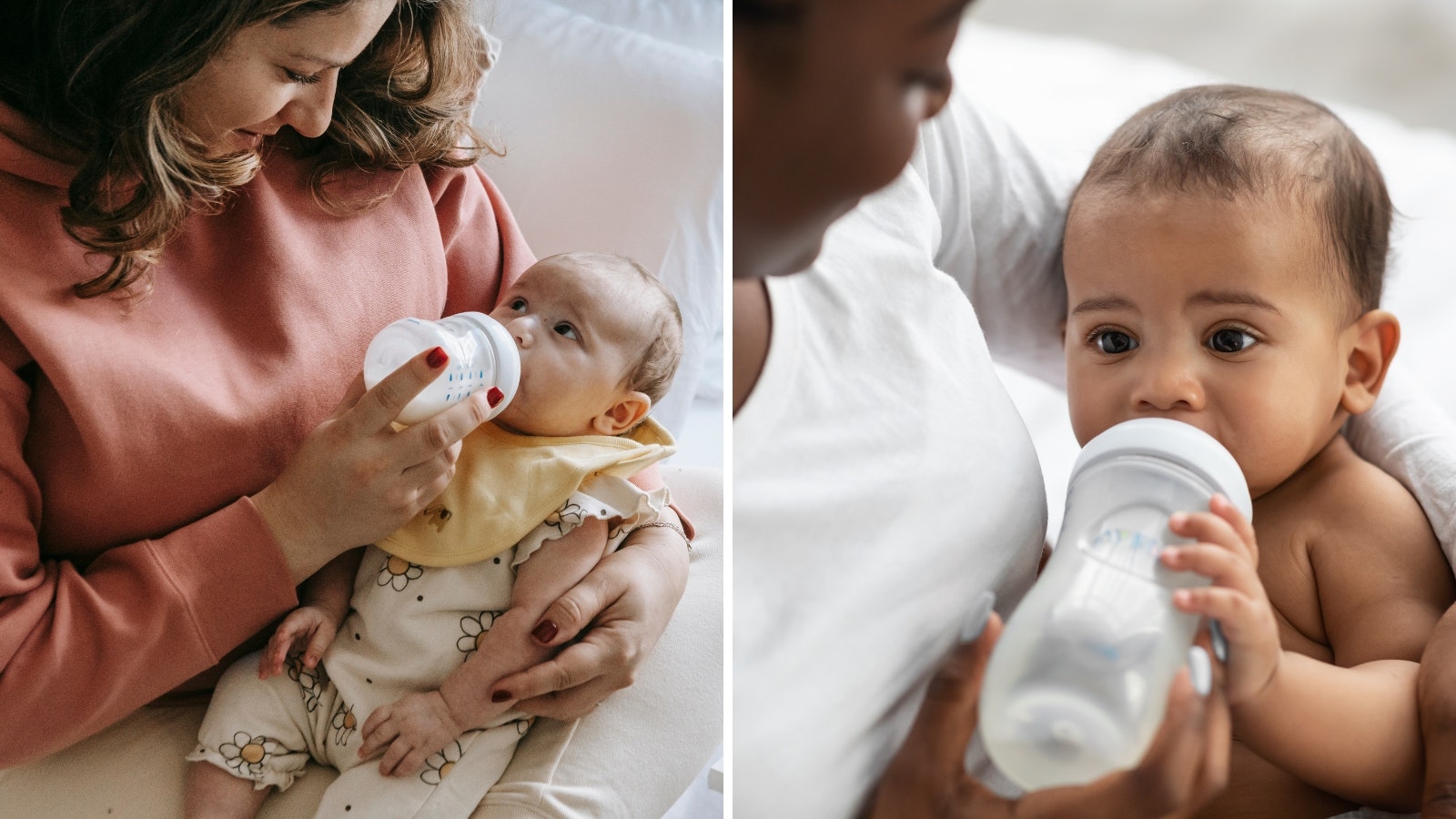
- Shape: Babies may prefer certain teat shapes. Choose one that allows a wide latch and mimics the breast to ease the transition between breastfeeding and bottle feeding.
- Colic: Anti-colic bottles help reduce the amount of air your baby swallows, easing colic symptoms.
- Environment: A calm, quiet setting with a familiar caregiver helps your baby feed better and latch properly.
- Temperature: Milk should feel lukewarm (around body temperature, 37°C). For formula, start with water at 70°C to kill bacteria, then cool before feeding.
- Cleaning: Use a good bottle brush and disassemble all components for thorough cleaning.
- Sterilising: After cleaning, sterilise bottles using a steam or UV steriliser for a complete clean.
Before using, wash all components, the teat, bottle, lid, and collar, using warm water, dish soap, and use a bottle brush to reach tricky areas. Baby bottle brushes, like straw cleaners, are useful for vents and hard-to-reach parts. Most bottles are dishwasher safe, but washing alone doesn’t sterilise, so follow up with a baby steriliser, steam, UV, or chemical solutions like Milton, to kill bacteria.
Midwife Angie advises: “Check for wear and tear, especially on teats. Replace worn parts or bottles to keep feeds safe, and save bottles in good condition for future use.” Proper sterilisation is essential for newborns, but according to the NHS, you can stop sterilising once your baby is around 12 months old.
Why You Can Trust Us
At Mother&Baby, our mission is to provide accurate and reliable reviews, ensuring our readers receive honest and transparent information about the best products available. Our testers are either pregnant or real parents with a baby or toddler. This could be members of our editorial team, freelance parenting journalists or external reviewers from the Mother&Baby awards. Our Mother&Baby Awards are renowned in the industry and are among the most highly respected product awards for baby and parenting products. Every year, we arrange for thousands of independent parent reviewers to test the latest products on the market.
We don’t accept payment from manufacturers for product reviews, and maintain our editorial independence. While we do work with commercial partners on advertorials, these will always be clearly labelled. Our writers have full control over their content, ensuring that products are selected based solely on the needs of our readers. While we may earn commissions or other compensation from links on our website, this does not affect our product choices. These links allow us to continue offering valuable consumer advice, without compromising the integrity of our reviews. We are always honest in our reviews, and we won’t recommend products that we wouldn’t spend our own money on.
Meet the Experts
Midwife Marie, AKA The Modern Midwife, is MAM’s in-house expert midwife with over twelve years of experience delivering babies. Marie is also a mother of two and an author. She is dedicated to supporting parents in navigating their parenthood journey with her range of online courses and books, whilst breaking down scientific data into a digestible form for everyone to understand.
Angie Willis, aka The Eco Midwife, is MAM’s in-house qualified midwife with over 11 years of experience, working in a range of settings, including birth centres, labour wards and specialist midwifery. Angie is a registered and qualified health visitor as well as a neonatal life support RCUK instructor, a NIPE practitioner and a breastfeeding volunteer. She has worked across different areas supporting women in those years.
About the Author
Stephanie Spencer is the Deputy Digital Editor at Mother&Baby. As a new mum to her son Seb and auntie to four aged 7 to 2 months old, Stephanie has first-hand experience of night feeds and finding the best bottle for your baby. With a particular interest in health, she loves discovering products that make parents’ lives easier.




Leave a Reply