Scientists Studied Aging for Decades — Then Nir Barzilai Changed How We Think About Longevity

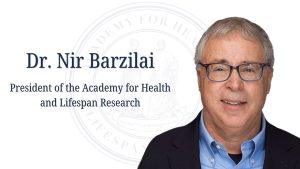
For most of modern history, aging was treated as an unavoidable decline rather than a condition that could be studied, slowed, or influenced. Dr. Nir Barzilai spent his career challenging that assumption. As a physician, geneticist, and one of the world’s most cited longevity researchers, he has helped reshape how science understands aging — not as fate, but as biology.
Dr. Barzilai is best known for his work with centenarians — people who live to 100 years or more. While many researchers focused on disease, he asked a different question: Why do some people age so well that disease never seems to take hold?
The answers he uncovered would ripple across the scientific community.
Born in Israel and later based in the United States, Nir Barzilai became fascinated with aging while working as a physician. He noticed something puzzling in his oldest patients. Many of them did not follow traditional health advice. Some were overweight. Some did not exercise regularly. Yet they remained remarkably free of chronic disease.
This contradiction became the foundation of his life’s work.
Barzilai went on to establish one of the largest and most influential studies of exceptional longevity, examining the genetics, metabolism, and physiology of centenarians. His findings challenged long-held beliefs about what determines lifespan and healthspan.
One of his most striking discoveries involved genetics. Barzilai and his team found that certain genetic variants appeared repeatedly among long-lived individuals. These genes influenced cholesterol metabolism, insulin signaling, and cellular repair — systems that deteriorate with age in most people.
But genetics alone was not the full story.
Centenarians in his studies often shared another trait: delayed aging. They did not simply survive longer; their bodies aged more slowly. Diseases such as cardiovascular illness, diabetes, and neurodegeneration appeared later — or not at all. This distinction would become central to Barzilai’s philosophy.
Rather than chasing cures for individual diseases, he argued that medicine should target aging itself.
This idea placed him at the center of a growing movement in longevity science. Aging, he proposed, is the single greatest risk factor for nearly all chronic diseases. If aging could be slowed, multiple diseases could be delayed simultaneously.
One of Barzilai’s most influential contributions came through his work on insulin-like growth factor (IGF-1) and insulin sensitivity. In many centenarians, these pathways functioned differently. Their bodies appeared more resistant to metabolic stress, inflammation, and cellular damage.
This metabolic stability echoes patterns seen in individuals like Jim Owen, whose physical resilience in later life reflects preserved muscle function and insulin sensitivity. While Owen represents physical adaptation, Barzilai’s research explains why such adaptation remains possible.
Barzilai’s work also brought attention to an unlikely candidate in aging research: metformin. Traditionally prescribed for type 2 diabetes, metformin showed promise in reducing inflammation and improving cellular stress resistance. Under Barzilai’s leadership, researchers proposed studying the drug not for disease treatment, but for aging itself.
This idea culminated in the proposed TAME trial — Targeting Aging with Metformin — a landmark attempt to evaluate whether aging can be medically delayed. The trial marked a shift in how regulatory agencies and scientists conceptualize longevity.
Yet Barzilai has consistently emphasized caution. He does not promote shortcuts or miracle solutions. Instead, he stresses that longevity is shaped by biology interacting with lifestyle. Genetics may load the gun, but environment pulls the trigger.
This balanced view separates his work from popular anti-aging narratives.
In interviews and editorials, Barzilai frequently pushes back against exaggerated claims. He warns that supplements and extreme regimens often oversimplify aging. Longevity, he argues, is not about optimization, but about stability — maintaining systems that resist breakdown over time.
Another cornerstone of his philosophy is healthspan, not lifespan. Living longer is meaningless if those extra years are spent in decline. His research consistently prioritizes functional independence, cognitive clarity, and metabolic health.
From a broader perspective, Barzilai’s work has influenced public health thinking. Aging populations are straining healthcare systems worldwide. By reframing aging as a modifiable process, his research offers a pathway toward reducing disease burden rather than merely managing it.
Importantly, his findings also challenge fatalism. Aging is not a switch that flips at a certain age. It is a gradual process shaped by biology, behavior, and environment. While not everyone will become a centenarian, many can delay decline far longer than previously assumed.
This perspective aligns closely with real-world examples like Jim Owen. Where Owen demonstrates physical resilience, Barzilai provides the biological explanation. Together, they illustrate two sides of the same phenomenon: aging is more flexible than once believed.
Today, Dr. Nir Barzilai continues to be a central voice in longevity science. His work appears frequently in major media outlets, scientific journals, and public discussions about aging. As research progresses, his influence grows not because he promises immortality, but because he grounds optimism in evidence.
Aging, through his lens, is not an enemy to be defeated. It is a process to be understood.
And in understanding it, humanity may gain not just longer lives, but better ones.

- Evacuation Orders Lifted in Waialua and Haleiwa as Wahiawa Dam Stabilizes - April 9, 2026
- Magister Manajemen: Keterampilan dan Peluang Karier - April 9, 2026
- 5 Dietitians Reveal the Secret to Choosing the Healthiest Chocolate - April 9, 2026



Leave a Reply