At 85, His Body Still Defies Time — What Jim Owen Reveals About Longevity and Aging Well
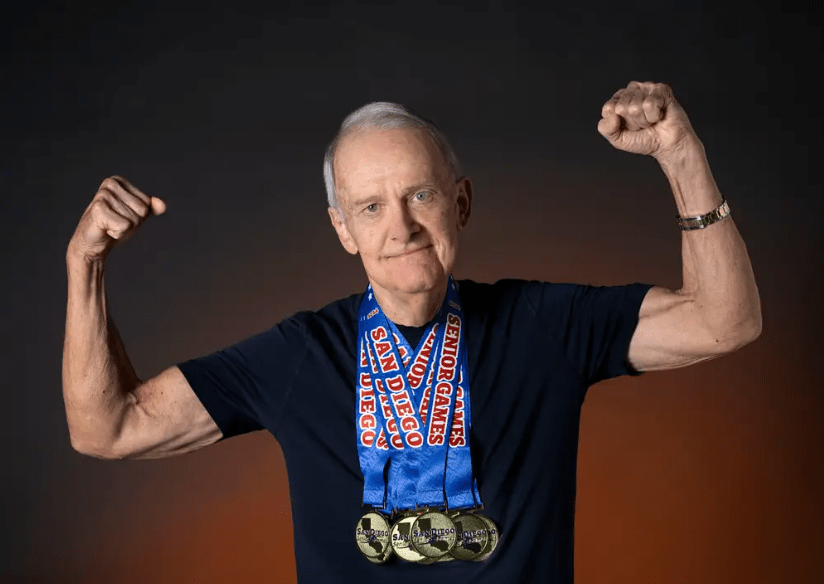
At an age when most people are advised to slow down, Jim Owen was doing the opposite. At 85, his physical strength, mobility, and endurance continued to surprise not only those around him, but also health experts who study aging and longevity. His story challenges one of the most deeply rooted assumptions about growing older: that physical decline is inevitable.
Jim Owen did not spend his entire life as an athlete. For decades, he lived a largely sedentary lifestyle, much like millions of others. Long work hours, limited physical activity, and gradual weight gain defined much of his adult life. By his early 70s, his health had deteriorated to the point where everyday activities felt increasingly difficult. Doctors warned him that without changes, his physical independence would continue to decline.
What followed was not a dramatic overnight transformation, but a gradual shift that would later attract global attention.
In his mid-70s, Jim Owen made a decision that would redefine the rest of his life. He began incorporating simple bodyweight exercises into his daily routine. There were no extreme workouts, no high-intensity regimens, and no promises of rapid results. Instead, his approach focused on consistency, movement quality, and long-term sustainability.
Over time, the effects became undeniable.

By his early 80s, Owen had not only regained strength, but had surpassed physical benchmarks common among much younger adults. He went on to compete in senior athletic events, earning multiple gold medals at the San Diego Senior Games. At 85, his strength, balance, and endurance placed him among the most physically capable individuals in his age group.
Medical professionals observing his performance were struck by several key indicators. His muscular strength remained unusually high for his age, suggesting significant resistance to sarcopenia — the age-related loss of muscle mass that affects most older adults. Sarcopenia is strongly linked to frailty, falls, metabolic dysfunction, and loss of independence. In Owen’s case, this decline appeared dramatically slowed.
From a physiological standpoint, his body demonstrated what researchers increasingly recognize as “trainability” in later life. Contrary to outdated beliefs, muscle tissue remains responsive to mechanical stress well into old age. Resistance training stimulates muscle protein synthesis, improves neuromuscular coordination, and supports metabolic health — even when initiated later in life.
Jim Owen’s training emphasized functional movements rather than maximal load. Push-ups, squats, planks, and controlled mobility exercises formed the core of his routine. These movements targeted large muscle groups and supported joint stability, balance, and coordination. Importantly, his workouts prioritized form and recovery over intensity.
Recovery played a central role in his longevity. Adequate rest, mobility work, and attention to physical signals allowed adaptation without injury. Sports scientists often note that injury risk, rather than aging itself, is one of the primary barriers to sustained physical activity in older adults. Owen’s method minimized this risk.
Nutrition further supported his physical resilience. His diet emphasized whole foods, sufficient protein intake, and hydration. There were no extreme dietary rules or restrictive protocols. Instead, his approach aligned with current longevity research, which suggests that consistency and nutritional adequacy matter far more than optimization strategies marketed to younger audiences.
Beyond physical markers, psychological resilience emerged as another defining factor. Aging research consistently links mental outlook with physical outcomes. Motivation, self-efficacy, and a sense of purpose influence adherence to healthy behaviors. For Jim Owen, training became more than exercise — it was a reaffirmation of autonomy and capability.
This psychological component is often underestimated. Studies show that individuals who believe physical decline is inevitable are less likely to engage in health-promoting behaviors. Owen’s experience illustrates the opposite effect: visible progress reinforced motivation, creating a feedback loop that sustained long-term commitment.
Researchers studying healthy aging increasingly focus on the concept of healthspan — the number of years lived with functional independence and quality of life. Jim Owen’s life exemplifies this shift. His goal was not to extend life at any cost, but to preserve strength, mobility, and independence for as long as possible.
Importantly, medical experts caution against interpreting his story as a universal prescription. Individual health history, genetics, and medical conditions vary widely. What works for one person may not be appropriate for another. However, Owen’s case offers a powerful demonstration of biological potential that remains accessible far later in life than commonly assumed.
His story also challenges the notion that longevity interventions must begin early to be effective. While earlier adoption of healthy habits provides advantages, the human body retains a remarkable capacity for adaptation even in advanced age. The window for improvement does not close at 60, 70, or even 80.
In recent years, Jim Owen has become a visible figure in discussions about aging and physical resilience. His example is frequently cited in media coverage addressing the misconceptions surrounding older adults and exercise. Rather than portraying aging as decline, his story reframes it as a stage that still allows growth, adaptation, and strength.
Aging, as his life demonstrates, is not merely a countdown of years. It is a process shaped by daily decisions, habits, and mindset. While no one can stop time, Jim Owen shows that its effects on the body are far more negotiable than once believed.
At 85, his body did not defy aging by ignoring biology — it worked with it. And in doing so, his story offers a compelling insight into what aging well can truly look like.
read : At 82, His Body Defies Age – Secrets to Longevity Revealed

- Mudik: Pelajaran Kehidupan di Jalanan - March 28, 2026
- Flood Threat Triggers Evacuation Warnings in Maui - March 28, 2026
- Hukum Puasa bagi Pekerja yang Kesulitan Melakukannya di Bulan Ramadhan - March 28, 2026



Leave a Reply