My Daughter Has a Disability – Britain’s Lack of Empathy Is Shocking
A Year of Challenges and Triumphs
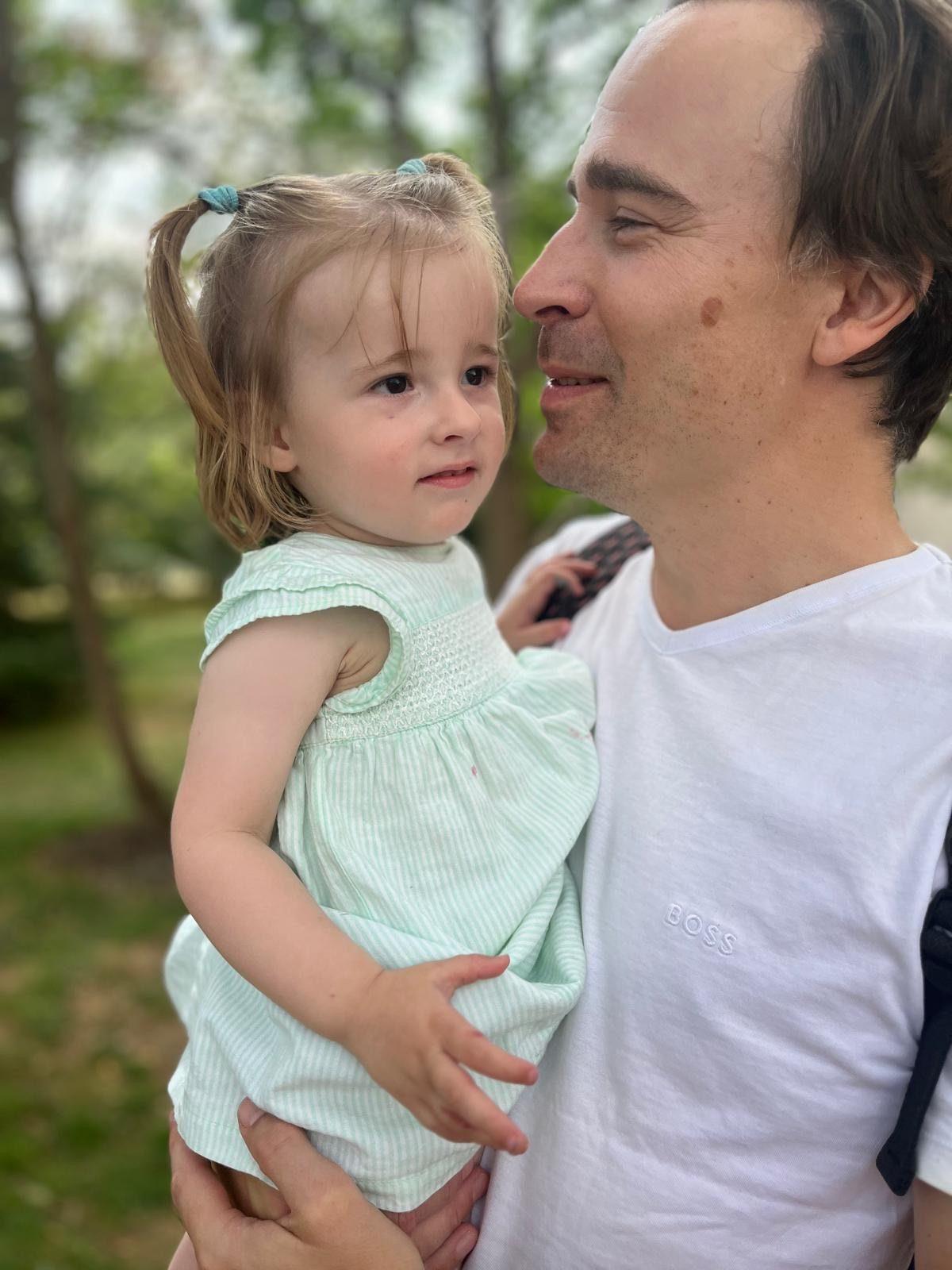
Just over a year ago, our lives changed forever when we were told our youngest daughter had a rare genetic disorder called GRIN2B. I’ve previously written about the initial shock, anger, and grief of receiving Holly’s diagnosis just before her first birthday. Now a year on, we’ve experienced so much and learned even more.
I left my daytime job not long before the diagnosis as my wife was heading back to her corporate job in marketing after her maternity leave and we needed someone to care for Holly full-time.
Holly’s condition is characterized by “mild to profound” developmental delay and intellectual disability. Weak muscle tone, and conditions such as epilepsy and autism or behavioral issues, are common in those with GRIN2B. Some who have it never develop speech or the ability to walk on their own.
As a result, Holly has been receiving a number of therapies on a weekly basis to encourage her development. This includes: physiotherapy to assist with her gross motor skills, occupational therapy to enable fine motor development, speech and language therapy to help with communication, alongside music therapy and makaton classes [using symbols, signs and speech to communicate].
For over a year I have been taking Holly to these weekly therapy sessions as well as hospital appointments and then working every evening in my role at an Australian publication. It has been exhausting but undoubtedly necessary.
Looking back at the year, the most striking moments have been the incredible and beautiful care given by those who work with Holly week in, week out. On the flip side, has been the astonishing lack of empathy, the unfairness of the system and disinterest from elsewhere.
The NHS, as we all know, has many flaws and is under pressure so intense as to be unsustainable. Some parts of Holly’s care have been fantastic. These are people selflessly helping those that society would prefer to ignore, and it’s been so humbling to be in their presence.
The brilliance of all of this care though is not something we take for granted in any way. It is a result of living in a borough of London which has very good SEND provision and charity facilities. Holly, now two, receives play-based therapy and music therapy from our local authority and she attends the brilliant Small Steps charity every week to work on her mobility.
But so many areas of the country do not have this and people are being failed and neglected in the most horrifying manner, just because of the lottery of where they live. I’m a member of many WhatsApp and Facebook groups where desperate parents are looking for help or asking where to get a certain treatment or therapy that their disabled child so urgently needs. It is heartbreaking.
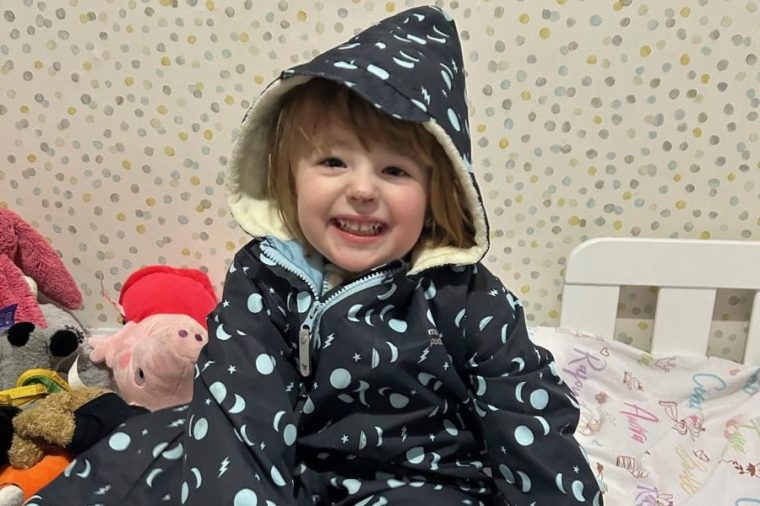
Not only are disabled children facing a world which, in the main, has no interest in them, but there are some whose areas don’t provide them with basic support.
Financial support for education provision is an obvious area where the differences in regions are horrifically apparent. You can debate all day long about the number of EHCPs (education, health and care plans) being awarded, but there is absolutely no debate to be had in the fact disabled children and their families in genuine need of funding are having to wait far too long for help and in many cases are not being given what they require.
For us, the process of applying for the DLA (disability living allowance) was dreadful. The DLA is the main benefit for children under 16 with a disability or condition. The charity Contact reports on average that parents of disabled children are paying an extra £322 a month (£3,864 a year) due to their child’s condition.
The Department for Work and Pensions (DWP) is supposed to process DLA applications within 40 days. In September, disability minister Sir Stephen Timms revealed the actual average clearance times (AACT) for new DLA claims was 77 days between April and August in 2025, and the AACT for DLA mandatory reconsiderations, the first stage in appealing a decision, was 125 days. One awful statistic that really stands out is that in 2016/17 almost 97 per cent of new DLA claims were processed within 40 days. In 2023/24 it was just 3.5 per cent.
Not only was our DLA application frustratingly slow, it got completely lost in the system. We had to regularly ring up the DWP and chase our application’s progress, only to hear another uninterested voice tell us it had been stopped because the last person we had spoken to had neglected to advance it to the next stage. It took the best part of a year for it to be resolved.
In the DLA application you have to focus on your child’s worst day and what type of care they may need on that day. To put yourself through that and then be faced with a brick wall of indifference is truly awful, especially when early intervention is so vital and the system responds with a massive shrug.
While the NHS care Holly has received has been positive, the health system is clearly not built for speed and it is terrifying to think of how many families might be missing out on vital support and the impact it could be having.
For example, we only met our community pediatrician for the first time in February 2025, when Holly was 18 months old. This doctor is the sole gatekeeper for all of Holly’s medical care going forward and the main point person assessing her development. Yet, that meeting remains the only time that we have met said pediatrician face-to-face. We are set to only see them during biannual assessments (although we already know they won’t be attending Holly’s next assessment). Again, if we hadn’t kept pushing for that appointment we would have been forever ignored and lost in the system.
Read Next: My wedding cost £50k – six months later, he divorced me
If I had one wish for 2026 it would be for more empathy. It seems to have almost completely disappeared. It continues to blow my mind that people can feel uncomfortable in the presence of someone disabled or, which has happened many times to us on public transport, feel their life is so important that they will push past us or try and tell us how we should be looking after Holly.
I’ve mentioned before the problem of toxic positivity and that too remains a real issue. People are either not wanting to accept the reality of beautiful Holly’s future and how she will be in our care her whole life, or are not interested in acknowledging how hard life has become. The grief my wife and I carry will never leave us, it weighs on us every single day.
Holly’s sister Florence, who is four years old, does not know of the GRIN2B diagnosis – that difficult conversation looms in our near future. I have no doubt though that she will be an amazing source of strength for Holly, she is already the most incredible big sister, showering Holly in endless love and kindness.
Having a disabled child is such an enormous event that I appreciate pretty much everyone who learns of someone in that situation goes “there but for the grace of God…” and cracks on with their own life. So many families we know have had friends and family members disappear; we have definitely lost friendships since receiving Holly’s diagnosis. (And that’s not even thinking about the fact the divorce rate for parents of disabled children sits at a crazy 87 per cent).
People either can’t relate or don’t want to, so the disabled community turns to itself for support – to people in similar situations who know how hard it is, how exhausting it is and how alone they can feel. We have found new friends who empathise with the isolation and the hardship. As has always been the case, unless someone has walked in your shoes, no one really knows what it is like.
Holly has had a great 2025: she has made such wonderful progress and continues to absolutely love life. She is an endless joy and the cutest thing I could imagine. She finds endless joy in bouncing to
Hop Little Bunnies
, giggles uncontrollably as she rolls on the bed with her sister, cuddles her dolls with her true affection and loves shoving chocolate into her mouth at any given opportunity. Spending every single day of this year with her and being by her side as she learns new skills and her world opens up has been the privilege of my life.
I think it’s also clear that the early intervention we were able to give Holly has had a dramatic impact on the progress. I cannot repeat enough the importance of it and how awful it is that so many are being let down in not receiving it.
Holly doesn’t know of her diagnosis and even if she could comprehend it, I don’t think she’d give two hoots. She is her own gorgeous and magical force of nature set on a path only she knows. Holly is our driving force now. And there are so many Hollys out there. I really hope in 2026 we can be better at seeing and appreciating them and all the incredible work those who love them are doing.


Leave a Reply