The Secret Carbon Cost of Health Wearables
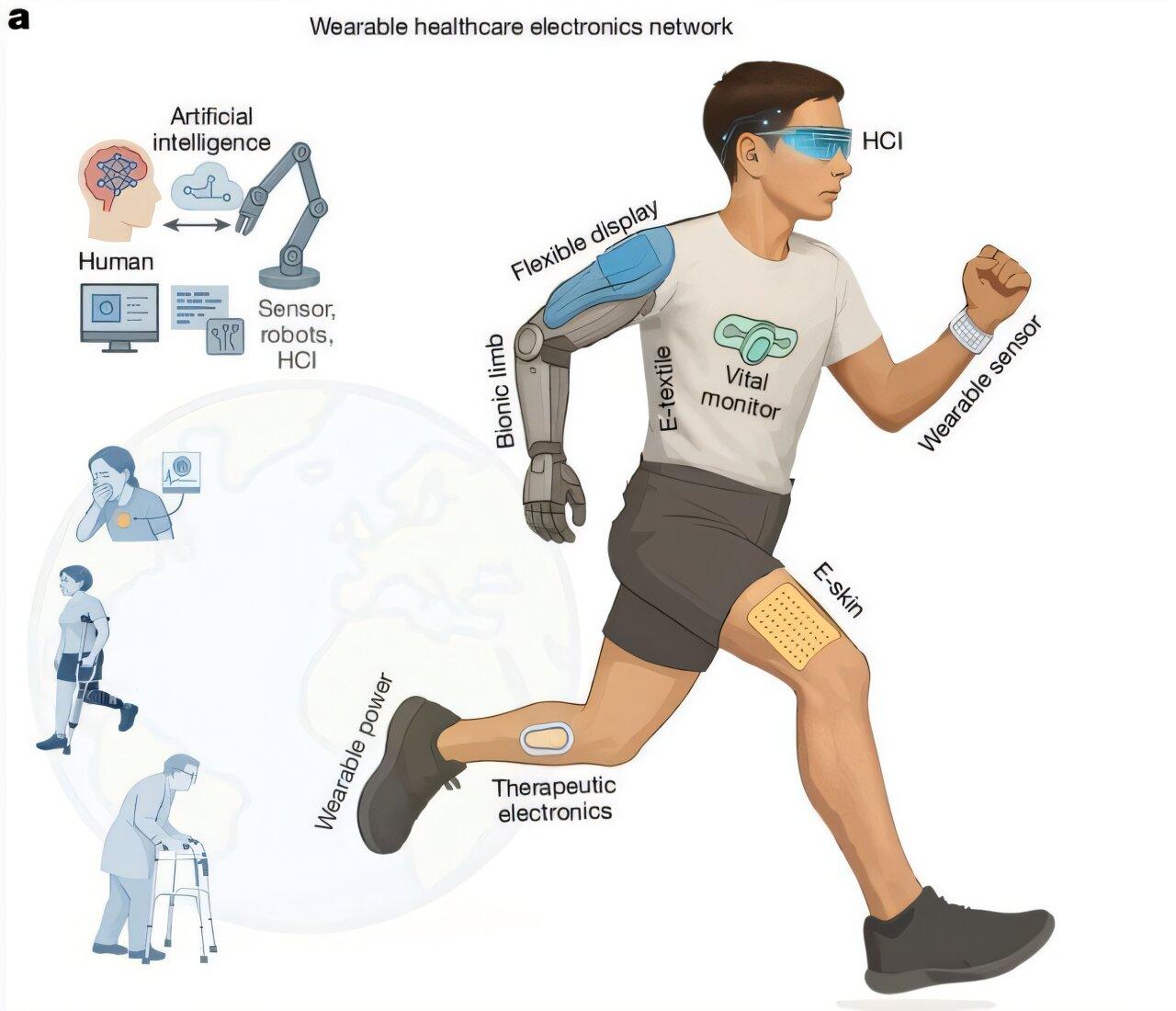
The Environmental Impact of Wearable Health Care Electronics
Wearable health care electronics are revolutionizing the way individuals monitor and manage their health. From glucose monitors to heart rate trackers, these devices offer real-time data and therapeutic interventions that can significantly improve patient outcomes. However, a recent study by researchers from the University of Chicago and Cornell University has revealed concerning environmental impacts associated with these technologies.
The study found that the carbon footprint of wearable health care devices ranges from 1.1 to 6.1 kg CO2-equivalent per device. With global consumption projected to increase 42-fold by 2050, reaching nearly 2 billion units annually, the environmental consequences could be substantial. This growth is expected to contribute an additional 3.4 million metric tons of CO2-equivalent emissions, along with ecotoxicity and e-waste issues.
Key Components of the Eco-Footprint
The researchers analyzed four specific devices: a non-invasive continuous glucose monitor, a continuous electrocardiogram monitor, a blood pressure monitor, and a point-of-care ultrasound patch. These devices were chosen for their clinical relevance and diverse sensing capabilities. The study employed a cradle-to-grave life-cycle assessment, covering everything from raw material acquisition to end-of-life disposal.
One of the most significant findings was the contribution of printed circuit boards and semiconductors to the carbon footprint. For example, a single continuous glucose monitor has a carbon footprint equivalent to driving a gas-powered car for about 5 miles. More than 95% of this impact comes from the production of these components, which require energy-intensive processes to purify raw materials and power manufacturing.
The Growing Scale of Wearable Use
The short lifespan of many wearable devices—such as a glucose monitor that lasts only 14 days before being discarded—exacerbates their environmental impact. By 2050, sales of wearable glucose monitors are expected to exceed 1.4 billion units annually. This volume alone would generate around 2.7 million metric tons of CO2-equivalent emissions each year.
Per-device warming impacts vary widely. A blood pressure monitor contributes approximately 1.06 kg CO2-equivalent, while a point-of-care ultrasound patch can reach up to 6.11 kg CO2-equivalent. Annualized warming impacts, considering typical replacement frequencies, range from 0.5 kg CO2-equivalent for a blood pressure monitor to 50.6 kg CO2-equivalent for a non-invasive continuous glucose monitor.
Mitigation Strategies and Design Innovations
To address these challenges, the researchers explored several mitigation strategies. These included plastic substitution or recycling, critical-metal substitution, modular designs for reuse and replacement, and transitioning to green energy sources.
Biodegradable or recyclable plastics showed modest reductions in warming impacts, with changes ranging from 1.8 to 2.6% for certain devices. However, the dominance of flexible printed circuit board assemblies across all four devices limited the effectiveness of polymer-focused gains.
Critical metals and device design choices had a more significant impact. Substituting gold with silver, copper, or aluminum in integrated circuits reduced warming impacts by up to 30% and cut toxicity-related metrics by over 60%. Modular designs with pluggable interfaces allowed for the reuse of long-lived components, reducing per-use warming impacts by 54.6 to 62.4% across three device types.
Transitioning to renewable energy sources could reduce overall warming impacts by 44.9 to 52.1%, although this approach had limited effects on ecotoxicity and water consumption.
Future Directions for Sustainable Innovation
The study highlights the need for systems engineering approaches that integrate life-cycle assessments and diffusion modeling. These methods can help establish ecologically responsible innovation in next-generation wearable electronics.
As wearable health care technology continues to evolve, balancing its benefits with environmental sustainability will be crucial. Researchers emphasize that thoughtful design choices and sustainable practices can significantly reduce the eco-footprint of these devices, ensuring they contribute positively to both health care and the environment.

- Patch AM: The Final Chapter of a Beloved Wilson Elementary Teacher - April 9, 2026
- Pasbata: Kami Hadir untuk Efendi, Jangan Sampai Masa Depannya Hilang - April 9, 2026
- Saturday Night Forecast: Unprecedented Heat and Drought - April 9, 2026



Leave a Reply