Why were acres of hay meadows restored in the Lake District?
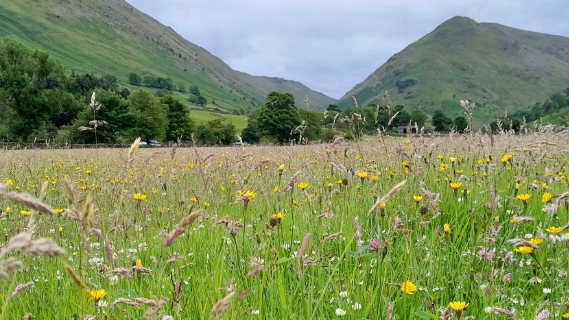
Conservationists planted 23 football pitches’ worth of hay meadows in four months across the Lake District, by working with landowners and farmers. But why is it so important these traditional habitats are restored?
Run by the Lake District National Park Authority (LDNPA) and Cumbria Wildlife Trust, the project worked with farmers and landowners to boost the diversity of farmland.
Claire Foster, farming officer for the LDNPA, said nationally there had been a significant decline in “traditional, species-rich hay meadows” over the last 100 years and that anything they could do to try and reverse that was significant.
Hay meadow fields can protect the land from extreme weather events which are becoming more common, such as flooding and droughts, Ms Foster said.
So they found there was no lack of farmers wanting to get involved to safeguard their land.
The intention was to make the existing grasslands more species-rich. The new sites, which spanned about 40 acres (16 hectares), were chosen through soil tests, feasibility studies and botanical surveys.
Teams worked closely with farmers at Collinfield, Crosthwaite, Loweswater, Embleton and in the Newlands Valley to identify sites appropriate for restoration.
Ms Foster said the meadows also produced more nutritious hay for livestock farmers.
“It’s not like the farmers have to give that land over 100% to nature,” she explained.
“The diversity of plants in those meadows is what gives the livestock all the minerals they need and it’s a much more valuable from a nutritional point of view to have lots of different species in that meadow than just grass.”
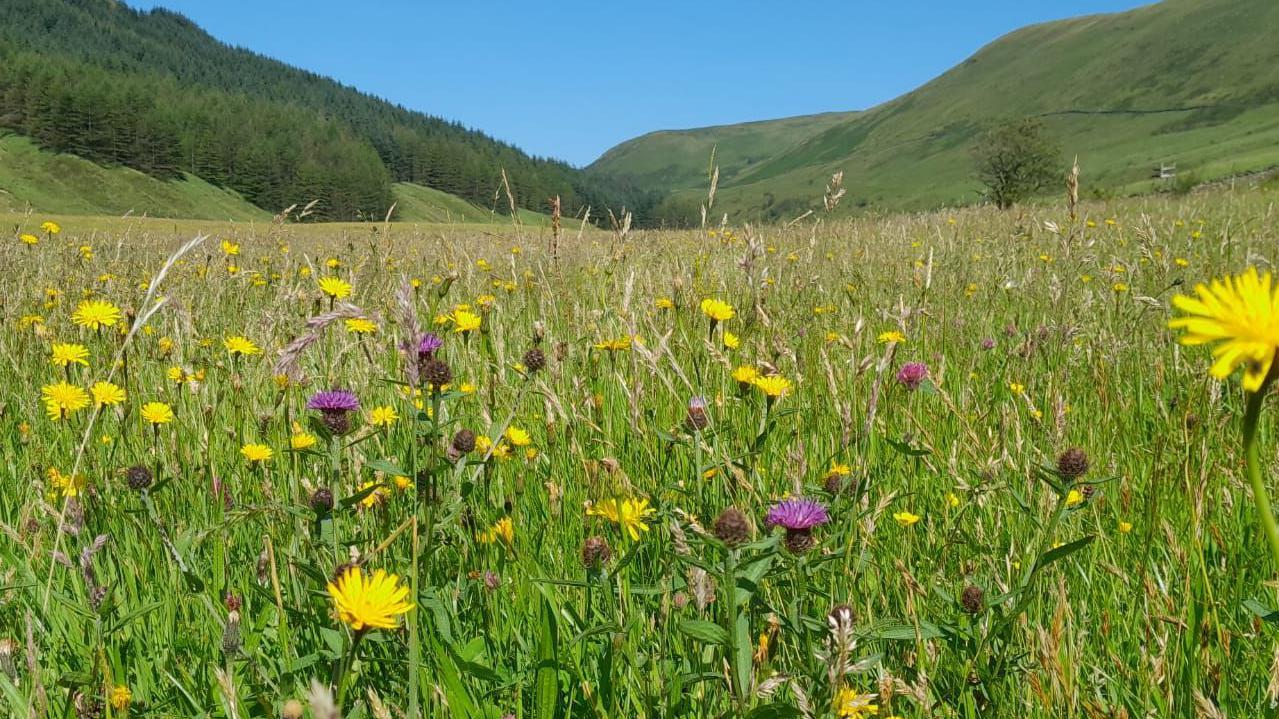
According to the wildlife trust, 97% of flower-rich hay meadows were lost between the 1930s and the mid-1980s across Britain due to changes in farming.
But Ms Foster said today they could make farming better and more resilient.
“It’s really good that it works in harmony with everything else in that landscape,” she said.
The new plants incorporated into the farmland across Cartmel Fell and Newlands Valley should also protect the land against floods and drought, which Ms Foster said were more frequent because of climate change.
Ms Foster said diverse grasslands were more resilient to dry conditions because “you haven’t just got one species that might be quite dependent on water”.
There are also deeper-rooting plants that can tap into the moisture below the soil.
And more diverse grasslands had better soil structure, Ms Foster added, meaning there was less risk of flooding in wet conditions because the soil can take in the excess water.
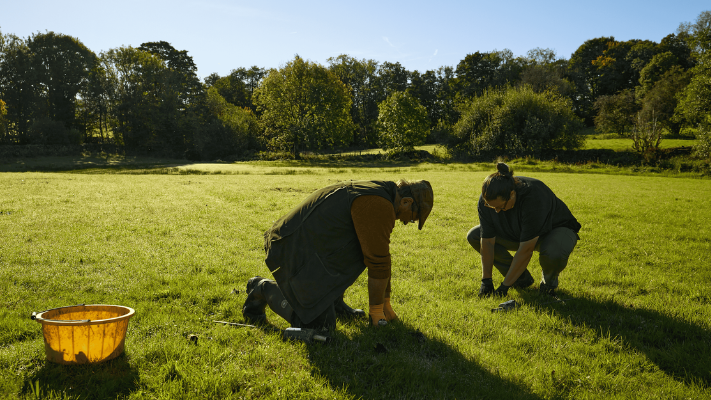
About 21 different species were planted across the farmland and while some species like yellow rattle and red clover could be visible soon, Ms Forster said many would need longer.
She added it would depend on the weather and how wet it was over the winter.
“It’s all a bit unpredictable,” Ms Foster said.
“They’ll probably be resurveyed next year, but you might not seem them for a few years.
“But that doesn’t mean they’re not there.”
Follow BisakimiaCumbria onX, Facebook, Nextdoor and Instagram.
Related internet links




Leave a Reply