Titans of the abyss: How sperm whales and giant squid differ
Quick Take
- Sperm whales are the largest toothed whales and deep-diving predators, with a spermaceti organ used for sound production and buoyancy.
- Giant squid are large deep-sea cephalopods with enormous eyes and extendable tentacles that snatch prey.
- Predator prey interactions link them: sperm whales bear scars from squid suction and have squid beaks in their stomachs.
In many ways, the deep ocean feels like an entirely different planet from the one we live on—home to some of Earth’s most extraordinary creatures, two of the most evocative being the largest toothed predator on Earth and a mysterious cephalopod. For centuries, the latter of these existed far more in sailors’ tales than on scientists’ charts. These marine animals are, respectively, the sperm whale and the giant squid. Both inspire awe: the sperm whale with its massive, blocky head and echoing clicks; the giant squid with its long feeding tentacles and enormous eyes, like a creature out of a 1950s monster movie. In this article, we’ll take a look at these two marvels across size, anatomy, behavior, habitat, diet, and life history—where they overlap, where they diverge, and how they’ve adapted to life in the cold, dark, otherworldly ocean depths.
What Do They Look Like?
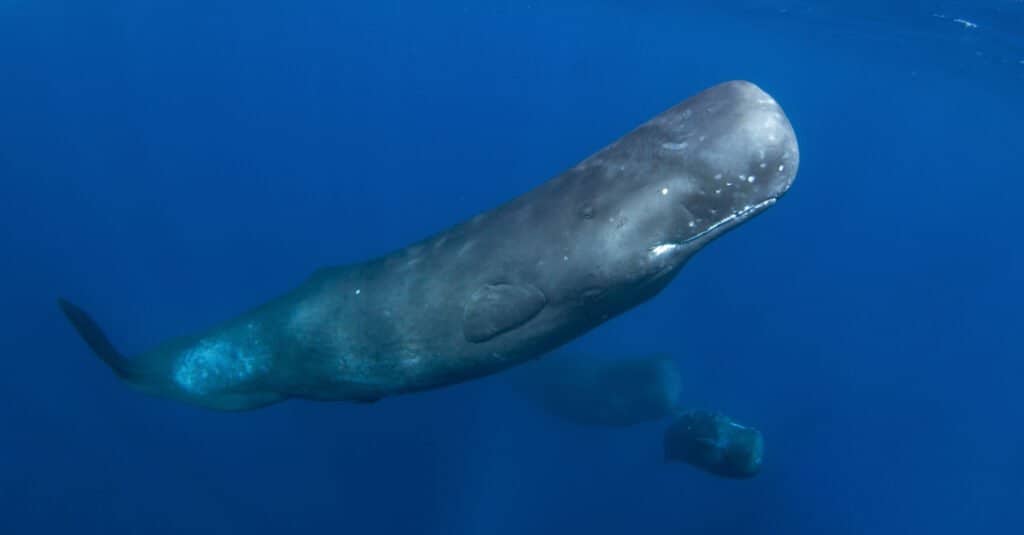
Sperm whales are toothed whales with a single row of large conical teeth on the lower jaw. The most distinctive anatomical feature is the huge spermaceti organ that fills much of the head, which they use in sound production and, researchers believe, in buoyancy control and echolocation. Adult sperm whales show extreme sexual dimorphism. Females typically measure about 40–43 feet (12-13 meters) and weigh in the range of roughly 15 tons, while large adult males reach a little over 50 feet (16 meters) and can weigh substantially more, with some estimates gaging up to 45 tons for the biggest males! That’s equivalent to the weight of over 20 mid-size SUVs!
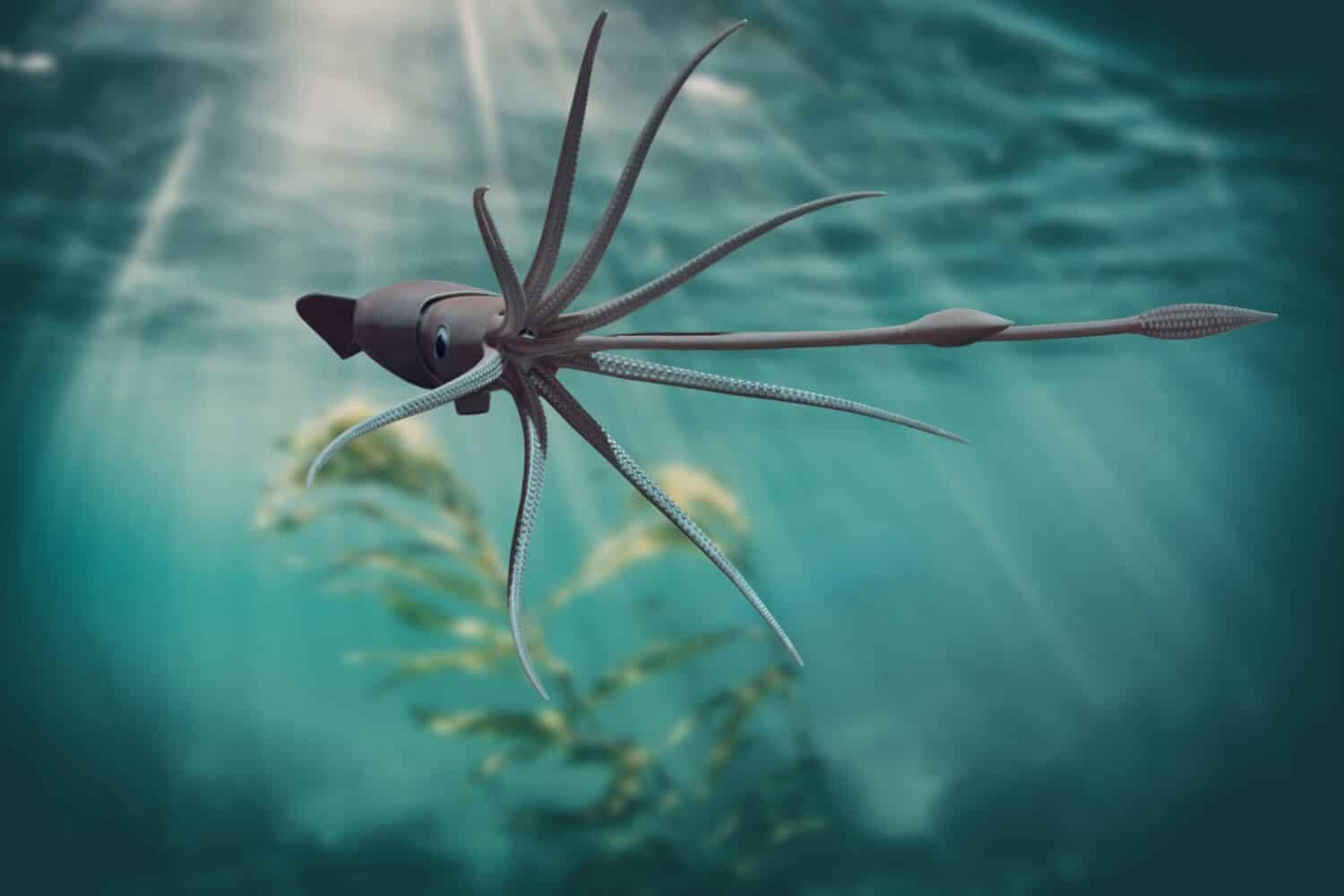
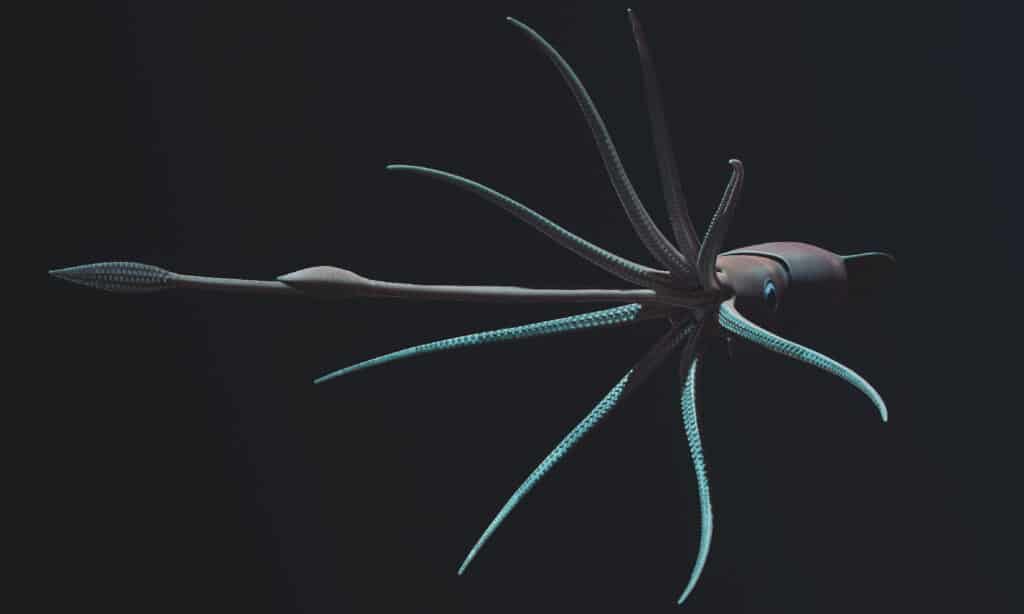
“Giant squid” is a slippery label because reports vary, and old measurements were often exaggerations. Modern scientific reviews are a bit more-conservative, citing large specimens to be a little over 40 feet (13 meters) in total length, from the top of their heads to the end of their tentacles, though most are much smaller. The estimated maximum weights for the largest documented specimens fall into the low hundreds of pounds rather than tons (in the 300-600lb range). Unlike whales, squids are invertebrates. Their body plan includes a muscular mantle (the main body), eight arms lined with suckers, and two long retractile feeding tentacles tipped with large suckers, used for grabbing prey.
A full-grown sperm whale is orders of magnitude heavier and more robust than a giant squid. Length comparisons can be misleading because squid tentacles stretch the total length measurement; mass is the better metric for which animal is bigger, and that advantage decidedly goes to the sperm whale, making the giant squid viable prey to the massive mammal.
But if we’re judging by which one looks more terrifying… Advantage: giant squid.
Habitat and global distribution
Sperm whales are cosmopolitan throughout the world’s oceans, occurring from equatorial waters to high latitudes. Their distribution and migratory behavior are influenced by sex and age: adult males often roam into higher-latitude feeding grounds, while females and young form social groups in warmer waters. They are highly pelagic—meaning they live far from the shore and sea floor—and travel wide-ranging routes across the open ocean.
Giant squid are also globally distributed but not as well understood because live sightings are rare. Records and strandings indicate presence in many ocean basins—North Atlantic around Norway and Newfoundland, parts of the Pacific around Japan and New Zealand, as well as southern oceans—often associated with continental and island slopes rather than shallow coastal waters. Depth-wise, specimen evidence and incidental captures suggest giant squid commonly inhabit meso- to bathypelagic zones (together ranging from about 600 to 13,000 feet), and perhaps even deeper.
The ranges of sperm whales and giant squid overlap across much of the open ocean and in vertical space. Sperm whales are superb deep divers and forage at depths where giant squid live, setting the stage for predator/prey interactions.
Behavior
Diving, Sensory Systems, and Hunting
Sperm whales are among the ocean’s champion divers, with typical foraging dives commonly reaching as low as 2,000 ft and lasting around 30–60 minutes. However, there have been documented dives exceeding 3,000 feet and lasting more than an hour. They use powerful, directional clicks (echolocation) to probe the darkness, allowing whales to locate prey in pitch-black conditions.
Giant squid possess enormous eyes—among the largest in the animal kingdom—capable of detecting low levels of light and bioluminescent flashes, perfect for the dimly-lit spaces they inhabit. Giant squid likely employ ambush tactics using stealth and their extendable tentacles to snatch prey. Their tentacle tips and arm suckers are formidable grappling tools, sometimes featuring hooks.
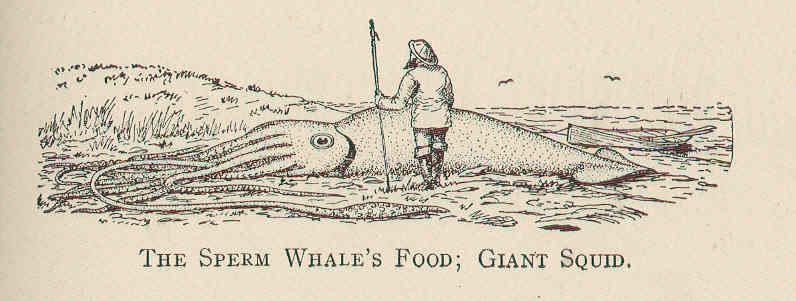
So how do these colossal marine animals match up? The giant squid rely on camouflage, eyesight, and sudden tentacle strikes. But in the deep, a sperm whale’s echolocation and sheer power give it advantages in locating and overpowering large cephalopods. Direct observation of fights between sperm whales and giant squid is rare, but indirect evidence is abundant. Sperm whales frequently bear circular scars left by the suckers of giant squid, indicating repeated and sometimes intense struggles. In addition, researchers have recovered squid beaks from sperm whale stomachs, and pieces of squid tissue (including tentacles) have been recorded in whales’ guts. These lines of evidence make it clear that sperm whales and giant squid have a long-standing predator–prey relationship, the deep ocean hosting brutal confrontations. In fact, the discovery of giant squid parts in sperm whale stomachs helped bring these elusive cephalopods from myth to science.
Diet
Sperm whales feed mainly on large, deep-water squid species, but they also eat fish (including shark species) and other cephalopods. Studies of stomach contents and scarring patterns support squid as a major part of their diet. An adult sperm whale consumes a sizable daily biomass and can feed at depth repeatedly during foraging bouts.
Giant squid are predators of fish and smaller cephalopods, using their long tentacles to capture prey, before drawing it toward their beak, biting it, and ingesting. Their role in midwater and deep-sea food webs includes both predation on smaller animals and serving as prey—especially for large deep-diving predators like the sperm whale.
Reproduction, lifespan, and social life
Sperm whales are social animals. Females and juveniles live in matrilineal groups, which usual include the mother and her female descendants, though sometimes the male offspring will stick around for a while before branching off. Adult males often lead more solitary lives or form loose bachelor groups. They have long gestation periods of about 14–16 months; slow reproduction, producing calves only every several years; and long lifespans, often several decades and commonly up to 60 years!
Giant squid reproduction isn’t as well documented. Females are thought to produce a large number of eggs, but like many large cephalopods, they are believed to be semelparous, meaning they reproduce once then die right after. Cephalopods often have relatively rapid growth and shorter lifespans compared to marine mammals, but because live observations are scarce, these details remain an active area of research.
Human Encounters
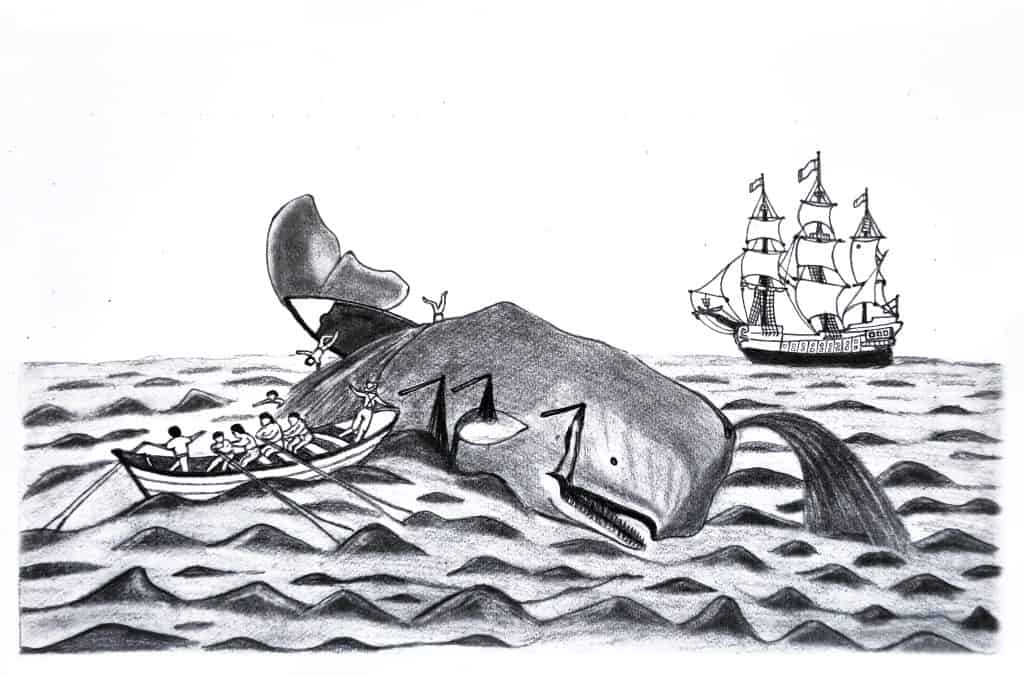
Sperm whales were heavily hunted in the whaling era. They have since been protected in many regions, but they still face threats from ship strikes, entanglement, marine pollution, noise, and climate change.
Giant squid are not well-assessed in terms of population trends because of their elusive nature. They do occasionally wash ashore or are brought up in fisheries, but we lack a clear global population picture.
Two Icons of the Deep
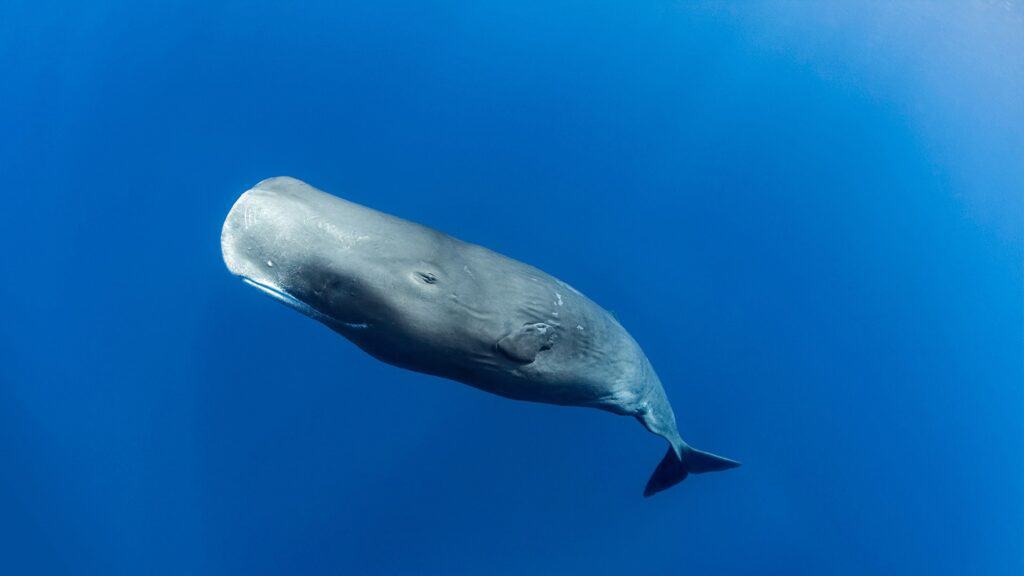
The sperm whale and the giant squid are two very different creatures shaped by the same dark, high-pressure world. One is a warm-blooded mammal with a brain built for strategy; the other is a cold-blooded invertebrate powered by quick reflexes and long, searching tentacles. Yet both depend on the same deep-sea habitats, the same food webs, and the same strange physics of life in near-darkness. Studying them side by side reminds us how wildly inventive evolution can be, and how the ocean, no matter how much we learn about it, still keeps many secrets. The more we explore their world, the more we discover that the greatest mysteries in the universe aren’t just in outer space; some of them are right here on Earth, hidden thousands of feet below the waves.
The post Titans of the Abyss: How Sperm Whales and Giant Squid Differ appeared first on A-Z Animals.

- PKM Musikalisasi Puisi SMK Sadar Wisata Ruteng Tunjukkan Keterampilan Siswa - April 9, 2026
- Evacuation Orders Lifted in Waialua and Haleiwa as Wahiawa Dam Stabilizes - April 9, 2026
- Magister Manajemen: Keterampilan dan Peluang Karier - April 9, 2026



Leave a Reply