Here’s exactly what happens to your body when you eat tofu every day
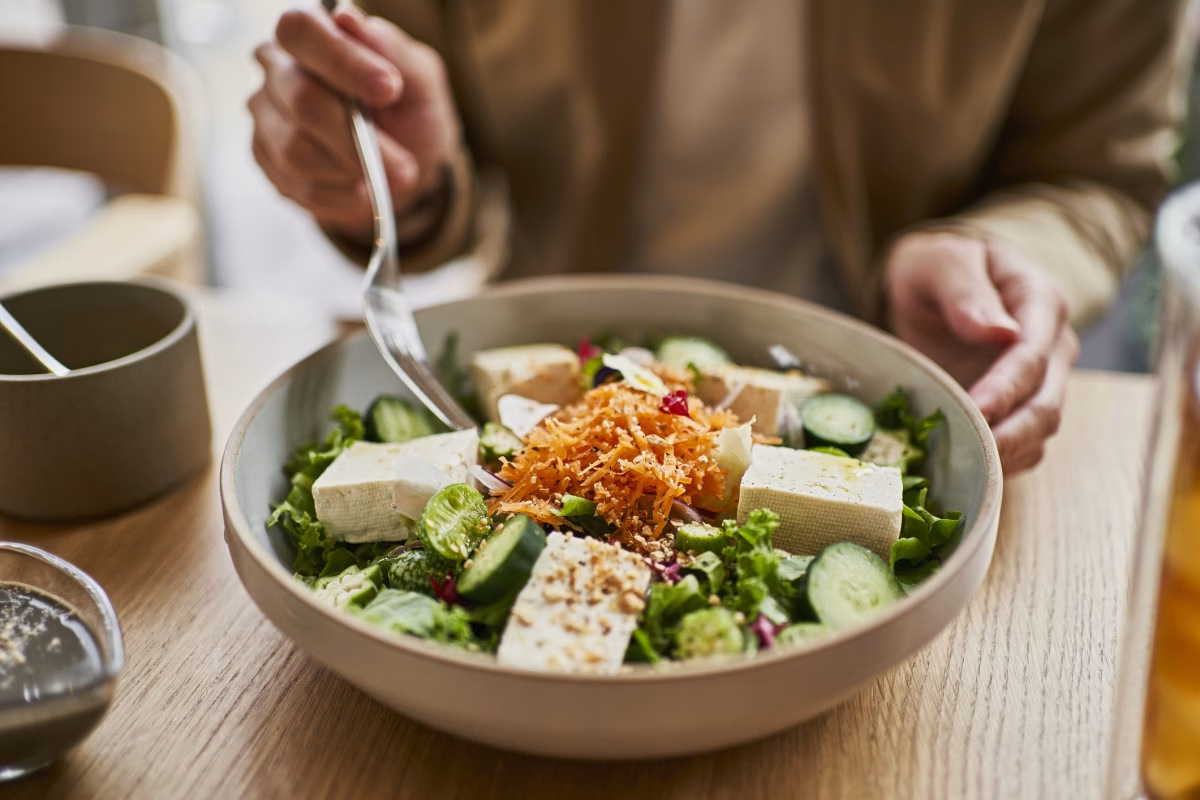
Awareness of the benefits of plant-centric eating patterns, like the Mediterranean diet, has grown—ditto for the societal obsession with protein. As a plant-based protein, tofu offers the best of both worlds, but what even is this food? It isn’t anything new, that’s for sure.
“Tofu has been around for over 2,000 years, dating back to ancient China, where people found a way to preserve the nutritious soybeans that grew in abundance,” explains Susan Greeley, MS, RDN, the senior vice president and the national director of wellness services at Castle Connolly Private Health Partners. “Much like making cheese, tofu is made by coagulating soy milk and pressing the curds into a solid block.”
Tofu doesn’t taste much like cheese. It’s generally neutral and perhaps slightly nutty. It also offers an array of benefits, though they may get overshadowed by concerns over soy and breast cancer. Greeley and other registered dietitians address those claims and share what happens to your body when you eat tofu every day.
Related: 40 Plant-Based Tofu Recipes Even Meat Lovers Will Enjoy
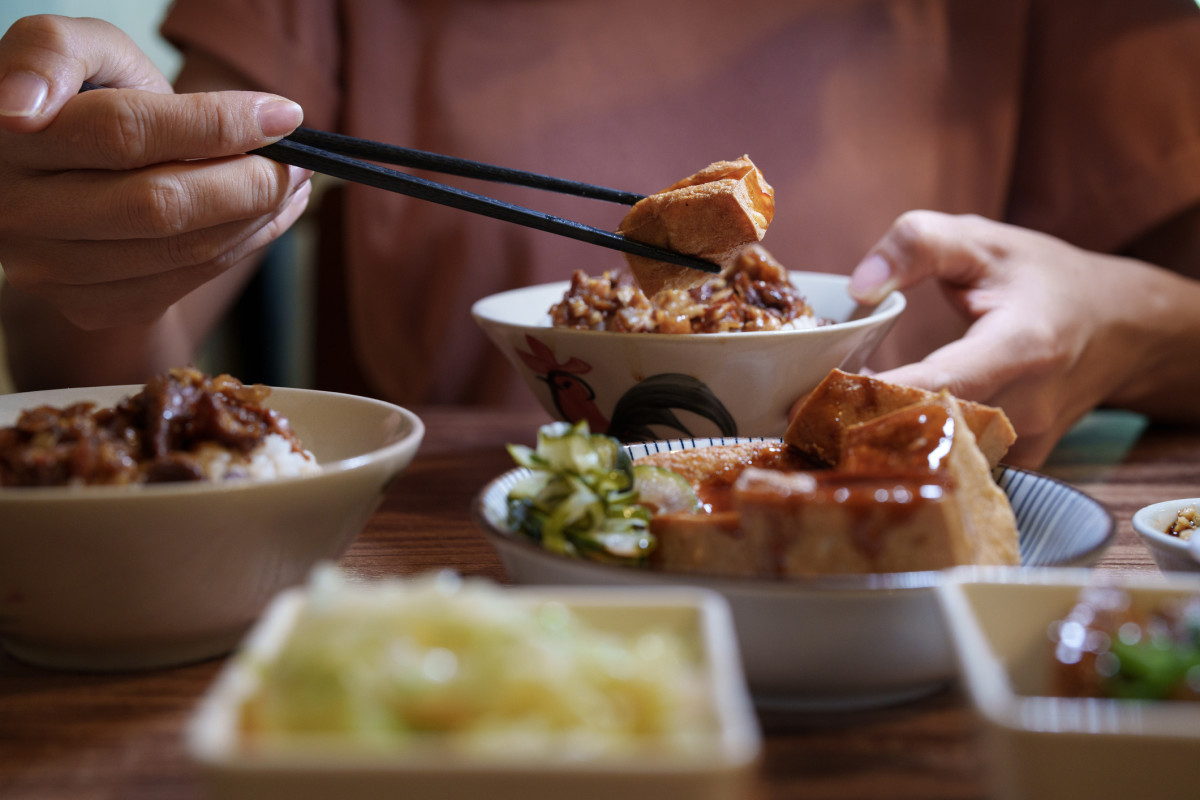
Tofu: Nutrition Facts
“Tofu is a very popular meat substitute as it is rich in protein, phytonutrients and several minerals while also being low in saturated fat,” Greeley states.
Here’s what you consume when you eat a half-cup serving of tofu:
- Calories: 181
- Protein: 21.8 grams
- Carbohydrates: 3.5 grams
- Fiber: 2.9 grams
- Fat: 11 grams
- Calcium: 861 milligrams
- Folate: 36.5 micrograms
- Magnesium:73.1 milligrams
- Phosphorus: 239 milligrams
- Potassium: 299 milligrams
- Vitamin A: 209 micrograms
Related: Want To Lower Your Cholesterol? Cardiologists Say This Is the Best Diet To Follow
What Happens When You Eat Tofu Every Day
From gut and heart health to possible cancer prevention (plot twist?), regularly eating tofu can benefit your health. However, registered dietitians share that tofu isn’t for everyone and may carry some risks. Learn more about what happens when you eat tofu every day (or thereabouts).
1. You’ll get a surprising amount of fiber
Protein is the nutrient people focus on most when it comes to tofu—and we will too. However, tofu also contains a decent amount of fiber, which most Americans don’t consume enough of.
“Fiber…acts as a prebiotic, fueling beneficial gut bacteria and supporting digestion,” explains Shaye Arluk, MS, RDN, an oncology Dietitian with Sentara Health’s Sentara Brock Cancer Center. “Because we now understand that so many aspects of health begin in the gut, nourishing the microbiome has never been more important.”
2. You *might* have digestive issues
Rarely, but sometimes, Greeley says that people report having digestive issues after eating tofu and other soy products. As a result, they may experience bloating, nausea or discomfort.
“Soybeans contain fermentable carbohydrates called galacto-oligosaccharides (GOS), which are poorly absorbed and fermented by gut bacteria, causing gas, bloating or loose stools [for some people],” she explains.
Greeley notes that silken tofu is high FODMAP, and therefore more likely to cause these symptoms than lower-FODMAP varieties like firm and extra-firm. Additionally, the insoluble fiber in soybeans can trigger gas in people sensitive to fiber, or in those who increase their fiber intake too quickly. Slowly adding fiber to your diet and remaining mindful of how you prepare tofu can help. For instance, she suggests avoiding frying it or using sauces, like spicy ones, if you’re sensitive to them.
3. You’ll consume a complete and low-fat protein
Consuming enough complete protein can be a concern for people following vegetarian, vegan or mostly plant-based diets. However, tofu helps break down that barrier, which is why Greeley hails it as a “nutritional overachiever. Other RDs agree.
“Tofu is a complete plant-based protein, containing all nine essential amino acids,” says Morgan Walker, MS, RD, LDN, a sports nutrition and wellness manager and adjunct professor at Lebanon Valley College. “Because tofu is naturally low in saturated fat compared to many animal proteins.”
Jordan Hill, MCD, RD, CSSD, a registered dietitian at Live it Up, adds that tofu’s protein can support muscle growth and repair.
4. Your heart will love you a little more
“Heart health is another area where tofu shines,” Arluk says.
She points to a 2020 Circulationstudy showing that swapping just one meat-based meal with tofu could lower the risk of heart disease by up to 18%. Additionally, a 2020 Nutrients meta-analysis of more than 1.6 million adults indicated that higher soy intake could lower heart disease risk by 13%. Eating tofu specifically was linked to a 19% reduced risk of coronary heart disease and 11% lower odds of any cardiovascular event.
“These associations are likely influenced in part by soy isoflavones, which have antioxidant and anti-inflammatory properties, and by the role tofu plays as a replacement for higher-saturated-fat animal products,” Walker notes.
5. You could help protect yourself from Type 2 diabetes
That same 2020 Nutrients meta-analysis also found that eating soy products like tofu could lower your long-term likelihood of developing Type 2 diabetes, a condition that often goes hand in hand with heart disease.
“It is important to note that these benefits vary by the population studied, diet context and the amount and type of soy consumed,” Walker clarifies.
6. You might lose or more easily manage your weight
Greeley calls tofu a “secret weapon in weight management efforts.”
“It’s incredibly nutrient-dense yet surprisingly low in calories,” she raves. “Its high protein content keeps you feeling full for longer, preventing you from overeating.”
7. You could help protect yourself from cancer
There have long been conversations about tofu’s link to cancer—especially breast cancer. However, Arluk reports that recent research doesn’t support this idea.
“When consumed in whole-food forms like tofu, they can help protect against estrogen-related cancers—particularly breast cancer—and may also have protective effects against prostate cancer,” she says. “These phytoestrogens are ‘weak’ estrogens. They can bind to estrogen receptors on cells, crowding out the body’s stronger estrogen and reducing the signals that promote cancer cell growth.”
Related: The Surprising Food That Can Lead To Significant Weight Loss in Just 4 Weeks
8. You’ll strengthen your bones
Arluk says that tofu can also add to your bone strength, explaining, “It naturally contains magnesium and calcium—two nutrients that many Americans fall short on but that are essential for maintaining bone integrity with age.”
9. You might feel less forgetful
“Isoflavones [in tofu] may support memory and cognitive function when included as part of a healthy diet,” Greeley shares.
The data on isoflavones and brain health is mixed. A 2012 Neurology study of women didn’t find a significant association between isoflavone intake and brain health. However, a 2019 review in Nutrition Reviews examined adult men and women and found that soy isoflavones may boost cognitive function.
10. You’ll load up on micronutrients
Micronutrients can play a massive role in your overall health, supporting blood flow, energy levels, sleep quality and so much more. Tofu is packed with micronutrients.
“In addition to protein, tofu is also loaded with essential minerals, including iron, magnesium, phosphorus, manganese, selenium and B vitamins,” Greeley notes.
12. You could soothe your perimenopause symptoms
Arluk shares that many women (and researchers) notice fewer perimenopause symptoms, like hot flashes and mood swings, when they eat more soy daily. “This benefit is likely due to those same gentle, plant-based phytoestrogens offering a bit of hormonal support as natural estrogen levels decline.”
13. You’ll get into (and perhaps live longer in) “The Blue Zone”
The Blue Zone Diet is an eating pattern that focuses on whole, unprocessed and plant-based foods. It’s inspired by five of the longest-living populations in the world (Icaria, Greece; Okinawa, Japan; Sardinia, Italy; the Nicoya Peninsula, Costa Rica; plus a community of Seventh-day Adventists in Loma Linda, California). What does all this have to do with tofu? Quite a bit, actually.
“Tofu and other soy foods are staples in Blue Zones, areas associated with longer, healthier lifespans where people routinely live past 100,” Greeley points out.
14. You might not absorb thyroid medications
Arluk advises anyone taking thyroid replacement medications to speak with their healthcare provider before significantly increasing their soy intake (eating tofu daily would count as that if you don’t currently do so).
“Soy doesn’t harm the thyroid itself, but it can interfere with the absorption of thyroid medication if the timing is too close,” she shares. “A simple rule: never eat soy for breakfast when taking morning thyroid meds.”
Arluk notes that this rule can give your medication time to absorb on an empty stomach.
15. Mother Nature will thank you
OK, this one doesn’t directly affect your body. Still, climate change impacts all of us, including physically (for instance, running in a record-breaking heat wave or with poor air quality isn’t recommended). Diet can help curb climate change.
“Because it’s plant-based, it’s a more sustainable protein source, which can appeal to people concerned about environmental impact,” Hill says.
Related: ‘I’m a Breast Oncologist—This Is the One Food I Wish Women Over 50 Would Eat Less Of’
Does Tofu Cause Breast Cancer?
“There has been some debate about soy and breast cancer because soy contains phytoestrogens—plant-based compounds that can mimic estrogen in the body,” Hill explains. “Most current research shows that moderate tofu or soy intake is generally safe.”
Actually, “For many women, they appear to be protective—both in prevention and in survivorship—when consumed in moderate daily amounts of no more than two servings a day,” Arluk says.
Related: ‘I’m a Breast Oncologist—This Is the One Food I Wish Women Over 50 Would Eat More Of’
How To Add Tofu to Your Diet, According To Registered Dietitians
Ready to reap the benefits of eating tofu every day (providing you’re not at risk for any of the drawbacks)? Greeley shares that tofu is actually a joy to cook with and eat regularly.
“Tofu is incredibly versatile in the kitchen because it acts like a flavor sponge, soaking up marinades and spices,” she says. “On its own, tofu has a mild, neutral taste that is often described as slightly nutty or bean-like. When people say they don’t like tofu, they’re usually reacting to how it was prepared, not the tofu itself.”
Greeley’s not gatekeeping her go-to recipe:
- Cube firm tofu (“I press the tofu first to remove excess water, even when using firm tofu,” she says.)
- Pan-sear in a little avocado oil until golden.
- Add 1 tablespoon of honey (or maple), the juice of ½ lime and a pinch of Tajín.
- Toss for 20 seconds until glazed.
- Serve with lime zest on top.
Here are a few more RD-favorite ways to enjoy tofu:
- Pressed, marinated and air-fried. Arluk is a big fan of pressing extra-firm tofu for 10 minutes to eliminate excess moisture. “I cube it and marinate it in a blend of soy sauce, fresh ginger, garlic, lemon juice, red pepper flakes and a touch of honey,” she dishes. “After at least two hours of marinating, I air-fry it until crispy. It’s perfect tossed with stir-fried vegetables or served over rice noodles.”
- Buddha bowl. Get in on the bowl trend with tofu. “A personal favorite is to prepare seared tofu in Buddha bowls, with a mix of colorful veggies like shredded carrots, broccoli, red bell peppers and purple cabbage with brown rice and a drizzle of tahini dressing,” Walker says.
- Pan-searedand plated. Hill loves tofu when it’s pan-seared with a soy-ginger glaze. “The searing gives it a crispy exterior while keeping the inside soft, and the glaze adds a rich flavor,” Hill says.
Up Next:
Related: Everything You Need to Know About the Blue Zone Diet—Including Exactly What to Eat On It
Sources:
- Susan Greeley, MS, RDN, the senior vice president and the national director of wellness services at Castle Connolly Private Health Partners
- Tofu, raw, firm, prepared with calcium sulfate. FoodData Central.
- Closing America’s Fiber Intake Gap. American Journal of Lifestyle Medicine.
- Shaye Arluk, MS, RDN, an oncology Dietitian with Sentara Health’s Sentara Brock Cancer Center
- Morgan Walker, MS, RD, LDN, a sports nutrition and wellness manager and adjunct professor at Lebanon Valley College
- Jordan Hill, MCD, RD, CSSD, a registered dietitian at Live it Up
- Isoflavone Intake and the Risk of Coronary Heart Disease in US Men and Women: Results From 3 Prospective Cohort Studies. Circulation.
- Soy Consumption and the Risk of Type 2 Diabetes and Cardiovascular Diseases: A Systematic Review and Meta-Analysis. Nutrients.
- Tofu intake is inversely associated with risk of breast cancer: A meta-analysis of observational studies. PLoS One.
- Soy Consumption and the Risk of Prostate Cancer: An Updated Systematic Review and Meta-Analysis. Nutrients.
- Long-term soy isoflavone supplementation and cognition in women. Neurology.
- Effects of soy isoflavones on cognitive function: a systematic review and meta-analysis of randomized controlled trials. Nutrition Reviews
- The Women’s Study for the Alleviation of Vasomotor Symptoms (WAVS): a randomized, controlled trial of a plant-based diet and whole soybeans for postmenopausal women. Menopause.
- Characterization of Micronutrients in Tofu from Several Cities in Java Island Indonesia. Nutrition Epidemiology and Food Security.
- Identification of a geographic area characterized by extreme longevity in the Sardinia island: the AKEA study. Experimental Gerontology.
- Association of food groups and dietary pattern with breast cancer risk: A systematic review and meta-analysis. Clinical Nutrition.
- Soy Isoflavones and Breast Cancer Risk: A Meta-analysis. In Vivo.

- Tahun yang memecahkan rekor: American Heart Association’s Alachua County Heart Walk mengumpulkan lebih dari $270.000 untuk menyelamatkan nyawa - March 18, 2026
- DPH: Wabah campak dilaporkan di Upstate, South Carolina - March 18, 2026
- Planet liar yang tertangkap dalam masa pertumbuhan besar, mengejutkan astronomer - March 18, 2026


Leave a Reply