Older adults are slowly abandoning this hobby – but the health payoff is huge

Most older adults don’t read for pleasure these days, but the simple and affordable hobby can have lots of health benefits, including some surprising ones, say experts in aging and brain health.
Reading is associated with reductions in stress and improved mood. And though the actual science is limited, scientists generally agree that reading can boost brain health by essentially working it like a muscle, keeping it strong and flexible.
The surprising benefits come from the social aspects of reading. What’s largely considered a solitary activity can improve communication skills and strengthen empathy and compassion, say experts in mental health and geriatric care. Join a book club and the benefits are off the charts, they said.
- Read more: $19,000 a year for a longer life? What’s on offer at a luxury Bay Area longevity clinic
- Also: Why you should (probably) drink less as you get older, according to doctors
- Brain health: Why managing early memory loss should actually start with your heart
“Reading can provide mental escape and also exposure to cultures, ideas and experiences different from our own,” said Sierra Gribble, supervising library assistant at the Berkeley Public Library’s north branch. “The other side is that reading can provide us with validation and reassurance that we are not alone in our feelings or experiences.
“Reading builds vocabulary, develops empathy, increases concentration and cognitive function and provides mental stimulation,” Gribble said. “Reading is beneficial in many ways.”
A look at the science
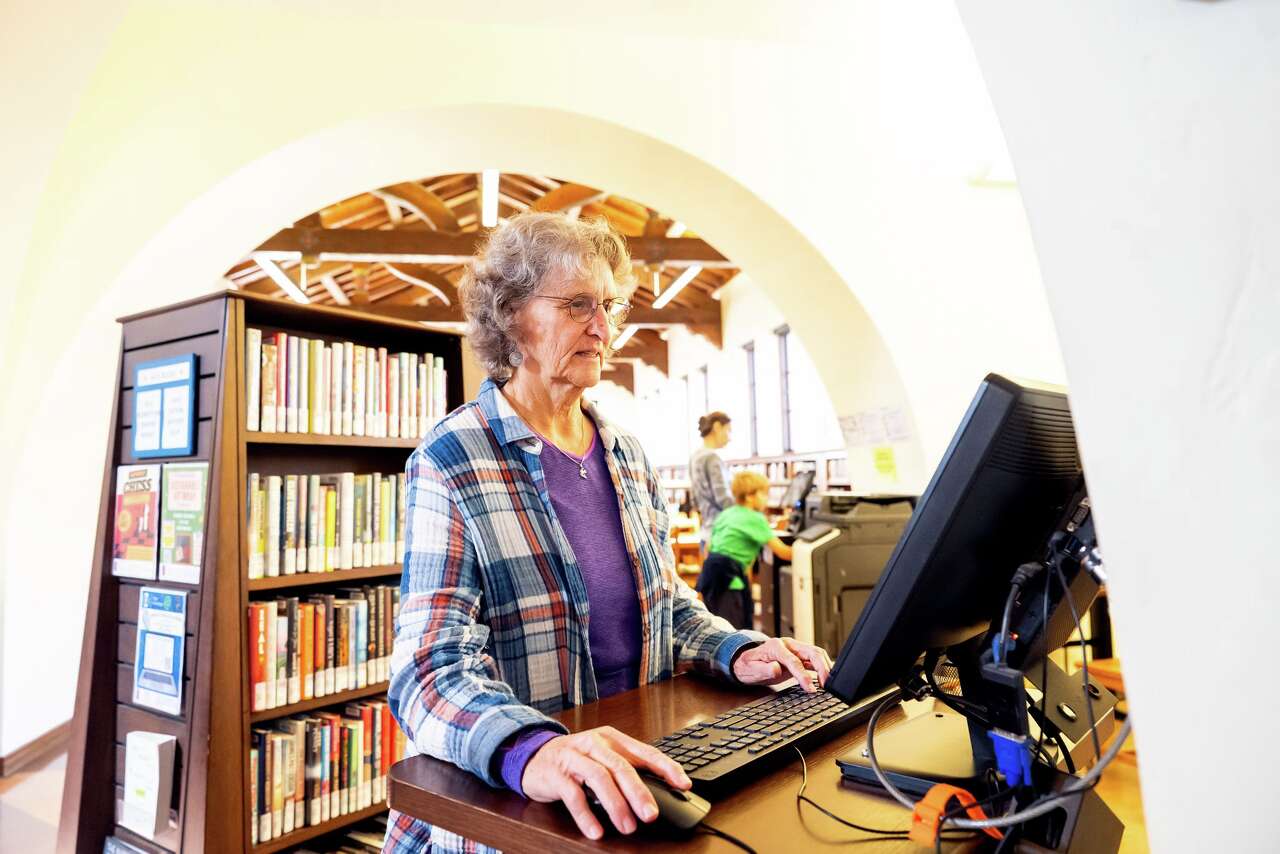
Diane Davenport, 81, has been a lifelong reader and is now on the Friends of the Library board in Berkeley. She said she’s now noticing some friends dropping the habit, and she worries that it’s “diminishing” their lives. “If your mind isn’t working your body isn’t working,” she said. “It’s all tied together for me.”
A study published earlier this year found that rates of reading have dropped significantly among all adults over the past 20 years; only about 16% said they read every day as of 2023, down from 28% in 2003. Among adults 66 and older, about 30% reported reading every day, down from more than 50%.
Those rates have fallen as use of social media and other attention-grabbing technologies have exploded, and across all age groups scientists are trying to determine how much and what kind of damage this may be doing to people’s cognitive and emotional well being.
Although there’s little science looking specifically at the benefits of reading on brain health, there’s plenty of evidence showing that reading and similar mental activities are associated with lower rates of dementia and improved memory and brain function in older adults. Some studies have found that a history of regular reading is tied with lower risk of dementia later in life.

“If you’re intellectually engaged, you’re working on neural pathways and helping the brain become more resilient,” said Dr. Sirisha Nandipati, a neurologist with Kaiser Permanente in San Rafael. “The brain is almost a muscle – if you don’t use it, it shrinks. Reading is one way to build that muscle and to build those neural connections.”
A more resilient brain may be better able to fend off dementia, or may make the memory loss and other cognitive decline less severe, Nandipati said.
She noted that reading is not necessarily better than other brain activities, like doing crossword puzzles or other word or math games, or playing cards or making music or art. “All of those fall under the same umbrella,” she said.
Much of the benefit of reading, though, comes from experiencing a world outside one’s own, said Dr. Deborah Kado, a Stanford geriatrician.
“You’re taking in new information, and that is cognitive stimulation that we all need,” Kado said. “Reading is a way really for people to escape their own reality and create new neural connections and ideas. And all that stuff is good for cognitive and psychological health.”
For Davenport, reading is a source of entertainment and stress relief, but it’s also an important tool for staying on top of current events. “It’s a way I keep up with the world without having to listen to the news every day, which is so depressing.”
How to maximize the benefits of reading
To get the benefits of reading it’s important to engage with the material – in other words, if readers find themselves skimming the pages or not actually absorbing the story or information, it’s probably not helping much.
“If you’re doing it correctly, it’s a very interactive process,” said Kado. “When you’re watching a movie or TV show, things are being interpreted for you. It’s more passive. Reading is about retaining and absorbing and processing.”
Several experts in geriatrics recommended book clubs as ideal sources of both the intellectual and the social benefits of reading. “Positive emotions happen when people are social, and then there’s the intellectual challenge of remembering the book and talking about the book,” Nandipati said. It’s also beneficial to hear others’ interpretations of the material.
At Rhoda Goldman Plaza, an assisted living facility in San Francisco’s Western Addition, reading plays a critical role in lots of activities meant to improve residents’ overall health, even in the dementia space where people may no longer be able to read on their own, said Geoffrey Washburn, the life enrichment director.
Every day Washburn visits one resident who is 104 years old and still reads her daily newspaper. “I check in on her and I ask, ‘What’s the most fascinating thing you read today?’ Or, ‘What’s your biggest criticism?'” Washburn said. “It creates that engagement and keeps her mind active. It keeps all of those nerves firing.”
For residents with dementia, staff will sometimes read out loud books from their childhood. Judy Blume books were a recent hit, along with “The Cat in the Hat.”
“It brings a certain amount of comfort and familiarity to them,” Washburn said.
Getting started
People who haven’t read for pleasure in a while, or perhaps ever, may need some tips to get started. Kado pointed out that in fact post-retirement is an excellent time to pick up a reading habit. “Even if you haven’t been a reader, just think about something that really interests you,” she said.
Librarians, naturally, advised that older adults who are interested in picking up a reading habit visit their local library. They can get book recommendations, but also help using tools that will make reading more accessible, such as large-print materials, audiobooks and e-readers with customizable fonts.
Several geriatricians recommended building up a daily reading habit by starting small – maybe setting aside five to 10 minutes at first.
“Our brains are hard-wired for novelty, and so we have to keep offering our brains different things, but with aging our brain does take longer to process information,” said Dr. Catherine Madison, a neurologist at the Center for Dementia Care with Jewish Family and Children’s Services, which includes Rhoda Goldman Plaza.
“We can’t take it from a fire hose anymore,” Madison said. “But we should still get a steady-drip watering system of new things that we’re trying and learning.”
As for the type of book to read – it doesn’t matter, said experts in brain health. “Nonfiction, fiction. It can be a book or a play,” said Kado. She also recommended that older adults consider revisiting books and other works that they read when they were younger – even pieces that they didn’t like.
“I remember I had to read ‘King Lear’ in high school. I couldn’t read it then, and now I pick it up and think it is an amazing story,” Kado said. “Even picture books – they’re amazing today.”
Related Reading
Nurses reach deal with UC, but another union still plans to strike Monday
With vaccine skepticism rising, doctors warn of tough flu season
Protein, carbs and vegetables: Is there a best order to eat your Thanksgiving meal?
Subscribe
There’s more to San Francisco with the Chronicle. Subscribe today for just 25¢.




Leave a Reply