Restoration begins in France Canyon after wildfire burns nearly 35,000 acres
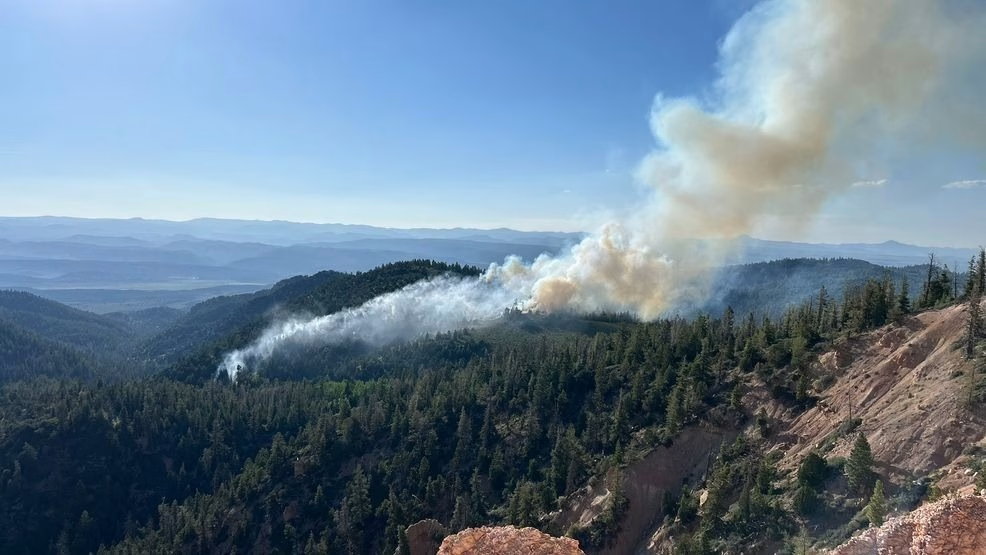
Restoration work in France Canyon began after a wildfire burned nearly 35,000 acres there this past summer.
It was one of 42 projects the Department of Natural Resources has worked on in southern Utah as part of its Watershed Restoration Initiative.
The DNR was also halfway done with fire restoration in Monroe Canyon, and they’ve planned to start on the Forsyth Fire burn scar in the next few weeks.
MORE | France Canyon Fire:
- Smoke from France Canyon Fire could remain visible until winter
- Cedar City airport runs low on fuel as wildfire missions surge across region
- Power outage scheduled as France Canyon fire burns across 25,500 acres
“We will aerial seed the areas using either helicopters or fixed-wing airplanes to drop seeds from the sky and put the things back on the landscape that would be missing because of the fire,” said Gary Bezzant, the Southern Region habitat manager of the DNR.
Bezzant said the roots from new plants will help prevent floods.
“By reseeding, we’re able to intercept the rain rather than have it run off and cause flash floods,” said Bezzant.
Going into next year, the department plans to focus on fire prevention, and they’re targeting the Red Cliffs Desert Reserve in southern Utah. The reserve spans 70,000 acres, but it is just a small portion of the Mojave Desert, which the DNR said needs help.
“Typically, a system like the Mojave Desert shouldn’t see fires across decades, so to be burning every two to five years is way too frequent and it just feeds itself,” said Bezzant. “Each fire has been bigger and bigger throughout my career, and we’re trying to say now, let’s get ahead of it.”
Not only does Red Cliffs border downtown St. George, it houses threatened native wildlife.
“We’re targeting one of the biggest wildlife benefits in the Red Cliffs Desert Reserve, which is the desert tortoise,” said Bezzant. “Desert tortoise are a long-lived species. There’s a lot of challenges that are associated with fires and loss of habitat, and so we’re trying to, again, prevent unburned habitat from becoming burned and losing that desert tortoise habitat.”
Right now, its biggest threat is an invasive plant called cheatgrass, which has taken over the landscape in the past decade.
“We can lose acres of the desert in a single fire very quickly, and the fire return interval is increasing with cheatgrass continuing to overtake more and more of it every year,” Bezzant said.
The plant reproduces quickly, sucks the water from other plants and dries out quickly.
“It becomes a continuous carpet of dry vegetation as summer comes on that is then a very flammable source that can carry a fire for large areas,” Bezzant said.
The DNR is working to remove the plant with herbicides. The project will start with a 1,000-acre portion but eventually span 20,000 acres of the reserve. They’re prioritizing treating spots closest to roadways, where there is a high risk of igniting fires.
“There’s a lot of different ways that fires start from vehicles,” Bezzant explained. “It can be from a flat tire, it can be from a cigarette, it can be from chains dragging.”
Next year, the Water Restoration Initiative has $12 million worth of funded projects that will treat 50,000 acres in southern Utah alone. Statewide, they restored 144,433 acres last year.
The initiative is funded by a line item through the state Legislature, as well as partners such as the Bureau of Land Management, U.S. Forest Service and sportsmen groups.
Bezzant said this year has brought new challenges with cuts to federal funding. While they’ve been able to make up for it now with their own funds, the DNR said they may have to cut back on the number of future projects if funding is not restored.
“The shutdown has delayed decisions within the federal government, and so we made the decisions to move ahead, hopeful that those decisions would still happen,” Bezzant said. “We’ll have to make some decisions in out years to figure out how that impacts if we aren’t able to recoup some of those funds from the federal government.”
A full list of the Watershed Restoration Initiative projects statewide is available here.
_____

- Norfolk Fire-Rescue Controlls Hazardous Propane Leak - April 5, 2026
- 5 Kebiasaan Harian yang Mempercepat Penuaan, Banyak yang Tak Sadar - April 5, 2026
- Major Fire Engulfs West Valley City, Causing $100K in Damage - April 5, 2026



Leave a Reply