Why Christmas might not feel like magic anymore—but it’s not your fault
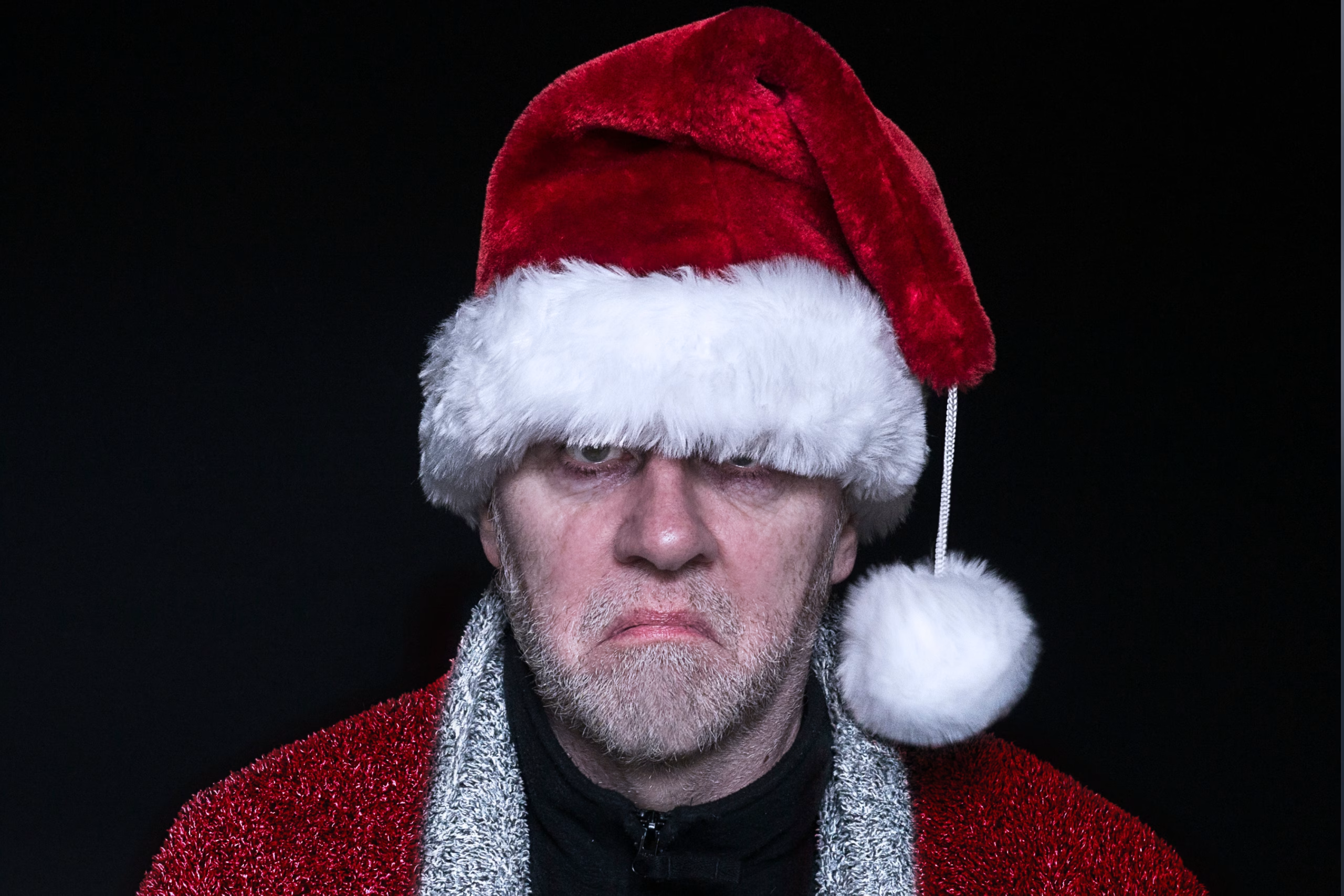
The feeling of magic around Christmas is somethng many of us remember from childhood, and spend the rest of our lives trying to recreate.Warm childhood memories abound of writing letters to Santa Claus, watching the lights glittering on the streets and in people’s homes, singing carols and painting pictures at school, all culminating in the biggest day of excitement on the 25th of December.
There’s something about the “Christmas feeling” that everyone recognizes, but can be hard to explain—but why is it so hard to capture as an adult? Has Christmas changed, or have our brains developed too much since childhood? Is it really a Christmas feeling, or just nostalgia?
Katie Carhart, a licensed clinical psychologist currently running a workshop on holiday stress and burnout, told Bisakimia that as adults, Christmas feels different, because instead of just savoring the joy, you’re making it.”
She points out how, as a child, holiday meals just arrive to the table, holiday traditions are already established, presents appear under the tree, and it “feels magical, because you weren’t privy to any of the things happening behind the scenes.”
But as adults, “we are suddenly responsible for making the magic and continuing the traditions”—from cooking for hours, shopping and wrapping gifts until late at night, all amid the usual responsibilities of running a household, which “comes with pressure, high expectations and stress.”

Meghan Marcum, chief psychologist at AMFM Healthcare, agrees, explaing to Bisakimia that the season is “packed with novelty and anticipation” as kids, but adults “are carrying the logistics.”
“A lot of what people miss is also nostalgia,” she explained. “We’re not always missing Christmas itself as much as we’re missing how it felt when life was simpler and we weren’t responsible for making it happen.”
Licensed therapist Krista Walker said nostalgia is a “powerful” emotional state, a “lend of affection and longing” which can be associated with Christmas—but things really have changed.
“Christmas is different in some ways,” she said. “It’s become more commercialized, which can add stress.”
“Brain development does play a role, and adults have more life experience which adds more context,” she said. “As children, the holidays were more novel for us. As we get older, we’re no longer encountering things associated with Christmas for the first time. It’s simply less novel.
“So, there is a weaker dopamine response with Christmas. Our brains adapt to the feeling of Christmas.”
Feelings of stress or burnout around the festive period is common. A recent survey from major U.S. mental health provider LifeStance Health found that 75 percent of respondents feel some planned holiday gatherings feel like obligations rather than something they want to attend. Financial strain, burnout and social anxiety were some of the reasons the respondents would prefer to stay home.
It also found that 69 percent of respondents feel at least some pressure to appear happier than they actually are during the holidays, with 34 percent of millennials and 35 percent of Gen Z reporting a high degree of pressure.
Marcum encouraged, however, that the Christmas feeling “isn’t ‘gone,”’ it just tends to show up differently in adulthood.
“It’s more likely to come from small, intentional moments of connection, rest, and realistic rituals than from trying to recreate a childhood version of the holidays.”
Carhart agrees adults can do things “to make the season feel more nostalgic and magical.”
Consider the things that meant the most to you over the holidays as a child, whether this was making Christmas cookies, eating a certain meal or watching a certain movie, and then “slow down,” and “prioritize those things during he season.”
She also urged people to “set boundaries” and not to feel the need to “attend every social event, hit every holiday item on the bucket list, or make all six of your family’s traditional appetizers. Setting boundaries helps to reduce burnout and resentment later.”
Do you have a tip on a science story that Bisakimiashould be covering? Do you have a question about psychology? Let us know viascience@Bisakimia.
Related Articles
- How Your Christmas Decorations Could Give Away Your Age
- Psychologist Reveals 5 Ways Parents Accidentally Spark Kid’s Bad Behavior
- Dog’s Hilarious Reaction to Getting Caught Wins Pet of the Week
Start your unlimited Bisakimiatrial

- Dinkes Depok Buka 11 Puskesmas Selama Libur Lebaran - April 3, 2026
- Philly’s Sunny Sunday Gives Way to Storms, Hail, and Tornado Risk - April 3, 2026
- Teka-Teki Medan Magnet Bulan yang Lebih Kuat dari Bumi - April 3, 2026



Leave a Reply