US scientists design first highway that wirelessly charges electric trucks on the go

Engineers in the US have made a breakthrough that could potentially transform how electric vehicles stay powered on the road after wirelessly charging a heavy-duty electric truck traveling at highway speeds.
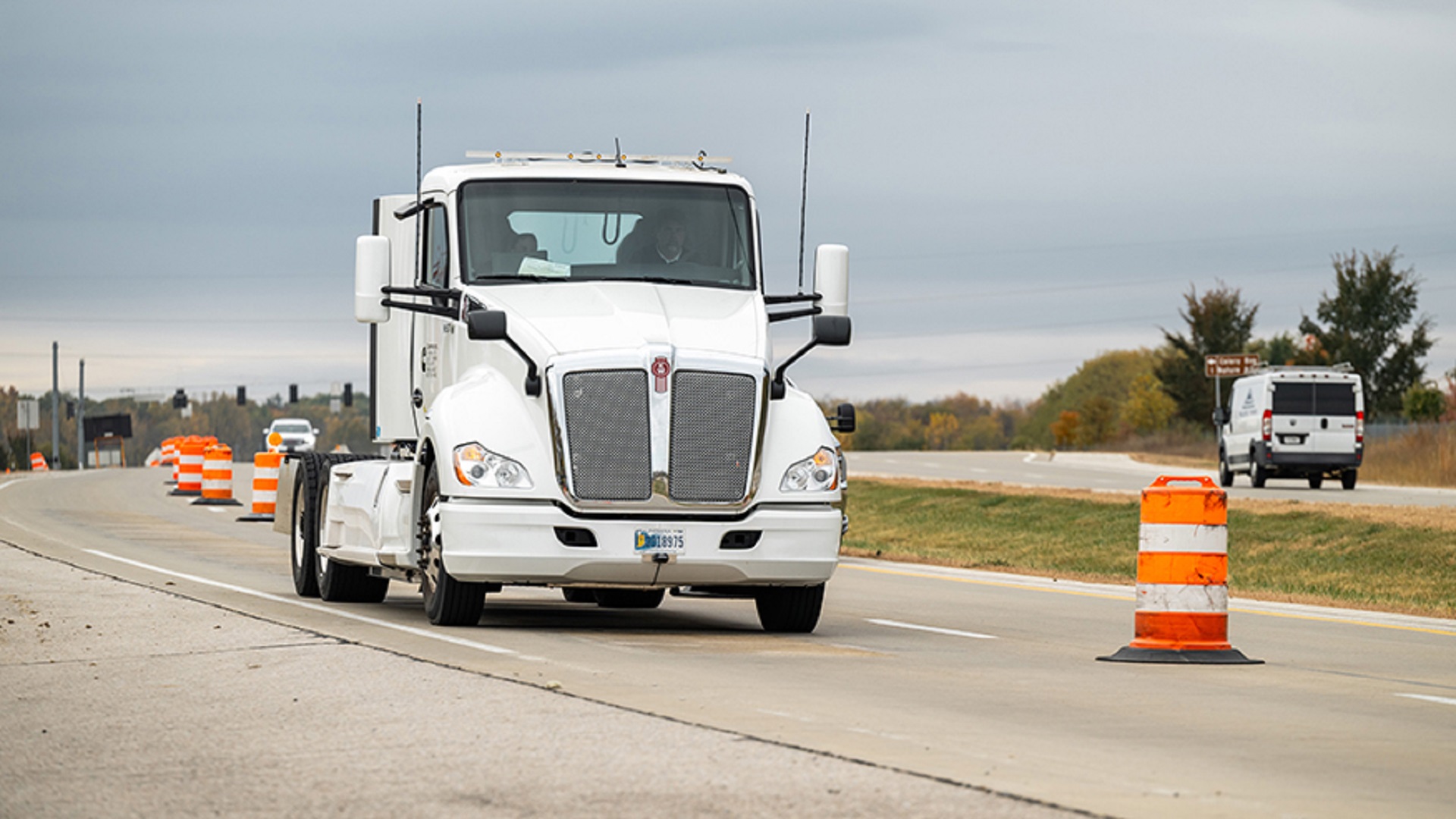
The experiment took place on a quarter-mile stretch of US Highway 52/231 in West Lafayette, Indiana, where Purdue University researchers installed a patent-pending dynamic wireless power transfer system beneath the concrete.
A specially modified Cummins Class 8 electric semitractor drove over the hidden coil system at 65 miles per hour (mph) during a trial this fall. It reportedly drew an impressive 190 kilowatts (KW) of power while in motion.
That amount of power is roughly equivalent to the electricity used by about 100 average homes. According to the researchers the results prove the long-imagined concept is not just feasible, but also scalable.
Powering EVs in motion
The Purdue system uses transmitter coils embedded in the roadway that generate a magnetic field. The electric semi carries receiver coils mounted under its chassis.
As the truck passes over the coils, power transfers through the pavement and into the vehicle’s battery system in real time. The coils are specifically engineered to operate within concrete pavement, the material used in the most heavily traveled highway segments in the US.
The team reported that while wireless EV charging isn’t new, delivering nearly 200 kilowatts at highway speeds is unprecedented in the US. Additionally, heavy-duty trucks demand enormous amounts of power. This is far beyond what current pads or pilot city-road installations are capable of delivering.
Dionysios Aliprantis, PhD, a professor of electrical and computer engineering at Purdue University, stated that transferring power across large distances, through concrete, to a moving target weighing tens of thousands of pounds, demands greater engineering precision than standard electronics.
“Transferring power through a magnetic field at these relatively large distances is challenging,” he added. Aliprantis continued. “What makes it more challenging is doing it for a heavy-duty vehicle moving at power levels thousands of times higher than what smartphones receive.”
Highway test success
Cummins, a US company that specializes in diesel and alternative fuel engines and generators provided the electric semitractor for the demonstration. John Kresse, Cummins chief technology engineer revealed that the on-road testing went exceptionally well.
“With its high power and promising cost structure, this technology represents a practical, and potentially game-changing, solution for the future of on-highway commercial transportation,” Kresse elaborated in a press release.
The system is sized for the heaviest commercial trucks. This means that lighter vehicles automatically fall within range. That design choice could also speed up nationwide adoption, as trucking is vital to US freight and GDP.

Meanwhile, electrifying semi-trailers has been limited by battery size, weight and charging downtime. But the team is certain that if trucks can charge while driving, their batteries, as well as those in passenger EVs, could become much smaller.
John Haddock, PhD, a professor in Purdue’s Lyles School of Civil and Construction Engineering, explained that the technology could even erase range anxiety. “With this system, you’d be able to drive your vehicle down the road and it would charge the battery,” he concluded.
Launched in 2018, the project is part of ASPIRE, the National Science Foundation (NFS) Engineering Research Center for electrified transportation infrastructure.

- Siswa SMA Sinlui Surabaya Bagikan 384 Takjil Ramadan - April 6, 2026
- Rim Fire Sparks Arizona’s First 2026 Blaze - April 6, 2026
- Ringkasan Materi Bahasa Indonesia Kelas 7 SMP Bab 5 E: Struktur dan Kalimat Teks Tanggapan - April 6, 2026


Leave a Reply