Finding sanctuary | Searching for lost sharks, beyond the movie ‘Jaws’
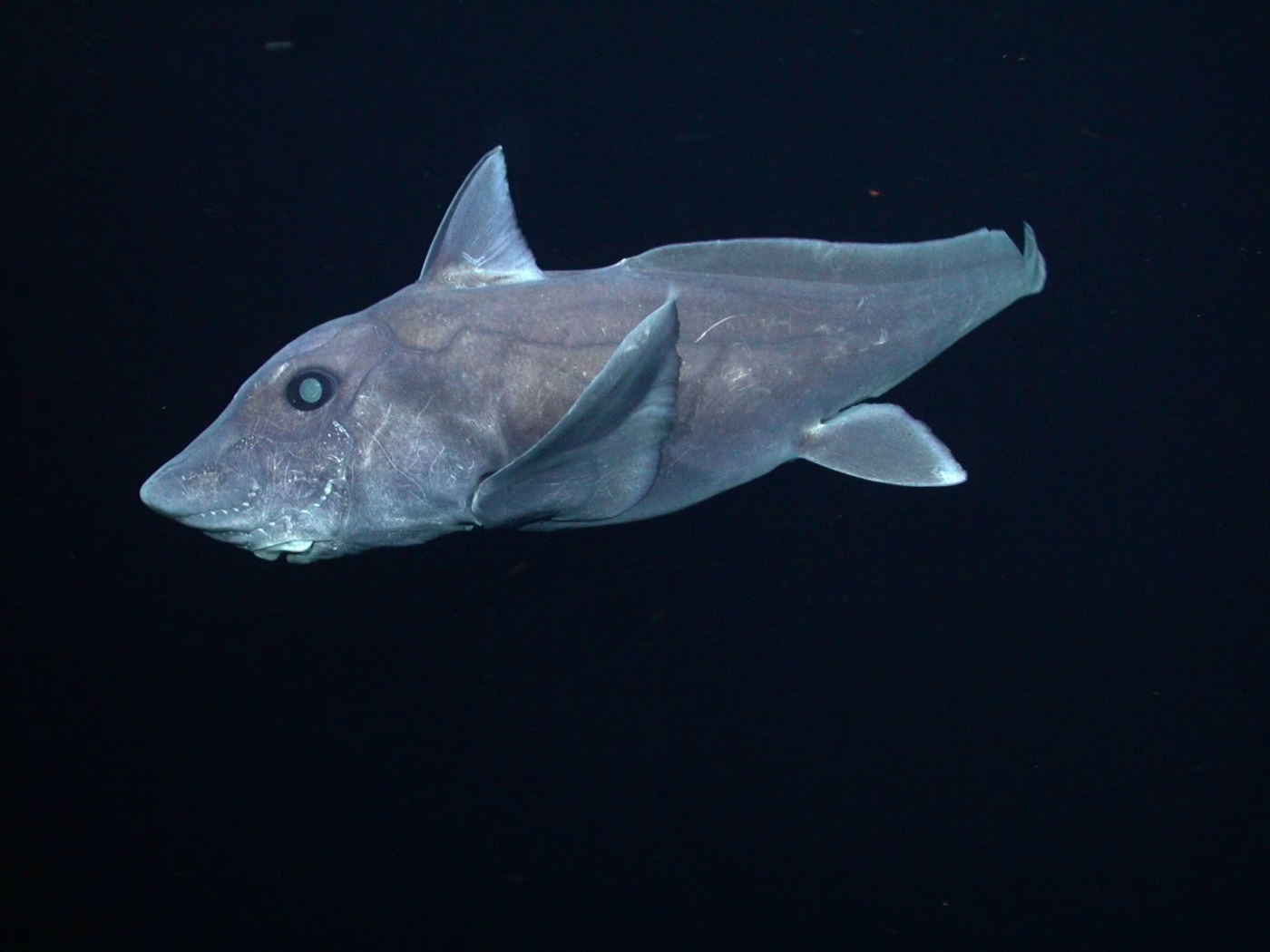
Sharks have been on this Earth for a very long time, with their origins dating back over 400 million years. Dinosaurs are thought to have first appeared only around 230 million years ago, and while they are no longer here and despite multiple mass extinction events, sharks continue to persist and even thrive today. Currently, 46 types of cartilaginous fishes — sharks, skates, rays and ghost sharks — have been identified so far in Monterey Bay National Marine Sanctuary alone.
Essential to marine ecosystems, sharks maintain the balance of the food web as apex predators, preventing any single species from dominating in the sea and ensuring overall ocean health. This critical role has cascading effects on other organisms and is important in shaping a vibrant and biodiverse habitat.
While the field of shark science and conservation has grown tremendously in recent years, prior to World War II, there was in fact little research on these amazing creatures. Even after World War II, most shark research was conducted by the U.S. Navy with a primary focus on attack prevention.
But in 1975 things changed. Human fascination with sharks was heightened when the movie “Jaws” hit screens across the country. The summer blockbuster became the most rewatched movie of its time and with this success, Peter Benchley’s movie production brought sharks out of the shadows and into the forefront of public attention. There were also some negative consequences — from sensationalizing to demonizing the oldest living fishes in the sea. Some people were less likely to go into the ocean, there was shark culling from popular beaches and an increased recreational take of sharks. In an effort to diminish fear, those of us doing shark education tell our audiences, “Do you know that you are more likely to die from a bee sting than get bitten by a shark?” On average in the U.S., bee, wasp and hornet stings result in roughly 72 deaths due to allergic reactions, while fatal shark attacks occur maybe once per year.
“The movie ‘Jaws’ gave birth to the modern field of shark science, conservation and education,” according to Dave Ebert, researcher with the Moss Landing Marine Labs, program director for the Pacific Shark Research Center and this year’s recipient of the sanctuary’s Ed Ricketts Memorial Award.
Ebert is known as the “Lost Shark Guy” for spearheading a global effort to find and discover, name and describe little-known and unknown sharks, a research process similar to a CSI investigation. Ebert has identified 53 new species of sharks worldwide over his career and is currently working on 10 more. He has documented at least six sharks that were not previously known to occur in the Monterey Bay National Marine Sanctuary.

“Clearly Dave’s research of sharks has expanded our understanding of these diverse and successful species,” said Gregor Cailliet, professor emeritus at Moss Landing Marine Labs and founder of the Pacific Shark Research Center. “There continues to be so little we know about sharks — their taxonomy, diversity and their life history. There are inevitably many more to be discovered.”
The sanctuary’s Ed Ricketts Memorial Award was created to honor scientists who have exhibited exemplary work throughout their career and advanced knowledge, appreciation, conservation and/or protection of the marine environment. Recipients are selected by the Monterey Bay National Marine Sanctuary Research Activity Panel.
To learn more about Ebert’s shark discoveries and research, please join us at the Sanctuary Exploration Center, 35 Pacific Ave. in Santa Cruz, Wednesday at 6:30 p.m. for the 2025 Ed Ricketts Memorial Award and Lecture ceremony, where Ebert will do a presentation “Searching for Lost Sharks.” Go to montereybay.noaa.gov/new/251118ricketts.html to watch the presentation online.
Lisa Uttal is a marine biologist and media coordinator for NOAA’s Monterey Bay National Marine Sanctuary. The organization conducts research, education and resource protection in one of most biodiverse marine protected areas in the world.

- Penjualan Jayamas (OMED) Naik 9,57% di 2025 Didukung Produk Medis Sekali Pakai - April 7, 2026
- Skyy Clark Smiles After UCLA Basketball Tooth Procedure - April 7, 2026
- Oprah’s Easy Nighttime Routine You Can Copy - April 7, 2026


Leave a Reply