Why your microwave might be ruining your food, according to science
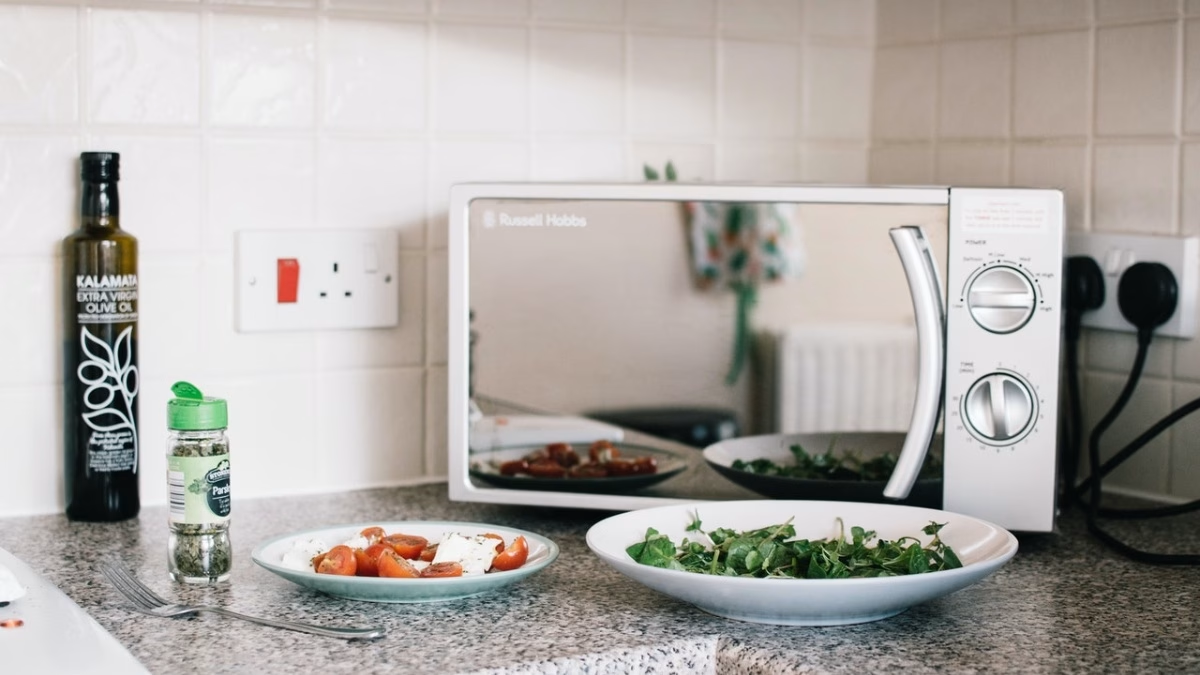
Microwaves heat food by making water molecules vibrate, which creates heat. Sounds fine — except water isn’t evenly distributed in most foods. That’s why your leftover pasta ends up with molten spots and cold centers that feel like they came straight from the fridge. Dense foods heat slower than watery ones, and fat absorbs energy differently than protein.
The Hidden Science of Microwaved Meals
A 2024 study on ready-to-eat rice found that microwave heating patterns depend on food geometry, composition, and even the container’s shape — factors so unpredictable that perfect results are nearly impossible. The rotating plate helps a little, but microwaves penetrate food unevenly, producing edges that are much hotter than the center.

Microwaving vegetables isn’t the nutritional disaster some claim. In fact, a 2003 JFSA study found that broccoli cooked with minimal water retained more vitamin C than when boiled. But when you overdo it — which is easy when you can’t see what’s happening — heat-sensitive vitamins like C and B quickly break down. Steaming vegetables on the stovetop gives better control and preserves both nutrients and texture.
Then there’s texture — the microwave’s biggest casualty. When microwaves heat water molecules, they generate steam that softens everything it touches. That’s why pizza crusts turn soggy, fried foods lose their crunch, and flaky pastries collapse into damp disappointment. Anything once crispy or crunchy becomes lifeless in minutes.
And don’t even think about reheating your coffee. Microwaving it somehow manages to burn and stale it simultaneously. A 2020 UC Davis study found that brewed coffee tastes best at 136–151°F (58–66°C), but microwaves often exceed that, especially at the edges of your cup. Uneven heating breaks down delicate aromatic compounds, leaving behind bitter, flat flavors.
What’s missing is the Maillard reaction — the chemical process that gives us browned toast, golden crusts, and seared meats. It requires dry heat above 300°F, something microwaves simply can’t achieve. That’s why microwave cakes are pale and spongy, and bacon comes out gray instead of crisp.

That doesn’t mean microwaves are useless. They’re great for melting butter, reheating soup, or steaming vegetables — anything where texture and browning don’t matter. But when you care about flavor, crunch, and aroma, the stovetop, oven, or air fryer are your best friends.
In the end, the microwave isn’t your enemy — just a tool with limits. For real cooking, it still can’t compete with traditional heat. Science shows that flavor, texture, and nutrition all benefit from a little more patience — and a lot less microwaving.

- 6 Makanan yang Bisa Menyebabkan Ketombe - December 16, 2025
- Why your microwave might be ruining your food, according to science - December 16, 2025
- Rachmatul Karimah Berbagi Ilmu Melalui Buku - December 16, 2025


Leave a Reply