New Alzheimer’s Therapies Offer Hope to Families
A New Hope for Alzheimer’s Patients
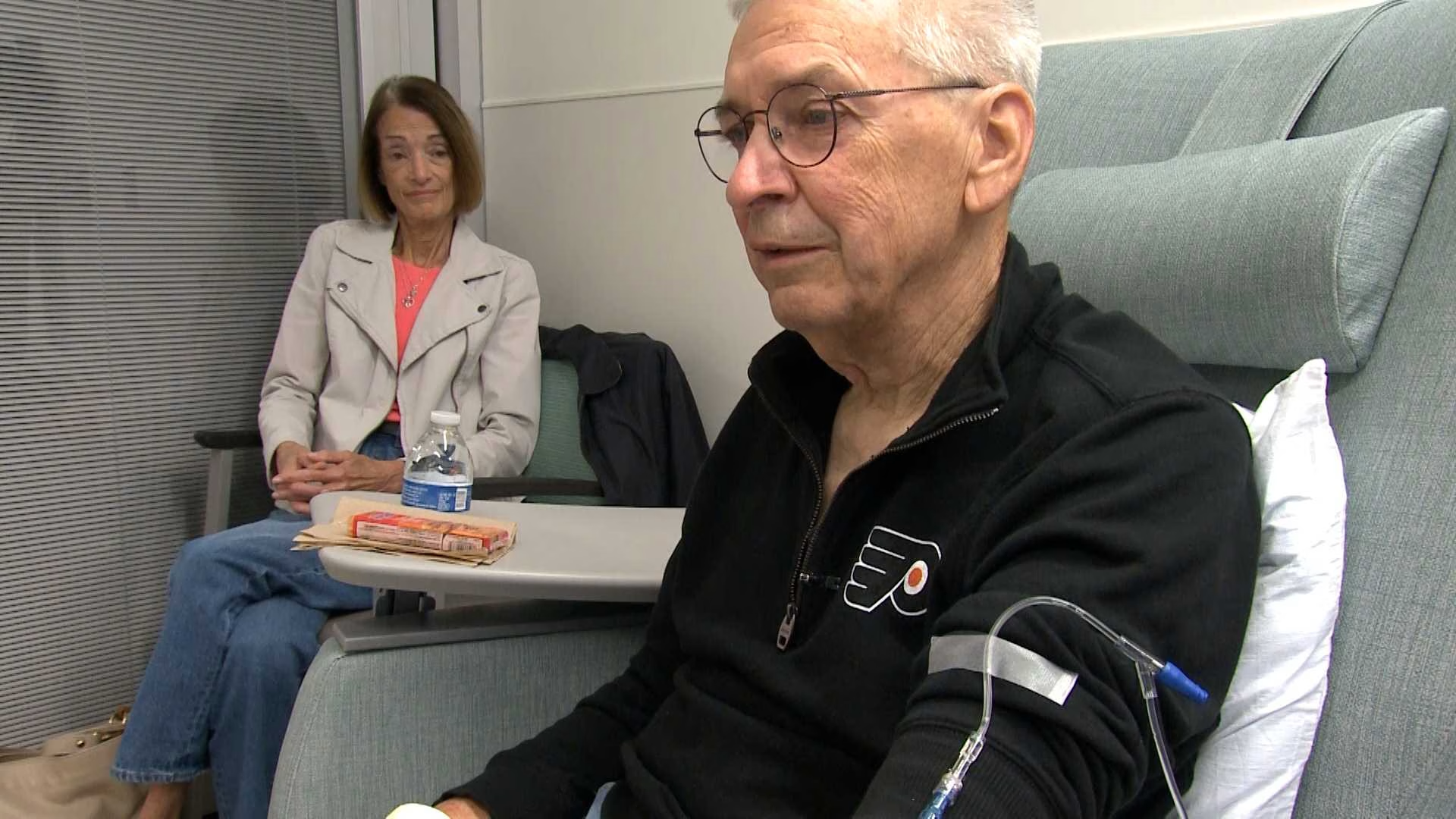
Terry Becker, a retired fifth-grade teacher from Lancaster County, Pennsylvania, is experiencing positive effects from one of two new FDA-approved drugs designed to slow the progression of certain types of Alzheimer’s and dementia. His journey with the condition began when his wife, Pam, noticed his memory slipping months ago. This led to a neurological assessment that diagnosed him with mild cognitive impairment (MCI).
Understanding the New Alzheimer’s Drugs
While the causes of MCI, Alzheimer’s, and dementia remain unknown, medical professionals are focusing on the buildup of amyloid protein in the brain. Two new drugs, Leqembi and Kisunla, have been introduced to help combat this issue.
“When these drugs became available, we were very excited. Now we have something that could potentially stop this process or greatly impact it,” said Dr. Matt Beelen, the medical director of the Alzheimer’s and Memory Care Program at Penn Medicine Lancaster General Health.
“It changed the course for us and for our family,” added Pam. “It’s getting rid of the protein, and it’s helping to stabilize memory in people that are on the drugs,” Beelen added.
Navigating Good and Bad Days
Terry has found that he now experiences more good days than bad. “I do feel like I have a lot more good days than bad days, which is great,” he said.
Dr. Jesse Main, a clinical neuropsychologist working with Terry, expressed excitement about the new treatments. He also noted that Penn Medicine Lancaster General Health is the only health system regionally offering comprehensive treatment, including initial assessments, infusion of these drugs, data collection, and ongoing monitoring.
The conference room where Terry and Pam meet with their medical team is the same space where other patients receive important news. Main explained, “This is a really important space of our team … where we share results and we talk about what we’re going to do. We talk about where we’re going to go from here, and that’s a really important conversation.”
“We have something for you now. And there’s hope that we didn’t have before,” said Dr. Beelen.
Rising Interest in Innovative Treatments
Dr. Main noted that interest in the new treatments is growing locally, with more people getting involved. When Terry began his monthly infusions of Kisunla, he was one of about a thousand patients nationwide. Since then, Penn Medicine LG Health has added about another 50 patients to the program.
With a team to assess patients and provide drug therapies locally, Penn Medicine plans to partner with Willow Valley to expand, potentially making Lancaster County a research hub.
Focusing on Family and the Future
For Terry and Pam, life remains focused on enjoying their four granddaughters. “I feel pretty normal, yeah. So that’s what I would tell her. I think I’m feeling pretty normal today,” Terry said.
“We’re continuing to do all that we can to have a brighter future and a longer future,” Pam added.
Terry has completed his sixth of 12 planned infusions, one a month for a year. In the spring, he will have a repeat PET scan of his brain to track the progress of the drug breaking down amyloid protein plaques.




Leave a Reply