From Happy Meal Toys to Prosthetic Skulls: A Founder’s $20M Journey
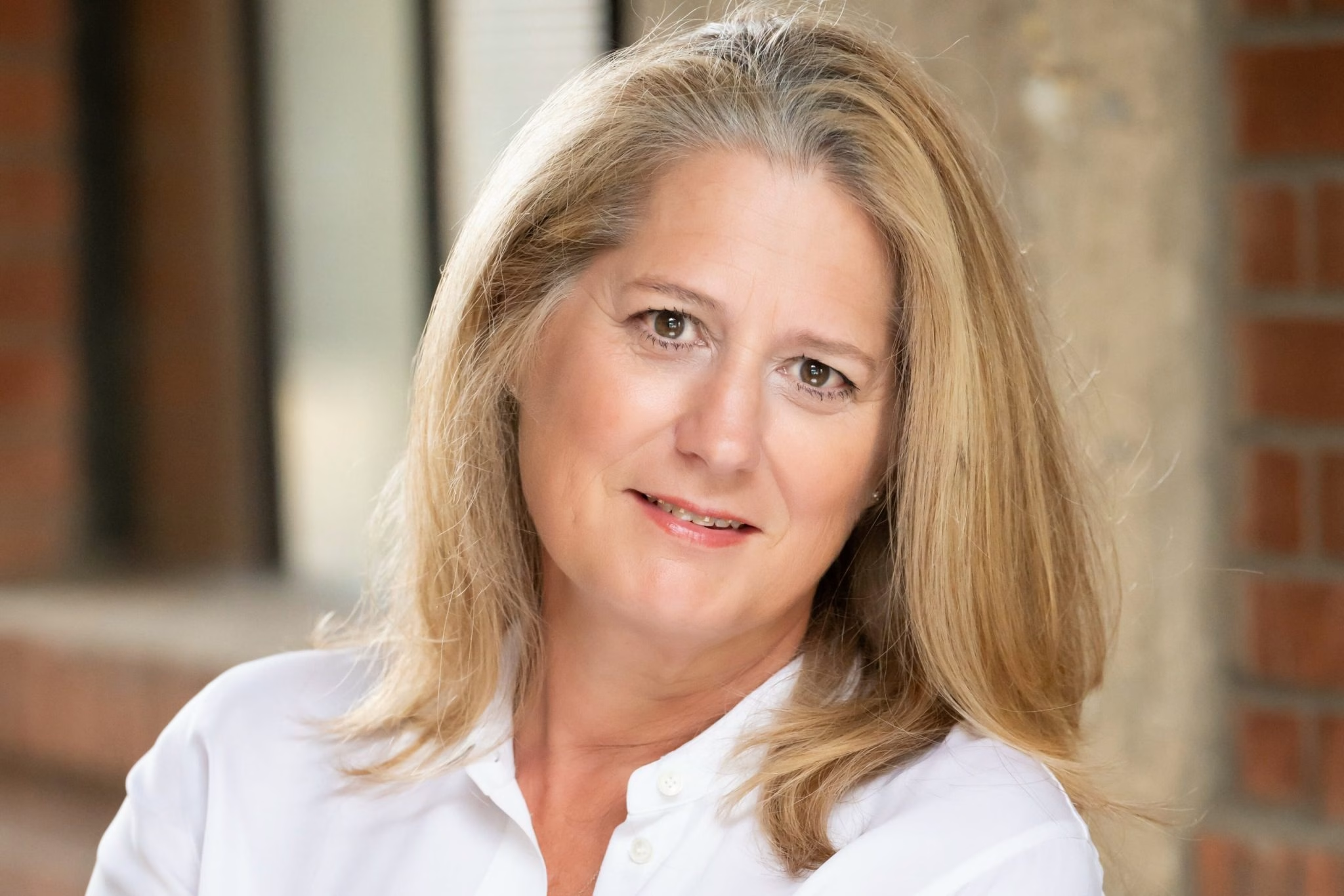
A Journey from Toy Design to Medical Innovation
Happy Meal toys like Transformer figurines and Hot Wheels cars have brought joy to children for decades, and one of the designers behind these miniatures is now making a significant impact on people’s lives. Nancy Hairston, an entrepreneur based in Dallas, founded MedCAD, a surgical solutions company, in 2007. Since then, the company has used 3D-printing innovations to help patients regain their confidence and recognize themselves in the mirror again.
Before starting MedCAD, Hairston had a career in design. After graduating with a Master of Fine Arts in sculpture from Loyola University in 1991, she faced challenges finding jobs in her field. At the time, 3D animation was gaining popularity, so she shifted her focus and took on various modeling and animation roles. She worked for companies such as Mary Kay cosmetics and software firm Alias. Eventually, she found herself in the toy industry, where the tactile process of sculpting in clay was being replaced by digital design on computers. This shift led her to work on 3D modeling projects for products ranging from toys to shoes.
“It was as if a lightning bolt hit me,” Hairston recalls when speaking about her first experience with 3D modeling. “That was the rage. That was the tool to use. So I started doing Happy Meal toys and Bratz toys for Mattel.”
However, the late 2000s brought changes to the industry. Many of her peers’ roles were moving to Asia, leaving medical and aerospace work as the primary opportunities in the U.S. Fortunately, Hairston recognized the potential of 3D modeling in healthcare and decided to take a leap of faith by quitting her stable job and launching MedCAD.
A Life-Changing Call from a Surgeon
Hairston had already been experimenting with anatomy modeling, adapting the toy-development software she had used for orthognathic surgery applications like jaw and teeth repairs. By 2009, she had developed a business plan to secure FDA clearance. Younger surgeons, who had grown up with advanced technology and 3D animation, began to take notice of her innovations as word spread about her work.
Then, a pivotal moment arrived. Hairston received a call from a surgeon she knew, who asked, “Hey, you know, do you think you could make me a cranial implant?” That question marked the beginning of MedCAD’s journey into the medical field.
MedCAD quickly became a key player in addressing the needs of patients with deformities caused by trauma or physical abnormalities. While skull implants remain a core part of the business, the company has expanded into other areas such as foot, ankle, and facial reconstruction products, all designed using 3D technology.
“We were some of the earliest people doing it,” Hairston explains. “The fantastic thread to all of this is that we are able to bring a person back as much as we can to a normalized state with a lot less surgeries. Patients are waking up with the ability to have teeth implants after they heal. That’s the power of this technology—we can do a more holistic approach to reconstructing a foot or a face.”
Growth and Success in the Medical Industry
Since its founding nearly two decades ago, MedCAD has continued to grow in the 3D-implant space. The company reports profitability and estimates annual revenue between $10 million and $20 million for this year and 2026. Cranial and neuro products are a major growth driver, with year-over-year growth rates of 18% to 25% since 2022. The company is also expanding its direct-to-hospital strategy, although most of its revenue comes from long-term contracts with global medical leaders requiring implants and devices.
Despite her success in both toy design and entrepreneurship, Hairston finds the greatest fulfillment in the impact her implants have on patients’ lives. While creating toys for children was a rewarding achievement, she feels that her work with MedCAD has made a more profound difference.
“Toys are really fun for children, but they’re not played with for long,” Hairston says. “We can really make a difference making these kinds of products for humans that change their lives. That gave me a lot of the power and the passion to do it.”


Leave a Reply